Frank
Frank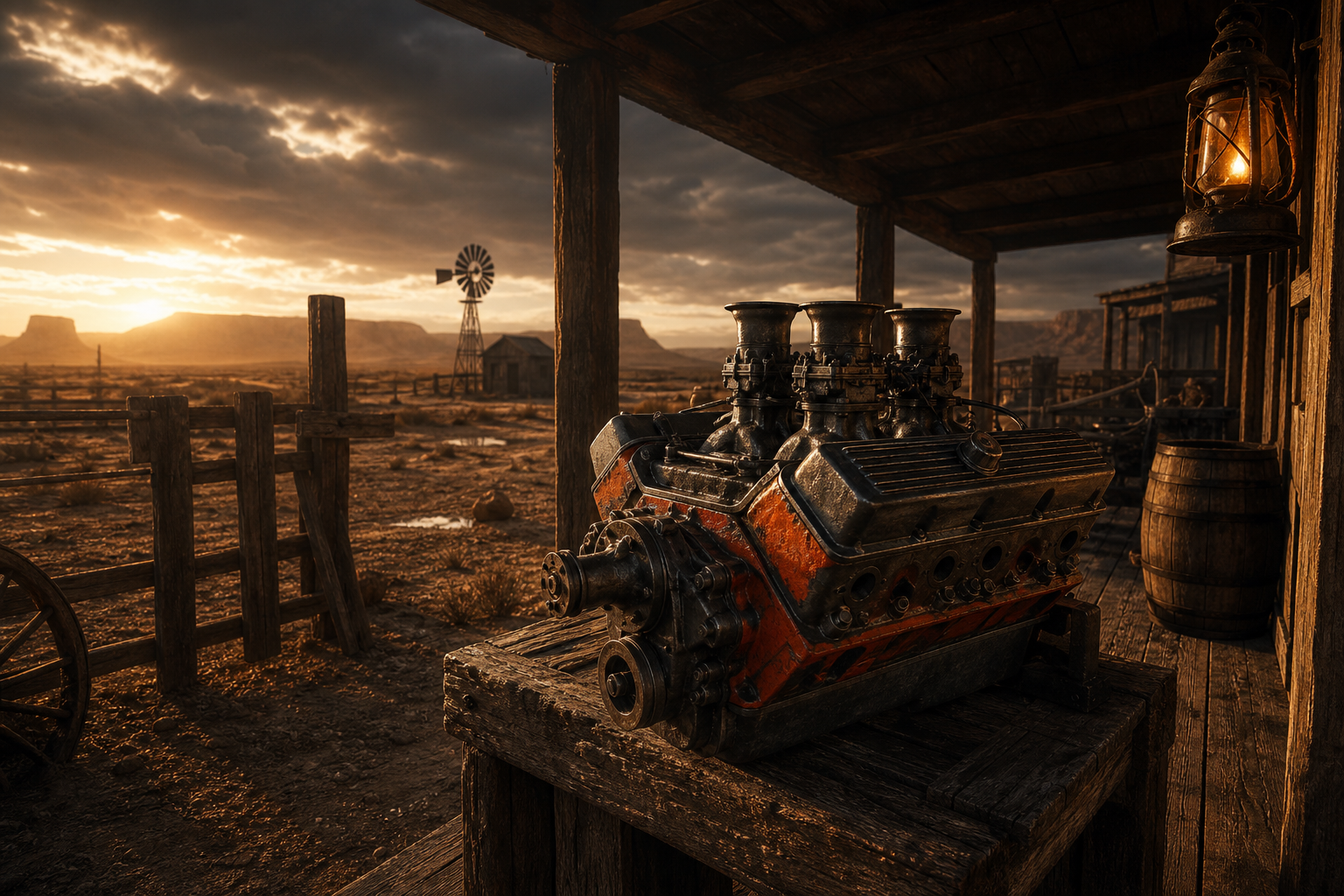
Before the HEMI, There Was the Max Wedge
In 1962, before Chrysler had a hemispherical combustion chamber in any production car, they were already embarrassing people at the dragstrip with something called the Max Wedge. The 413 and later 426 cubic inch versions of that engine were purpose-built violence, with exhaust manifolds that dumped straight down toward the pavement and intake runners that made no apology for what the engine was designed to do. You didn’t buy a Max Wedge for the daily commute. You bought it to win on Sunday and let people talk about it on Monday.
The Max Wedge matters to this story because it establishes something critical about Mopar’s performance philosophy before we ever get to the legendary stuff. Chrysler’s engineers were not building street cars that occasionally went racing. They were building racing hardware that occasionally wore license plates. That distinction runs straight through the entire lineup we’re discussing in this post, from the 426 HEMI down to the 340, and it’s the reason I’m going to argue that Chrysler had the deepest and most coherent performance engine lineup of any manufacturer in this era.
That’s a strong claim. Let’s back it up.
The 426 HEMI: What the Factory Wouldn’t Tell Your Insurance Agent
The 426 HEMI arrived in NASCAR in 1964 and promptly won the Daytona 500 in its debut. Richard Petty took the checkered flag. Three of the top five finishers were running HEMIs. NASCAR’s response was to ban the engine the following year for being too dominant, which is the kind of product endorsement money can’t buy.
When Chrysler put the street HEMI into production in 1966, they faced a problem that had nothing to do with engineering. Insurance companies were using horsepower ratings to set premiums, and a car rated at 425 horsepower was going to cost a young buyer a significant chunk of his paycheck every month. So Chrysler rated the street HEMI at 425 horsepower, which was, to put it charitably, a conservative number.
As I covered in Part 1 of this series, the SAE gross measurement method of the time allowed manufacturers to test engines without accessories, in ideal conditions, with tuning that wouldn’t survive a real street application. The HEMI’s actual output in period testing, including the independent work done by magazines like Car and Driver and Motor Trend, pointed to something considerably north of 425. Credible estimates from engine builders and period dyno sessions put the number closer to 500 horsepower. Some say more.
What made the HEMI different:
-
- Hemispherical combustion chambers allowed larger valves, positioned for near-perfect airflow geometry
-
- Dual four-barrel carburetors on a cross-ram intake
-
- Forged internals from the factory, not as an option
-
- Separate rocker shaft assemblies on each bank, a design that added complexity and cost but delivered reliability under hard use
The HEMI was available in the Charger, the Road Runner, the GTX, the Barracuda, and the Challenger, among others. It cost roughly $800 over the base engine at a time when that was real money. It was not a casual choice. The people who ordered it knew exactly what they were getting, and the people who lined up against them at the light usually found out the hard way.
Production numbers were low. Real numbers-matching HEMI cars are now legitimately valuable collector pieces, which is a conversation we’ll have in detail in Part 8 when we talk about what’s still affordable and what belongs in a vault.
The 440 Six Pack: The Sensible Choice That Wasn’t Sensible at All
If the HEMI was a statement, the 440 Six Pack was an argument. And the argument was this: torque wins street races.
The Six Pack configuration, named for its three two-barrel Holley carburetors on an Edelbrock designed intake manifold, took Chrysler’s already capable 440 cubic inch B-engine and turned it into something that could be had for significantly less money than a HEMI while putting up numbers that kept the conversation interesting. The factory rated it at 390 horsepower, which carried the same credibility as the HEMI’s 425 figure, meaning not much. The torque rating of 490 pound-feet, however, told the real story.
Torque is what moves a car off the line. Peak horsepower is a number that happens at high RPM, usually in a range you only see briefly in a quarter-mile run. Torque, especially the broad, flat torque curve the 440 produced, is what you feel every time you push the throttle past halfway on a street with a stoplight at the end. The Six Pack’s center carburetor handled idle and light throttle. All three opened under hard acceleration, and when they did, the intake tract lit up in a way that people standing on the sidewalk remembered.
The 440 Six Pack appeared in the Road Runner, the GTX, and importantly in the ‘Cuda and Challenger with the A12 package, which included a fiberglass lift-off hood to clear the carbs, dog dish hubcaps instead of styled wheels to save weight, and a deliberately stripped-down trim approach that said the owner had “exactly zero interest” in impressing anyone at the country club.
For street use, many knowledgeable people in this era argued the Six Pack was the better choice than a HEMI. Less finicky, better low-speed manners, easier to tune, and available at a price point that didn’t require financing your groceries.
The 340: When Small Means Something Entirely Different
Here’s where I lose some people, and I don’t particularly care.
The 340 cubic inch small-block that Chrysler built from 1968 through 1973 does not belong in a conversation about displacement. It belongs in a conversation about what happens when engineers decide to build the best version of a small engine rather than simply the biggest one.
The 340 used a four-barrel carburetor on a well-designed intake manifold, free-flowing cylinder heads with large valves for the displacement, a solid-lifter camshaft in the high-performance tune, and a short stroke that let it rev where most Mopar big-blocks were already running out of breath. Factory rated at 275 horsepower, which in this era’s currency means something closer to 310 to 320 by honest measure.
Why the 340 deserves serious bracket consideration:
-
- Power-to-weight ratio in an A-body car like the Duster 340 was legitimately competitive with larger engines in heavier platforms
-
- Three two-barrel carburetor setup in the AAR ‘Cuda and Challenger T/A created a Six Pack equivalent at small-block scale
-
- Parts interchanged freely with the entire LA small-block family, making it unusually serviceable
-
- Insurance rates were lower, meaning younger buyers could actually afford the cars
The Duster 340 in particular is one of the most underappreciated performance stories of the entire muscle era. A modest-looking car with a small-block that ran mid-14s in stock trim and responded well to basic modifications. It wasn’t exotic. It was competent in a way that held up over time better than some of the headline acts.
The Deepest Bench in the Business
Here’s the case I’m making. Ford had peaks, and we’ll cover those in Part 3. Chevrolet had volume, and that story comes in Part 4. But Chrysler had a performance engine lineup that covered every slot from the working-guy small-block to the untouchable HEMI, with a legitimate mid-tier option in the 440 Six Pack that arguably made the most sense for real-world use.
No other manufacturer in this era handed you three legitimately different performance arguments at three different price points, all with serious engineering behind them and all with a racing program that validated the work. The Max Wedge proved the philosophy. The HEMI proved it on the biggest stage in American motorsports. The Six Pack made it accessible. And the 340 made it affordable.
When we build out the final bracket in Part 8, at least two of these engines crack my top five. The argument about which one sits higher is one I’m still working through, and I suspect the comments section is going to have opinions about it.
Next up, we cross the aisle to Dearborn. Part 3 covers Ford’s high-water marks, including the 428 Cobra Jet’s split personality, the Boss 429’s homologation story, and the engine Ford built specifically to humiliate Chrysler at the drags and then never actually put in a car anyone could buy.