Frank
Frank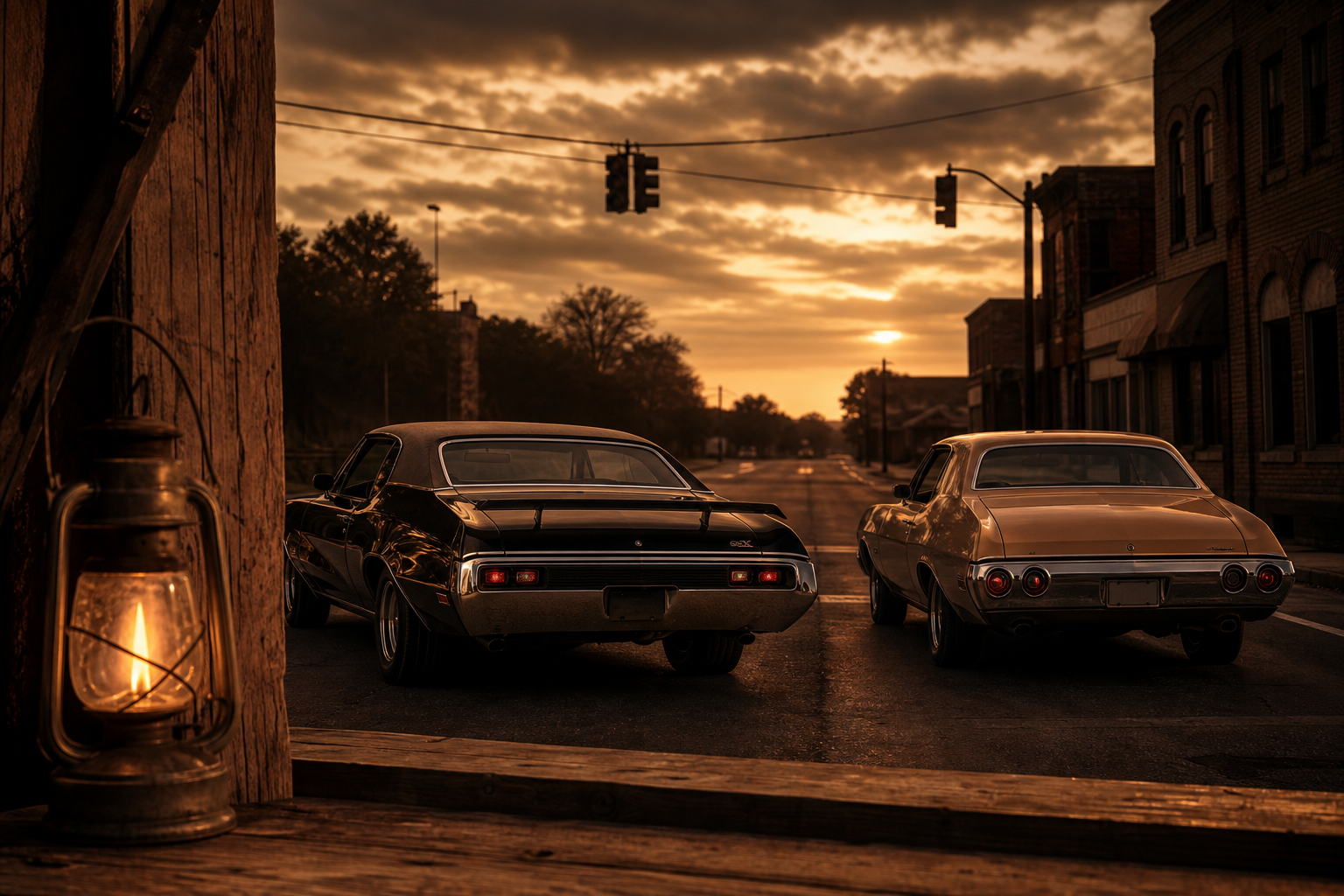
The Engines Nobody Puts on Their Poster
Here is what happened at a stoplight in Lansing, Michigan, sometime in 1970. A guy in a Buick GSX pulls up next to a guy in a Chevelle SS 454. The Chevy driver looks over, sees a Buick, and goes back to staring at the road. The light goes green. The Buick disappears.
That story gets told less often than it should, and that gap between what actually happened and what the culture remembered is exactly what this post is about.
Oldsmobile and Buick don’t get the magazine covers. They don’t get the die-cast models at Walmart. When somebody’s kid asks about muscle car engines, nobody leads with the Buick Stage 1. And that’s a problem, because if we’re being honest about what moved a car down a quarter mile on a Tuesday afternoon with the air conditioning on and a full tank of premium, Buick and Olds belong in the same conversation as everything we covered in Parts 2 through 5. They might actually win parts of that conversation outright.
Let’s work through this properly.
Oldsmobile’s W-30: Engineering Over Marketing
Oldsmobile was always a little different inside GM’s structure. They had a history of technical credibility that went back to the original Rocket 88 and the first mass-produced overhead valve V8 in American volume production. By the late 1960s, Olds was running a 400 cubic inch engine in the 442 that was genuinely competent, and then they attached the W-30 Force Air package to it and things got interesting.
The W-30 system used functional cold-air induction, pulling from two scoops mounted low in the front bumper where the air was cooler and denser. It sounds like a simple trick because it is a simple trick, but simple tricks that work are worth more than complicated tricks that don’t. The cold air induction combined with specific camshaft profiles, reworked heads, and a higher compression ratio pushed the 400 to a rated 370 horsepower. You already know from Part 1 why that number needs an asterisk attached to it.
What you actually got with the W-30:
- Factory rated at 370 horsepower, almost certainly underrated for insurance purposes
- Red plastic inner fenders that functioned as air scoops, a detail that sounds cheap and actually worked
- A forced-induction effect without any supercharger, just physics being used correctly
- Quarter-mile times that competed directly with engines rated significantly higher by their manufacturers
The 442 itself was a well-balanced platform. It wasn’t the lightest car in the class, but the suspension was sorted, the body was stiff, and the whole package drove like something engineered rather than something assembled. The W-30 didn’t make it a track weapon. It made it a very fast car that a real person could manage on real roads, which is a different and arguably more valuable thing.
In 1970, Olds also offered the 455 in the 442, and that combination produced torque numbers that genuinely alarmed people. We are talking about 500 pound-feet of torque from the factory, rated conservatively, in a car with decent weight distribution and competent brakes for the era. If we’re judging on street usability, the 455-powered 442 W-30 is one of the best arguments in the entire bracket.
Buick Stage 1: The Torque Number That Still Makes People Do Math
The Buick 455 Stage 1 is the engine that makes people do the math twice.
The official 1970 numbers:
- 360 horsepower (gross, SAE, and almost certainly wrong in the conservative direction)
- 510 pound-feet of torque
- A curb weight in the GSX of around 3,600 pounds
Five hundred and ten pound-feet of torque. In 1970. From a production car that your insurance company classified in the same category as a Skylark because Buick marketing didn’t want to spook buyers or attract regulatory attention. That torque number was higher than the rated output of the 426 HEMI, higher than the 454 LS6 from Chevrolet, and higher than anything Ford put in a production car in this era.
Buick achieved it through what might be called the quiet approach. Rather than building a high-revving, aggressive engine that announced itself with a rough idle and a temperamental street personality, their engineers focused on displacement, a large bore, generous ports, and a camshaft profile optimized for low-to-mid-range output. The Stage 1 pulled hard from almost any speed, in any gear. You didn’t have to work it. You didn’t have to drop it to 4,500 RPM and hold it there. You stepped on it from 2,000 RPM and the car simply went.
The GSX in Stage 1 form ran consistent mid-13-second quarter miles in contemporary magazine testing. Some tests came in at high 13s, a few at 13.3 or 13.4 with a skilled driver. That put it directly competitive with LS6 Chevelles and 440 Six Pack Mopars, which were being rated at 450 and 390 horsepower respectively. The Stage 1 was rated at 360. Draw your own conclusions about what Buick was actually building.
Why These Two Get Overlooked, and Why That’s a Mistake
There are a few reasons Olds and Buick get pushed to the margins in muscle car rankings, and none of them are actually about performance.
Reason one: brand image. Oldsmobile and Buick sold to older buyers. They were aspirational GM brands for people who had moved past the entry-level Chevrolet but weren’t ready for Cadillac. That image was accurate for most of their lineup and completely irrelevant to the W-30 and Stage 1, but the reputation stuck.
Reason two: marketing volume. Pontiac had John DeLorean willing to break internal GM rules to get the GTO noticed. Chevy had the Corvette halo and enormous dealer networks. Ford had the Shelby relationship and the Mustang’s cultural moment. Buick and Olds had quiet engineering and sensible press releases. Quiet engineering doesn’t generate magazine covers, even when it’s generating 510 pound-feet of torque.
Reason three: production numbers. The Stage 1 GSX in the striking Saturn Yellow or Apollo White was not a high-volume car. Buick built 678 GSX models for 1970, with a fraction of those being Stage 1 equipped. That rarity means fewer survivors, fewer people who drove them when they were new, and a smaller community to carry the story forward. The engines and cars that get remembered are often the ones that were common enough to leave an impression on a generation of drivers. Rarity works against legacy in this specific way.
The case for inclusion is straightforward. If we are evaluating engines on raw output relative to their rated numbers, the Stage 1 made a mockery of its factory specifications. If we are evaluating on street usability, both the W-30 and the Stage 1 beat most of their competition. If we are evaluating on torque-per-dollar value delivered to the buyer, it’s not a contest. A customer who bought a Stage 1 in 1970 was getting more actual performance than the horsepower rating suggested, in a car comfortable enough to drive every day, for a price that undercut most of the competition.
That is a winning argument. It doesn’t stop being a winning argument because the car had a Buick badge instead of a Pontiac or Chevy badge.
Where They Land in the Bracket
I’ll tell you this much before Part 8 settles it: at least one of these engines is in my personal top ten, and it is not there as a courtesy pick or a nod to diversity of coverage. It earned its spot on merit, specifically on the torque argument and on the documented gap between factory ratings and real-world performance.
The Buick Stage 1 in particular is one of the most dishonestly rated engines of the entire era, and I mean that as a compliment to Buick’s engineers and a mild criticism of everyone who accepted the 360 horsepower number at face value for the next fifty years.
Part 7 takes us to the edges of the bracket, where AMC was fighting above its weight class, where the Hurst/Olds blurred every division line GM had drawn, and where the COPO ordering system let buyers smuggle race engines into showroom cars through a back channel that the factory officially knew nothing about. Some of the most interesting decisions of the entire era happened in exactly those margins, and they deserve the same honest look we just gave to the engines that wore the wrong badges for the magazines to care.