Frank
Frank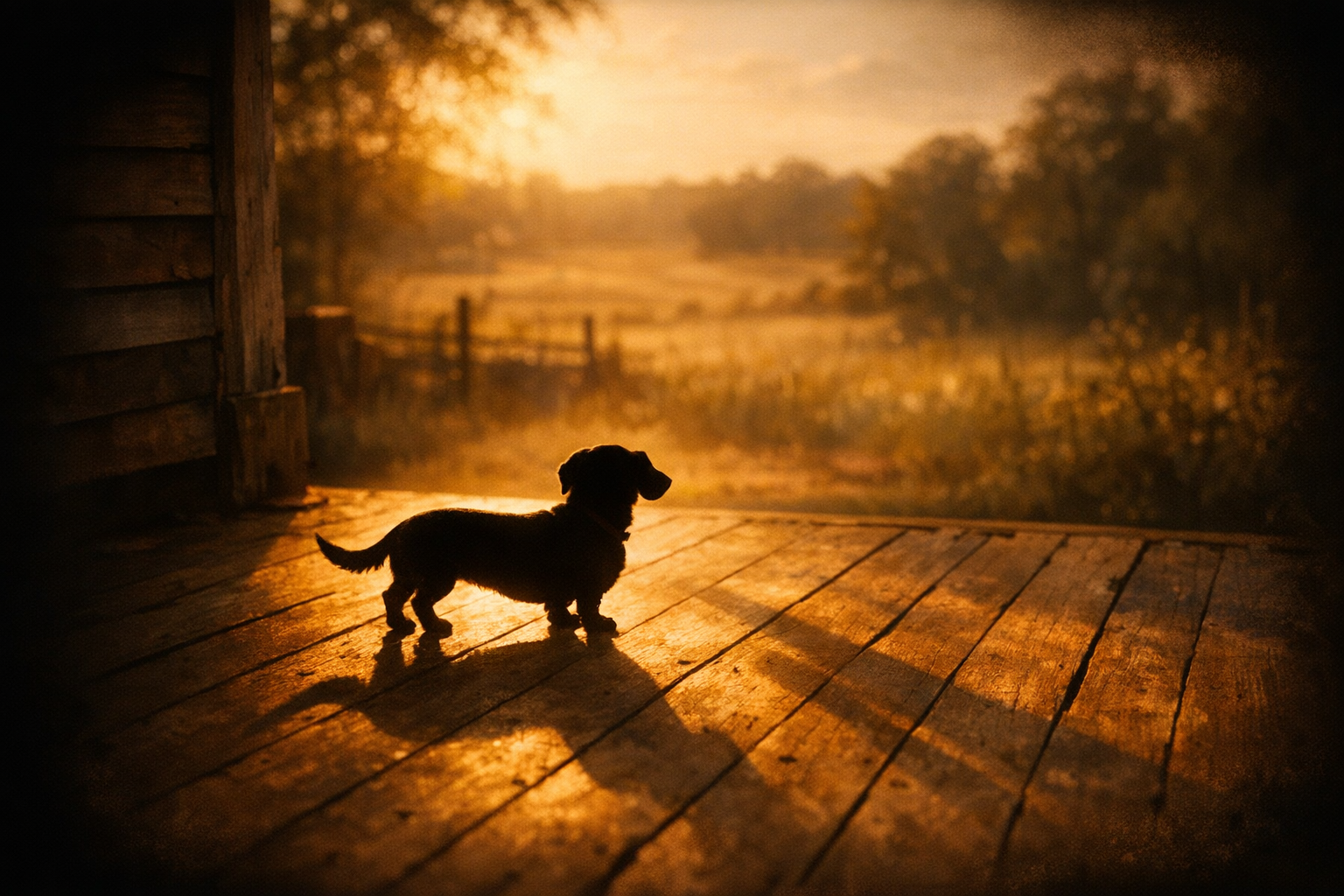
Flash didn’t know he was small. That was the first thing you had to understand about him. Eleven pounds of Miniature Dachshund, absolutely convinced he was running the property.
We put him down on December 22nd, 2025. He was sixteen years old, and right up until the last few weeks, he was still trying to pick fights with Oakley, who outweighs him by about seventy pounds. Oakley, to his credit, always let him win.
Sixteen years is a long time to share a house with something. Long enough that you stop noticing the animal is there and start noticing when he isn’t. Long enough that the specific sound of his nails on the hardwood floor, that little rapid-fire click-click-click, becomes part of the ambient noise of your life. And then one day it stops, and the silence is louder than you expected.
This isn’t a post about how dogs are loyal or how pets are family. You already know that. Everybody knows that. What I want to talk about is something a little harder to name, which is what it actually means to watch a living thing get old alongside you.
Flash was around when Lauren was in middle school. He was there when Logan was still playing youth football. He was around for every job change, every late-night lab build, every project that got finished and every one that didn’t. He was present for the ordinary grinding machinery of a family’s life in a way that no human witness ever quite manages, because he didn’t have anywhere else to be and no reason to pretend otherwise.
He slept in the bed for sixteen years. Not sometimes. Every night. He had a system, and the system involved him getting the exact spot he wanted, regardless of where you were. You adapted. That was the deal.
What catches you off guard isn’t the big moments of grief. It’s the small reflexes. I caught myself about a week after he was gone starting to step around something that wasn’t there anymore. You build muscle memory around a dog without realizing it. You route yourself through your own house differently because of where a small animal habitually sat. When that shape disappears, your body keeps compensating for it anyway, like a phantom limb that weighs eleven pounds and used to bark at the mailman with a personal vendetta.
There’s something particular about losing a sixteen-year-old dog that’s different from losing a younger one, and I’ve been trying to figure out how to say it right. When a young animal dies, it feels like a theft. When an old one goes, it feels more like a completed sentence. That doesn’t make it easier. If anything, it’s harder in some ways, because you were there for all of it. You watched the whole arc. You saw the puppy become the old man, and you were present for every version in between, and now you have to carry all of those versions at once.
Flash came home as a puppy when we thought we had room in the house for more chaos. Turns out we did. He filled it efficiently.
The last few weeks were hard. He slowed down in a way that was impossible to miss, and the vet was straight with us about what was coming. December 22nd felt too close to Christmas to be fair, but then that’s not really how it works. You don’t get to schedule it around the calendar.
Kimberly and I have been a little quiet since then. The house runs the same. Oakley is still Oakley. Life continues to require the usual things. But there’s a specific kind of absence that only a dog can leave, because a dog doesn’t know how to be present halfway. They’re either there or they’re not, and there’s no ambiguity about which one it is.
Flash was there for sixteen years, completely and without reservation, right up until he wasn’t.
That’s a good run. That’s about as good as it gets.
I’m still stepping around empty space when I walk through the kitchen, and I don’t think I’m in any hurry to stop.