Frank
Frank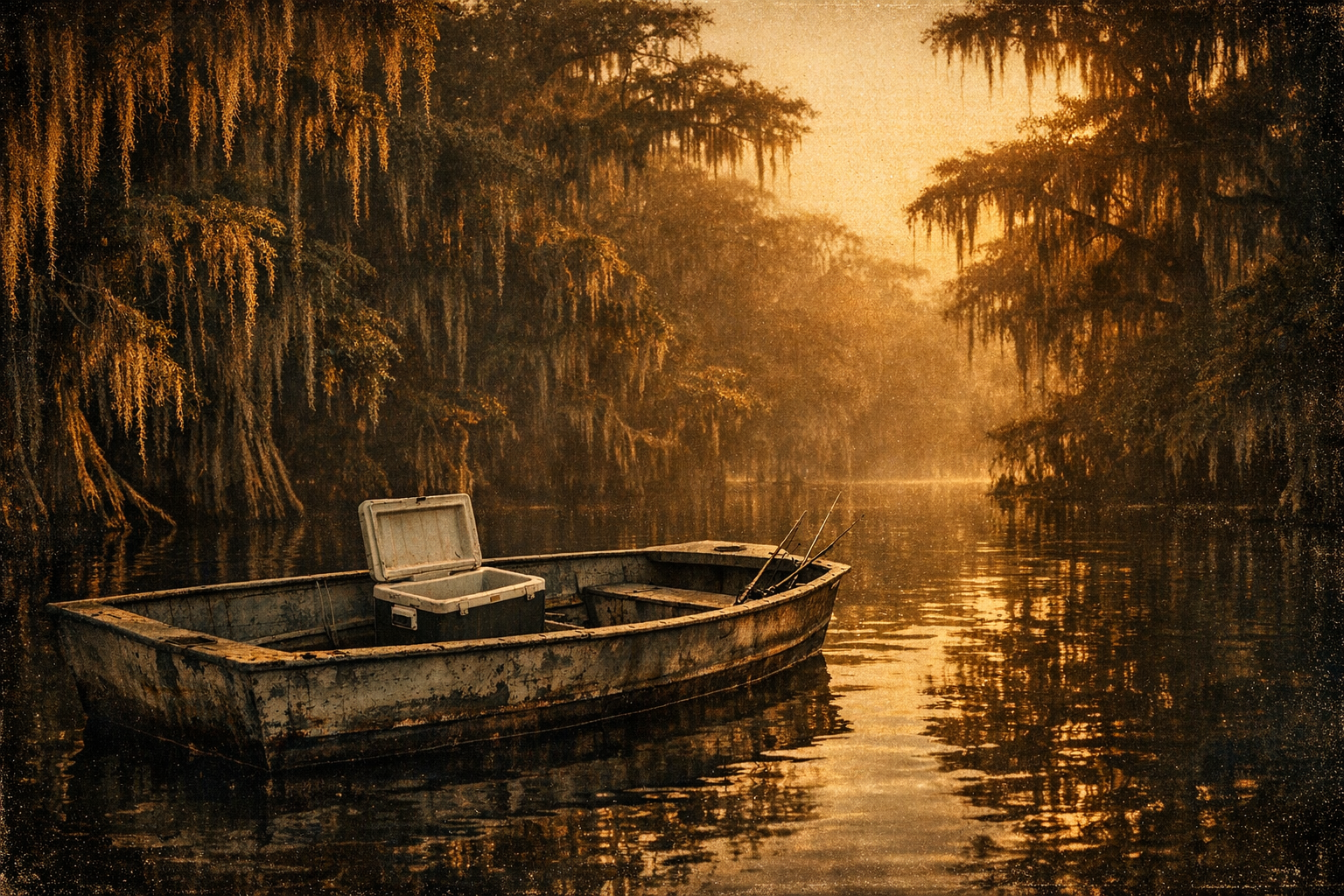
Nobody caught anything. The cooler was still full of beer and nothing else when we left. The drive home was quiet. And I have thought about that day more than almost any fishing trip where we actually put fish in a boat.
That’s the thing about fishing that takes a while to figure out. The ones that stick aren’t always the ones with a picture attached.
1. The Fish Don’t Owe You Anything
Middle Georgia in July is hot in a way that makes you question your life choices by about nine in the morning. The humidity sits on you like a wet blanket that’s also somehow on fire. You’ve got gnats. You’ve got sun. The water is warm and the bass are sulking somewhere deep and completely uninterested in whatever you tied on that morning.
You can leave. Most people do, eventually.
Or you can just… stay.
Not because you think it’s going to turn around. Not because you have a strategy. Just because you came out here to be out here, and the fish being uncooperative doesn’t actually change that equation unless you let it.
That reframe took me an embarrassingly long time to land on.
2. What You’re Actually Doing Out There
There’s a version of fishing that’s about catching fish. That version is legitimate and I’m not dismissing it. If you’re fishing a tournament or trying to put food on the table, the count matters.
But most recreational fishing isn’t that. Most of it is a man or a woman sitting near water, thinking, not thinking, watching a cork, listening to something far away, and existing in a way that the rest of the week doesn’t really allow for.
The fish are almost a prop at that point. A useful prop, sure. Gives you a reason to be there. Gives your hands something to do. But the thing that’s actually happening, the thing that sends you home in a better state than you left, has nothing to do with the catch count.
I’ve had days where I pulled bass out of the water one after another and came home tense and aggravated because I was fishing like I was trying to solve a problem. And I’ve had days where I caught nothing and sat in the same spot for four hours and drove home genuinely lighter than I’ve felt in weeks.
The fish weren’t the variable.
3. Nothing Teaches Patience Like Something That Can’t Be Rushed
You cannot hustle a fish into biting. You cannot optimize your way to a strike if the conditions aren’t there. You can change lures, change spots, change technique, and sometimes that works. But sometimes the lake just isn’t interested in cooperating today, and that’s the whole answer.
That’s a genuinely rare experience in modern life. Almost everything else we do has a feedback loop you can tighten if you just push harder. Send more emails. Write better code. Make more calls. Put in more time.
Fishing, at its most honest, teaches you that effort and outcome are not always connected. And that’s uncomfortable if you spend most of your days operating on the assumption that they are.
I run into this with powerlifting too. There are days the numbers go up and days they don’t, and the training was identical. The body is doing something you don’t fully control. You can influence it. You can’t dictate it.
Fishing hammers that lesson in with four hours of silence and a cork that doesn’t move.
4. The Stories That Don’t Have a Punchline
Ask any serious outdoorsman about the trips that meant the most. Really push them. Half the time they’re going to land on something where the bag was light or empty. A morning they sat in a stand and saw nothing but deer that walked the wrong way. A stretch of river that gave up nothing but taught them exactly where not to cast.
The fishing stories people tell the longest aren’t always the big ones. They’re the ones with texture. The weird morning. The conversation that happened because there was nothing else to do but talk. The moment the fog burned off and the lake looked like something from a painting and you were the only one on the water.
You don’t get any of that if you leave early because the fish aren’t biting.
5. Staying Is a Decision, Not a Default
Here’s the part that sounds easy and isn’t. Staying when nothing is happening requires you to actually decide to be somewhere. Not just physically, but actually present in a way that most of us have gotten genuinely bad at.
I’m as guilty of this as anyone. I’ve sat on the bank with a rod in my hand and spent forty-five minutes thinking about a server issue at work, a problem with one of my projects, something I should’ve said in a meeting, and basically been nowhere near the water at all. Body in Jones County. Brain somewhere in a ticket queue.
That’s not fishing. That’s just being outside with better lighting.
The days that actually work, the ones that send you home reset, are the days you’re actually there. Watching the water move. Noticing the sound of the tree line. Paying attention to nothing important and letting that be enough.
That’s harder than it sounds. It gets easier the longer you stay.
6. The Patience Has to Come From Somewhere
I want to be honest about something. Sitting still in the quiet for hours doesn’t come naturally to me. Never has. My brain runs loud, always has, and I’ve spent most of my life figuring out workarounds for that rather than just sitting with it.
Fishing is one of the few things that cuts through that, but it took repetition. It took going out when I didn’t want to. Staying when I wanted to leave. Letting the slow days be slow instead of trying to engineer them into something else.
The first hour on a dead lake is usually rough. The second hour, something starts to shift. By the third hour, if I haven’t checked my phone fourteen times and ruined it, I’m somewhere close to actually relaxed.
That progression, that particular trajectory, doesn’t happen with anything else I do. Not the gym, not music, not working on a project at midnight. Only the water does that, and only if I let it.
7. Some Days You Just Need to Sit by the Water
Not every trip needs a report. Not every morning on the lake needs a limit to justify the gas money. Some of them just need to happen, and the value is in the showing up and staying, not the box score at the end.
The best fishing story I have right now involves a summer morning, a cup of coffee going cold in a holder, a few missed strikes before sunrise, and then four hours of absolutely nothing.
I didn’t catch a thing. I stayed until noon anyway. And I’m a better version of myself for having done it.
The fish weren’t the point. They never really were.