Frank
Frank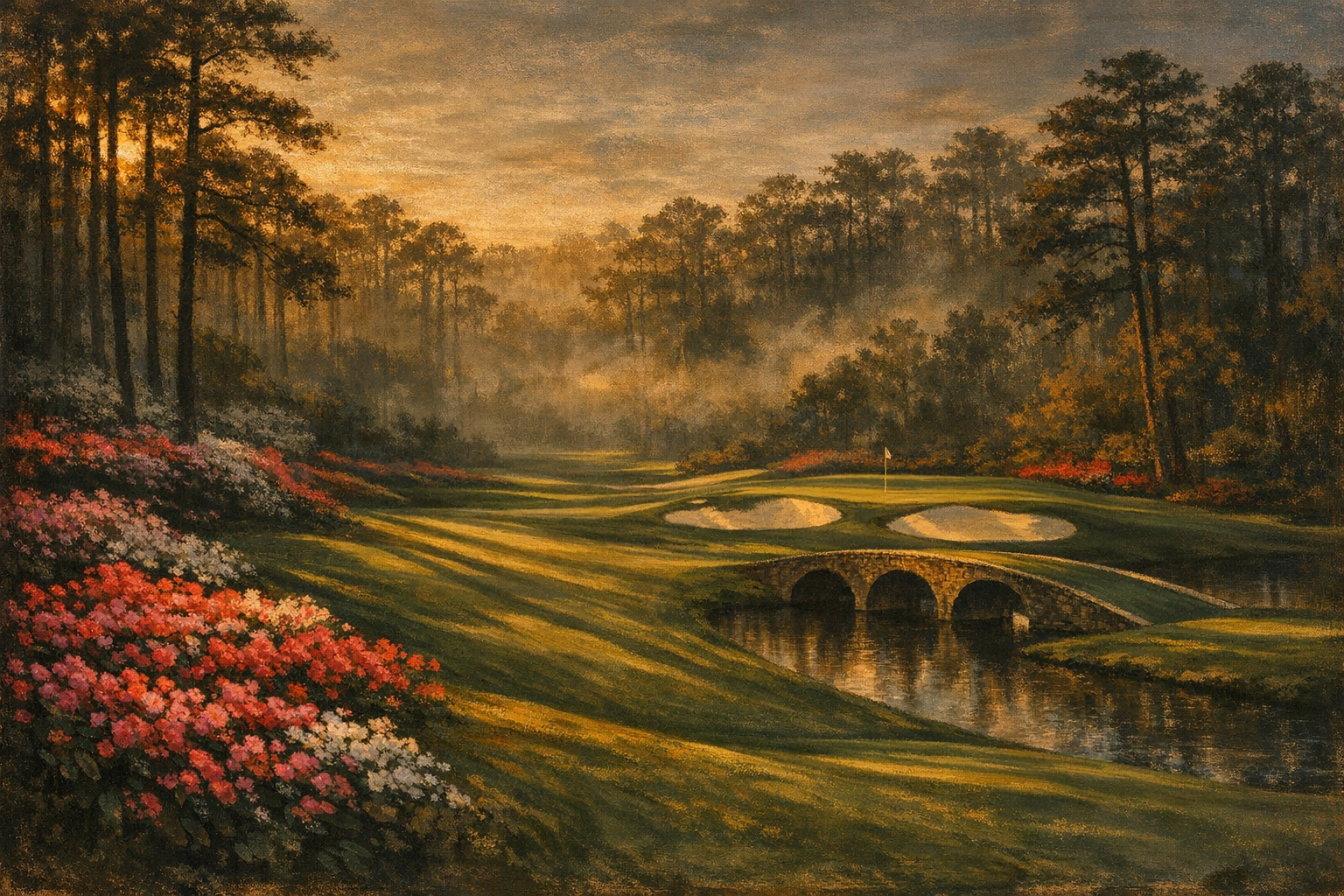
The first thing you notice when you drive into Augusta for Masters week is that the city looks like it’s been swept. Not cleaned, swept. Like somebody took a broom to the whole county and told it to behave.
I’ve made that drive several times in my life. Milledgeville to Augusta is about 94 miles on US-278, which cuts through little Middle Georgia towns that most people have never heard of and never will. Sparta. Warrenton. Thomson. You pass through all of it, and then you drop into Augusta and something shifts. The air feels different. Maybe that’s ridiculous, but I’ve never been able to shake it.
I’ve been inside Augusta National and let me be clear about that. I’m not pretending I’ve never strolled through Amen Corner during a Tuesday practice round. Tickets to that event are so rare they’re practically family heirlooms and I feel lucky to have been able to go several times. Most of the time though, I’ve experienced it like most Georgians do, watching on TV, volume up, debating every shot with whoever’s nearby.
But proximity to something sacred still means something. I grew up 94 miles from the most famous golf course on earth. That’s not nothing.
I watched the Masters every April when I was growing up in Milledgeville. It wasn’t a casual thing. It was a full stop. You didn’t talk during certain putts. You didn’t walk in front of the TV during the back nine on Sunday. The volume went up when they got to 12, and it stayed up. That’s just how it was. I absorbed it the way kids absorb everything, without trying, and now here I am at 55, still doing the exact same thing 40 years later.
The Masters is the one sporting event I have watched every single year of my adult life without exception. Not because I’m a hardcore golfer. I used to play, but I’ve never been obsessive about it. I watch because it is genuinely the most beautiful four days in sports. Saying that out loud sounds like something CBS would script, but it happens to be true. The azaleas, the silence from the crowd, the way Jim Nantz used to narrate it like he was presiding over something holy. Even if you hate golf, the production alone makes it worth watching. That course in full bloom on a Sunday afternoon is one of the prettiest things the South has ever produced.
What I’ve come to understand is that the Masters works because it doesn’t try to be anything it isn’t. Augusta National is one of the most stubbornly unchanging institutions in American sports. They do it the same way every year. Same leaderboard font. Same pimento cheese sandwiches at prices that haven’t moved in decades. Same understated announcing. They made a decision a long time ago about what this tournament was going to be, and they have refused, aggressively, to let the outside world renegotiate it. In a sports landscape that can’t go five minutes without a rebrand, a partnership announcement, or a new broadcast gimmick, Augusta just keeps doing Augusta.
That consistency is the thing I actually respect most, maybe more than the golf itself. It doesn’t try to sell you on how great it is. It just shows up in April, identical to last year, and lets you draw your own conclusions.
I remember watching the 1997 Masters at my house in Milledgeville when Tiger Woods won by twelve shots at 18 under. I was 26 years old. It was one of those Sunday afternoons where you just sit still and watch history happen in real time, and you know while it’s happening that you’ll remember it for the rest of your life. That’s a rare feeling. Sports gives it to you sometimes, but not often.
That was April 1997. My brother William had been gone since December 1995. That spring was still a gray one in a lot of ways. But that Sunday, for a few hours, everything stopped and this 21-year-old kid from Stanford was putting on a clinic that nobody in golf history had ever seen, and it was happening 94 miles from where we both grew up.
Some places just carry weight they didn’t ask for. Augusta is one of them, at least for me.
Every April, when that first shot goes off on Thursday morning and the Georgia pines fill up that television screen, I still feel it. Not excitement exactly. Something quieter than that. Like checking in with something that’s been there your whole life and isn’t going anywhere.
That’s what church feels like too, I guess. You go because you always have. You go because your dad did. You go because it’s April and the azaleas are out and some things are worth honoring whether or not you can fully explain why.