Frank
Frank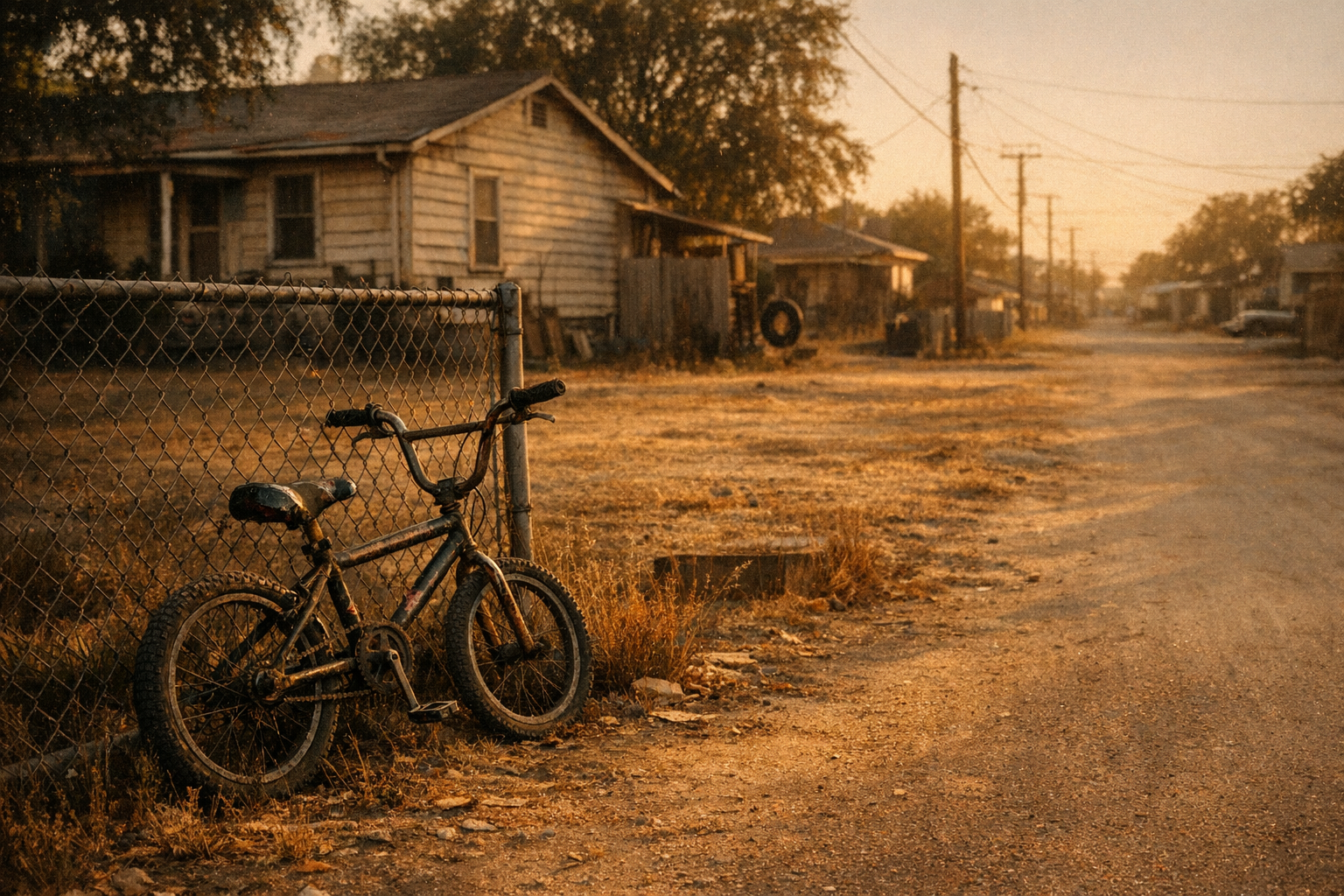
Nobody was home after school. That wasn’t a tragedy. It was just Tuesday.
Lakeside Drive, Milledgeville, Georgia. The late 70s and through most of the 80s. My crew was William, Tom, Derek, Corky, and me. We or (“Me”) called ourselves the Lakeside Drive Mafia, which sounds tougher than it was and about exactly as dumb as you’d expect from a pack of unsupervised kids. But that crew, that neighborhood, that era of absolutely zero adult supervision, taught me things I still use every single day.
Nobody Was Coming to Fix It
You broke your bike, you figured out how to fix your bike. You wanted to build a ramp, you found the wood, you found the nails, you built the ramp, and then you broke your bike again on the ramp you built. The loop was self-contained.
There was no adult standing by to troubleshoot the problem or validate the approach. You either figured it out or you went home and did without. That loop, that specific feeling of being stuck with a problem until you solved it yourself, is the exact same loop I run every time I’m elbow-deep in an Exchange issue at work or fighting with a Docker container at midnight.
I didn’t learn that from a textbook. I learned it from a broken Huffy and nobody answering the phone.
The Pecking Order Was Real and It Was Honest
The neighborhood had a hierarchy, and it wasn’t based on grades or participation trophies. It was based on what you could actually do. Could you ride faster? Could you throw harder? Could you keep your mouth shut when it mattered? Could you back up what you said?
That kind of social calculus sounds brutal, but it was clarifying. You knew where you stood. You knew what you needed to work on. There was no confusion about the score because nobody was softening it for you.
I think about that now, 40-plus years later, working in a large IT organization. The people I respect most are the ones who operate the same way. Say what you mean, know what you don’t know, do the work. The Lakeside Drive curriculum.
William Ran That Crew
My brother William was older, and when he was around, he ran things. Not because he was a bully, but because he was just better at almost everything, and we all knew it. He set the pace. He set the tone.
When he wasn’t around, we still operated like he was watching. That’s what good leadership actually does. It doesn’t need to be present to function. It’s already in the room.
I didn’t have the vocabulary for that at 10 years old. I just knew we didn’t do certain things because William wouldn’t have approved. Turns out that’s a fairly solid ethical framework for a bunch of kids with no adult supervision and too much free time.
What School Actually Was
School was where you went between the real parts of the day. That’s not me romanticizing delinquency. It’s just honest. The classroom gave me information. The neighborhood gave me judgment.
Knowing something and knowing what to do with it are two completely different skills. One gets tested on paper. The other gets tested by a situation that doesn’t care what you scored.
I’ve worked alongside people who could pass every certification exam on the market and still couldn’t diagnose a real problem in front of them. And I’ve worked with people who couldn’t spell “infrastructure” correctly but could fix anything you put in front of them before lunch.
The Real Diploma
There’s no way to put the Latchkey Kid curriculum on a resume. You can’t quantify it. It doesn’t have a certification body or a LinkedIn badge.
But it shaped how I think, how I solve problems, and honestly, how I measure people. The kid who went home and waited for someone to handle it for them? That kid grew into someone I still recognize immediately.
The Lakeside Drive Mafia didn’t produce scholars. But every one of us could figure out what was broken and fix it with what we had. In 2025, I’ll take that over a lot of things with a frame and a wall to hang it on.