Frank
Can you build a car audio system that actually thumps without spending stupid money? Yeah, you can. I know because I did it in a 1990 Honda CRX Si when I was a broke college student in Milledgeville, and that little car would rattle the mirrors off the car next to you at a red light.
Here’s what I think people get wrong about budget car audio: they confuse cheap with smart. Cheap is grabbing whatever’s on the clearance rack at Walmart. Smart is understanding which parts of the signal chain matter most, stretching your dollars where they count, and not being embarrassed to buy second-hand on the components that can survive it.
I had World Hi-Fi in Milledgeville do the install. Good shop. The head unit I brought in was a Sony piece of junk that would skip every single time the bass hit. Not occasionally. Every time. I actually sent it off to get repaired and it came back doing the exact same thing. At that point I accepted my fate and just lived with it. Broke ass college student priorities, you know. I needed the speakers and the amps working. The head unit was a casualty I decided to absorb.
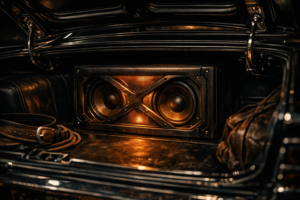
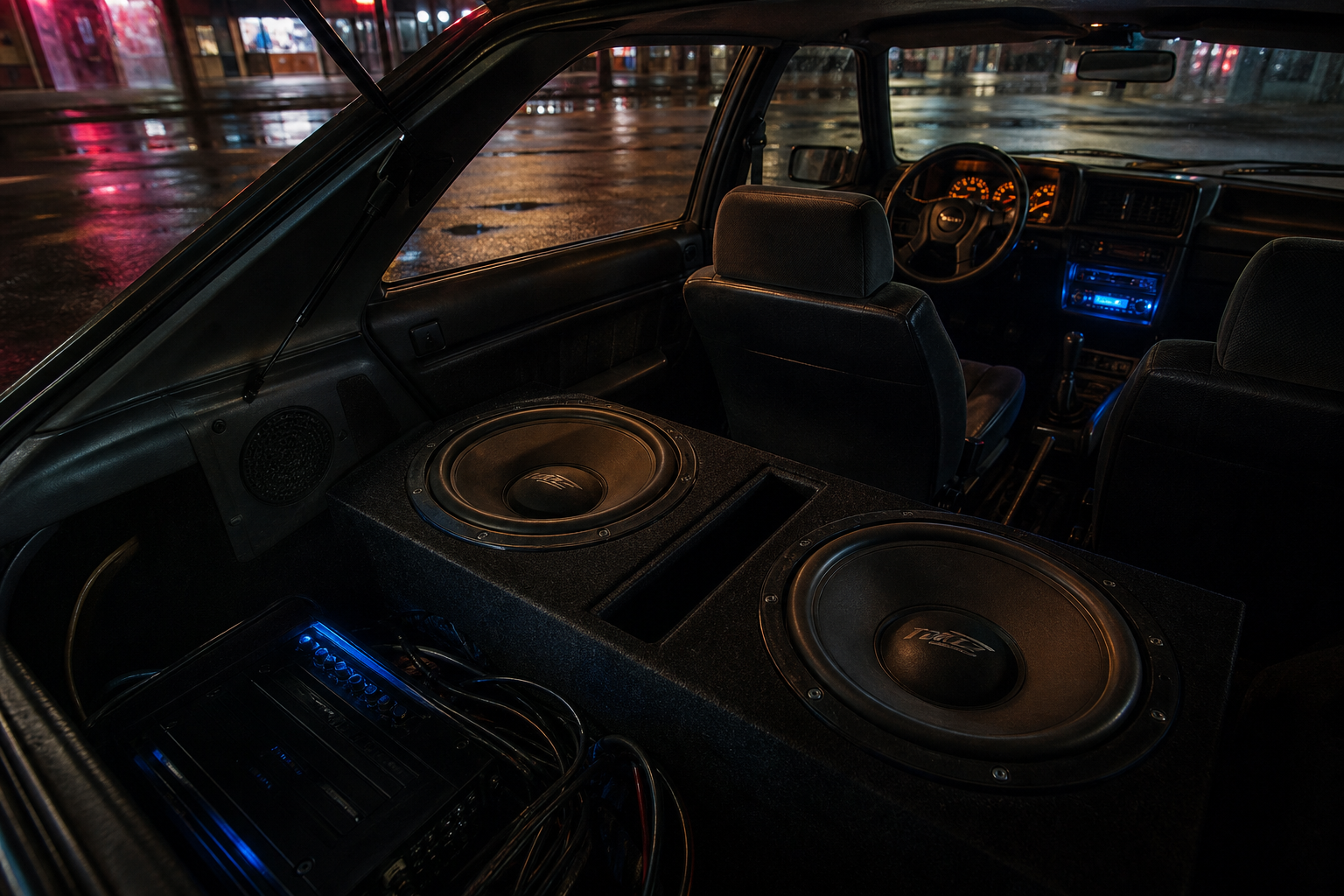
The sub setup was two Stillwater Kicker 12-inch woofers in a custom-built box. Kicker was already a name you could trust back then, and those woofers in a properly ported enclosure in that tiny hatchback body were absolutely absurd. The CRX had almost no interior volume, which sounds like a problem until you realize it means every cubic foot of air pressure had nowhere to go but straight at your spine. It was effective. Hilariously effective.
For power, I ran a Coustic 380 on the subs, pushing 250 watts RMS. The Coustic brand got absorbed by MTX eventually, but back then they made solid mid-tier amplifiers and the 380 was a workhorse. Bought it second-hand, which cut the cost considerably and gave me zero problems. The 6×9 JBL three-ways that sat in the speaker bays behind the seats ran off a Coustic 120. That position in a CRX was perfect, by the way. Right behind your head. Those JBLs filled in the midrange beautifully and gave the whole system depth it wouldn’t have had otherwise.
The front stage was Pioneer 2-way 6.5-inch speakers in the doors, plus tweets that I tucked into the air vents in the dash. CRX door panels are not exactly flush with real estate, so the vent slots made use of space that would have otherwise gone to waste. The whole front stage ran through a Precision Power PPI 2030M, which was genuinely a step above everything else in that system. PPI had a reputation back then for clean, musical power and that amp earned it. All of it was managed through a Coustic XM-3 crossover, which kept everything sorted and prevented the low end from frying the small stuff.
The whole system had no business sounding as good as it did. That’s the honest assessment. The head unit was garbage, the amps were budget or second-hand, and the car was basically a roller skate. But the fundamentals were right: good woofers, a proper enclosure, clean power distribution, and a crossover that actually did its job. Those four things are the whole game. Everything else is cosmetic.
My brain being wired the way it is, I probably spent more time obsessing over the crossover settings and speaker placement than any reasonable person would. When something captures my attention, I am all the way in until I either figure it out or break it trying. That system got the full treatment.
What actually killed systems back then, and kills budget builds today, is ignoring the signal chain. People drop $400 on a subwoofer and then run it off a cheap inline amp with no crossover, feeding it a clipped signal from a head unit maxed out at 80% volume. You end up with distorted bass that sounds like a cardboard box full of bees, and you’ve blown past what the speaker can handle thermally before you ever got clean output from it. The woofer takes the blame but the amp and the signal were the real problem.
The other thing people skip is the box. A subwoofer in a bad enclosure sounds like garbage regardless of the brand name on the cone. Getting that custom-built box made specifically for those Kicker 12s in that specific hatch space was worth every dollar. World Hi-Fi understood that. They didn’t just throw woofers in a generic ported box and call it a day.
Budget car audio still works exactly the same way in 2025 that it did in 1990. The brands have shuffled. Coustic is gone. Some of the mid-tier players from back then got bought out or just disappeared. But the physics haven’t changed. A correctly built sealed or ported enclosure, clean RMS power matched to the driver’s ratings, and a crossover that keeps the wrong frequencies away from the wrong speakers, that’s still the whole formula. You can do it for less than you think. You just have to understand that the box and the power are non-negotiable, and the head unit is the last thing to spend real money on.
That little CRX would thump. I knew it. And the skipping Sony head unit was just part of the experience.