Frank

Context & Background
Psalm 55 is a prayer of lament, attributed to David, in which the psalmist pours out distress over betrayal and enmity. The opening verses describe deep fear and turmoil; the speaker is surrounded by wickedness and violence, and the pain is intensified by treachery from someone close—perhaps a companion or counselor (verses 12-14). Throughout the psalm, David alternates between complaint and confidence, expressing both his anguish and his trust in God’s deliverance.
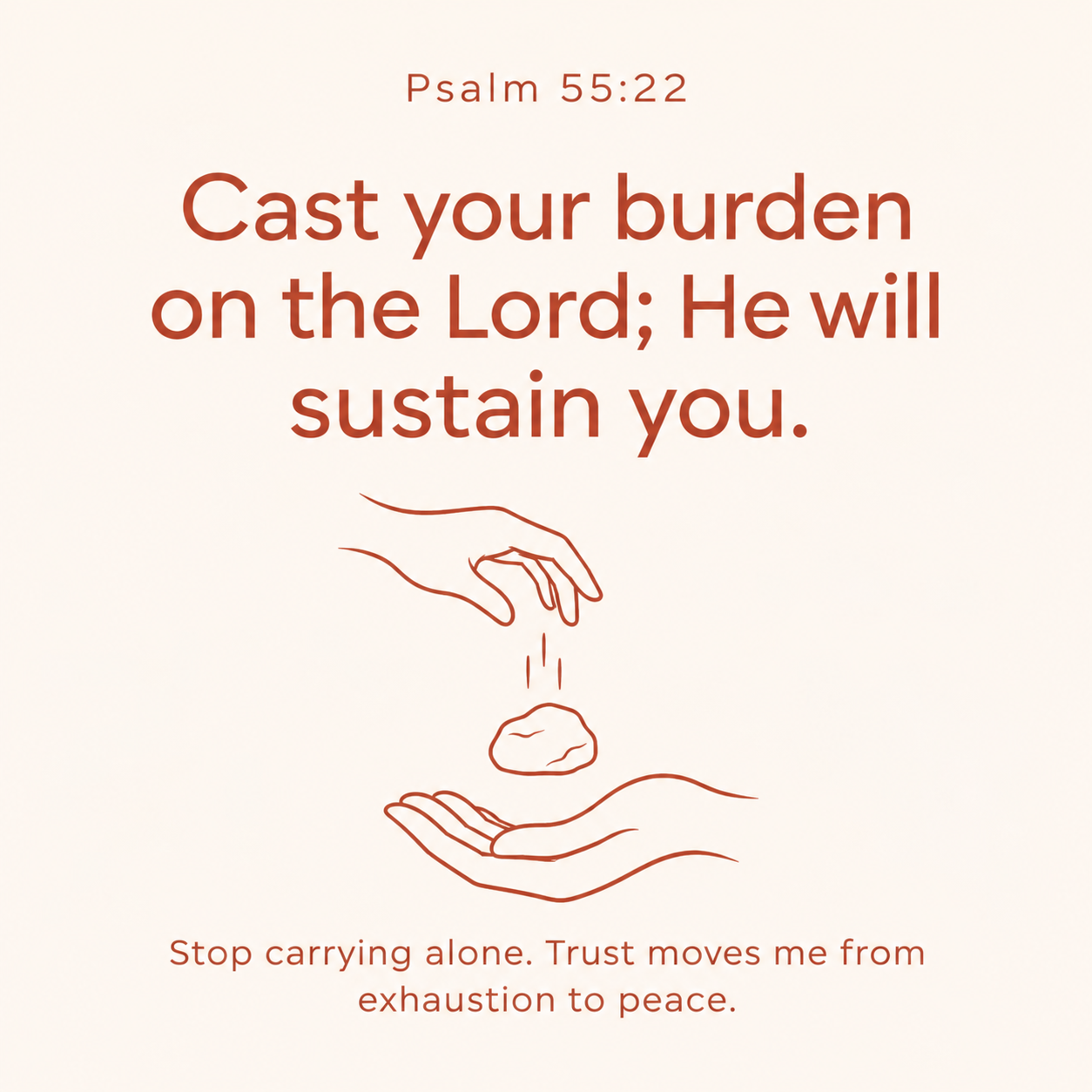
Verse 22 stands at the turning point, where the psalmist moves from describing his torment toward a resolution of faith. The call to cast one’s burden upon the Lord represents a deliberate act of trust, not a passive surrender, but an active transfer of anxiety to the one who is able to carry it. The promise that follows—that God shall sustain the righteous and never permit them to be moved—anchors the whole prayer in God’s faithfulness rather than in the psalmist’s changing circumstances.
Cross References
“Casting all your care upon him; for he careth for you” (1 Peter 5:7) — Peter applies this very principle to believers under persecution, echoing the psalmist’s invitation to release anxiety to God’s keeping.
“A prudent man foreseeth the evil, and hideth himself: but the simple pass on, and are punished” (Proverbs 22:3) — Contrasts with verse 22; while prudence requires wise action, ultimate security rests not in our efforts alone but in God’s sustenance.
“Be careful for nothing; but in every thing by prayer and supplication with thanksgiving let your requests be made known unto God: And the peace of God, which passeth all understanding, shall keep your hearts and your minds through Christ Jesus” (Philippians 4:6-7) — Paul teaches the same principle: bring burdens to God in prayer, and His peace will guard what matters most.
“The LORD is good, a strong hold in the day of trouble; and he knoweth them that trust in him” (Nahum 1:7) — Affirms God’s character as a refuge for those who turn their burdens toward Him.
Reflection Questions
What burdens are you currently carrying that you have not yet consciously laid at the feet of God? How might genuine trust look different from merely speaking words of faith?
The psalmist moved from deep fear to confident prayer within the same composition. What do you observe about the relationship between honest lament and strengthened faith—can sorrow and trust coexist?
When the verse promises that God “shall never suffer the righteous to be moved,” what does being “moved” mean to you? Does it refer to physical safety, spiritual stability, or something else?
How does the act of casting a burden differ from solving a problem? When is it appropriate to take action, and when is it most important to trust?
Prayer Prompt
O God, grant me the courage to lay my heavy cares before Thee, trusting that Thou art both able and willing to sustain me. Where I have grown weary from carrying what was never mine to bear alone, teach me to release my grip and rest upon Thy faithfulness. Keep my heart steadfast in Thee, that no circumstance may shake the rock upon which I stand. In the name of Jesus, Amen.