Frank
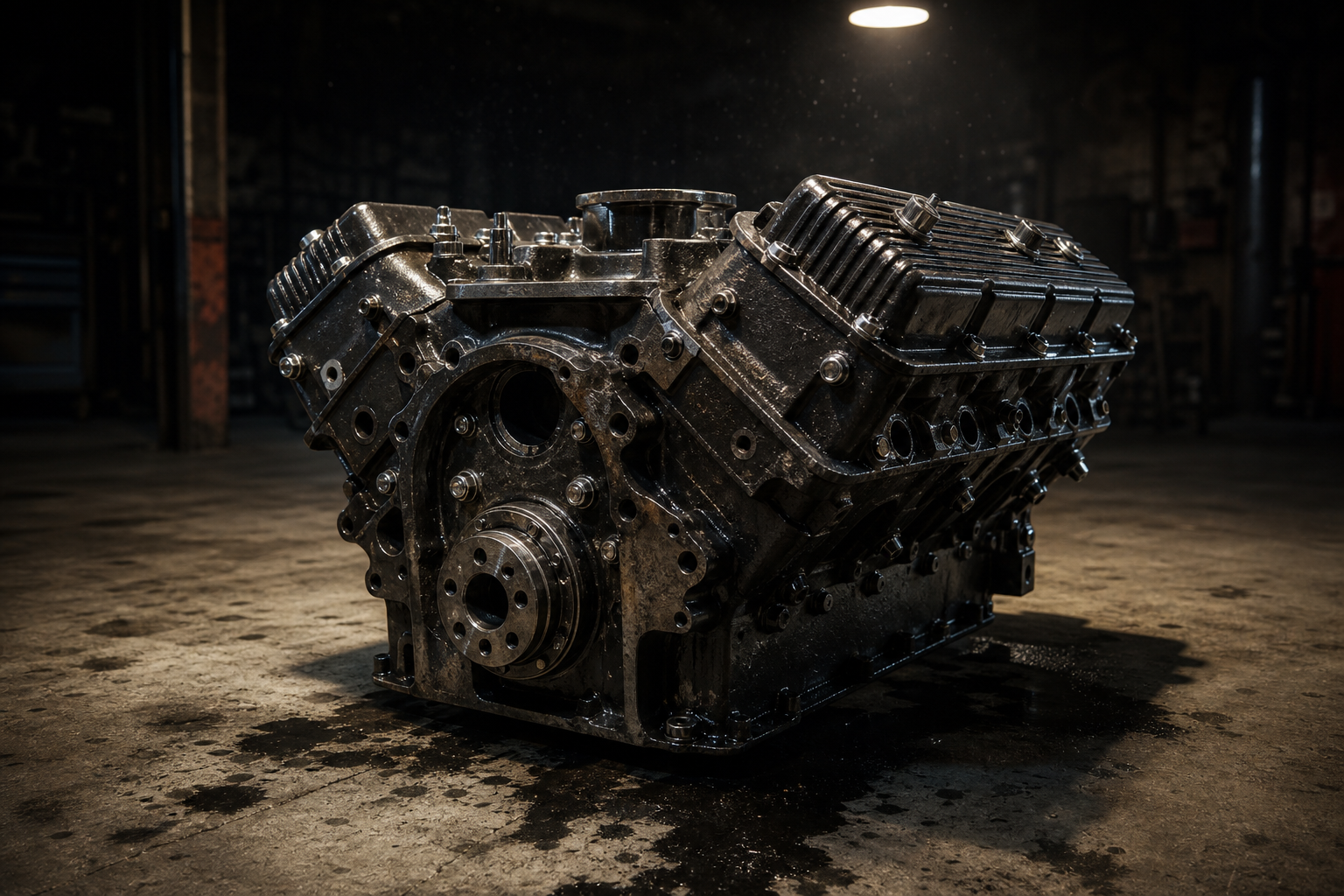
The FE 427 wasn't supposed to be a street engine, but somebody forgot to tell the guys buying Fairlanes.
The Story
Ford built the 427 FE for one reason: Le Mans. That's it. They wanted to embarrass Ferrari on a 24-hour endurance circuit in France, and they needed an engine that could take a beating at high RPM for a full day without grenading itself. So they built something almost absurdly overbuilt for a passenger car. Thick walls. Cross-bolt main caps. A bottom end so stiff it barely flexed under load. It was industrial equipment wearing a car costume.
Then some Ford dealers started dropping it into Fairlanes.
The 427 Fairlane wasn't advertised. Ford never ran a TV spot for it. You had to know somebody, or know where to look. These cars showed up at dragstrips in 1966 weighing almost nothing, with an engine built to survive Le Mans crammed into a mid-size body. They ran the quarter mile in the low 11s, which was not supposed to be possible in a production-based car that could also carry your groceries. The drag racing world didn't know what to do with them.
What Ford accidentally discovered is that building something for a harder job than it'll ever face makes it nearly unbeatable in the job it ends up doing. The 427 FE didn't dominate the strip because Ford engineered a drag engine. It dominated because they over-engineered a track engine and pointed it somewhere easier.
The Hidden Principle
Over-building for the wrong context is one of the most underrated competitive advantages in existence. When you design something to survive the worst possible environment, dropping it into a normal one makes it look almost supernatural. The 427 wasn't faster than purpose-built drag engines on paper. It just didn't break. And not breaking when everyone else is blowing motors is basically the same thing as winning.
There's a principle buried in there that most people skip right past. Constraints from a harder problem, applied to an easier one, don't just survive. They dominate.
What This Means Today
Y'all see this play out constantly in tech, lifting, cooking, business, all of it. The person who trained for a marathon doesn't just finish a 10K. They jog it. The chef who learned in a Michelin kitchen doesn't just cook a good burger. They cook the best burger you've ever had, because they're applying a higher standard to a lower-stakes job. The software engineer who built systems for NASA-level reliability writes home automation scripts that never crash.
The mistake people make is thinking they need to match the tool to the task exactly. Sometimes the right move is to bring something catastrophically overqualified to a fight nobody expected you to win.
Build for Le Mans. Race everywhere else.