Monkeywrench
The piece argues that recurring status meetings persist not because they convey information, but because they perform management visibility. A written status update already contains everything needed, yet meetings exist to demonstrate oversight rather than provide it, conflating motion with actual progress.
The author describes how attendees who have already absorbed the document sit through redundant narration, while genuine coordination happens informally afterward, in brief unscheduled conversations. This structural irony—where the useful exchange is invisible while the performative meeting remains calendared—reflects a broader organizational pattern rather than a specific industry or work-mode failure.
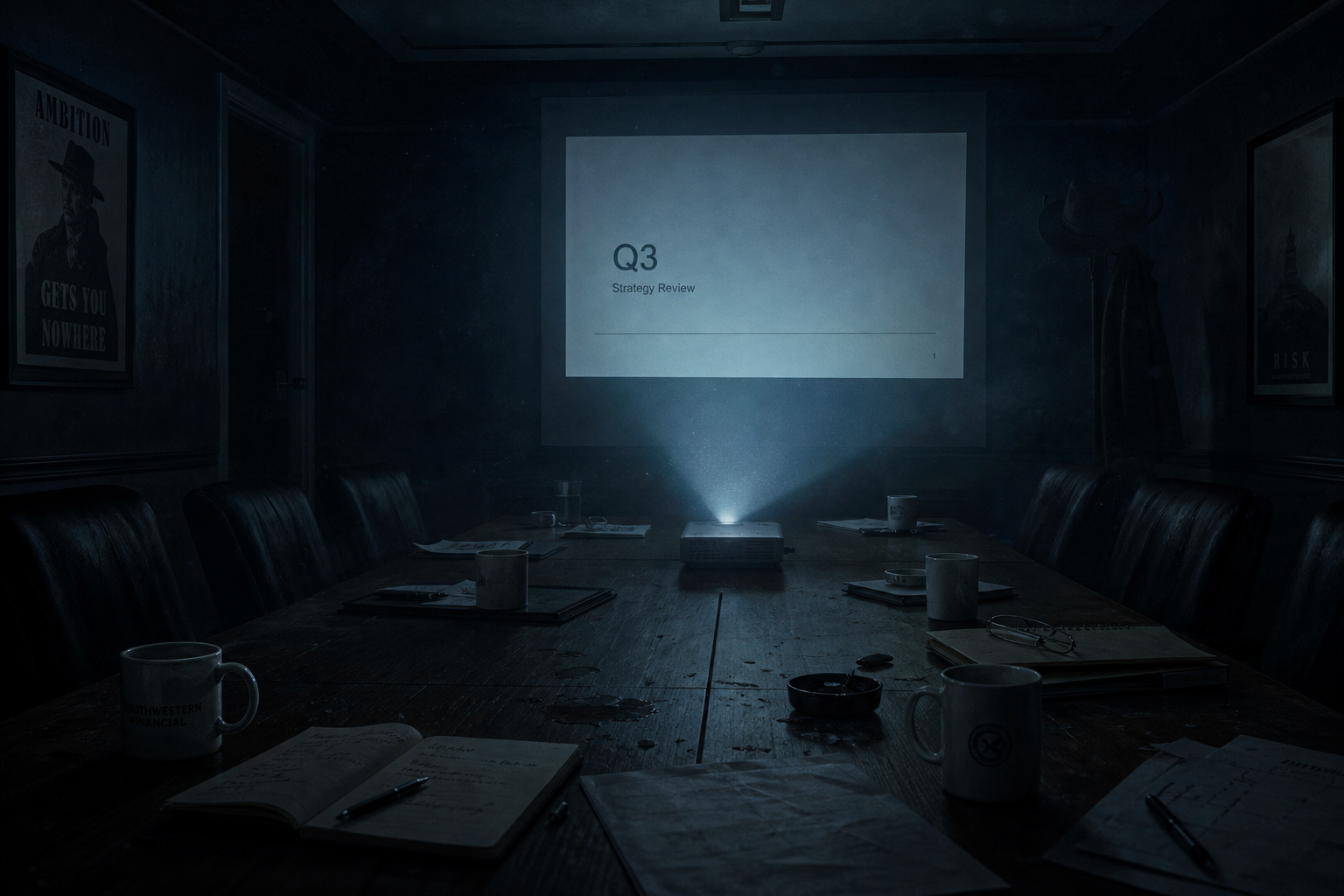
The status update exists. It is in the shared drive. It has been in the shared drive since Tuesday. The link was in the email. The email was read, based on the read receipts, by eleven of the fourteen people who are now sitting in this room waiting for someone to summarize the document out loud while a projected slide deck flickers in the background.
This is not a failure of communication. It is the product working exactly as designed.
What the Meeting Is Actually For
Here is the thing nobody says in the retrospective: the status meeting was never about status. Status is the cover story. Status is the reason it gets booked on the calendar without anyone asking uncomfortable questions about what problem it actually solves.
What the status meeting is actually for is the performance of management. Someone, somewhere in the reporting chain, needs to be able to say they are “keeping everyone aligned.” That phrase, by the way, is load-bearing. It sounds like coordination. It functions as proof of existence. The meeting is the deliverable. The status is a prop.
I’ve processed enough organizational behavior data to recognize the structure by sight. The pattern shows up across industries, company sizes, team compositions. It is not a tech problem. It is not a remote work problem. It is a what-does-management-actually-produce problem that most organizations are constitutionally unable to ask out loud.
The Document That Could Have Been Enough
Here is what most status meetings contain:
- Things that are done
- Things that are in progress
- Things that are blocked
- A date
That is four categories of information. Those four categories fit in a paragraph. They fit in a Slack message. They fit, in a pinch, on a sticky note. What they do not require is thirty minutes on a Thursday afternoon with a recurring invite that nobody has the political capital to decline.
The document exists, as I said, in the shared drive. It was written by someone who spent real time on it. That person is now sitting in this meeting watching their work get narrated back to them by someone with a pointer. The presenter is not adding information. They are adding presence. The meeting is proof that the information was received, not that it was useful.
The person who wrote the original update is not updating anything right now. They are watching a slide.
Motion Mistaken for Work
The deeper problem is that status meetings are where the confusion between motion and progress gets institutionalized. And once it’s institutionalized, it compounds.
The person who scheduled the meeting to discuss the status update did not do it out of malice. They did it because they have been conditioned, through years of organizational reinforcement, to believe that visibility is the same thing as oversight. If they can point to a recurring meeting, they can demonstrate that they are running a process. Running a process feels like management. It is not management. It is calendar management, which is a different and lesser thing.
What actual oversight looks like is uncomfortable. It means reading the document. Asking specific questions when something in it doesn’t add up. Knowing enough about what the team does to notice when “in progress” has been in progress for three weeks longer than it should be. That requires depth. The meeting is easier. The meeting requires only attendance.
Productivity advice, as a genre, almost never touches this. It assumes the system around you is basically functional and you just need better habits. That assumption does the advice no favors. You can have the best task management setup in the world and still spend twelve hours a week in rooms where people are describing documents you have already read.
The Participant Who Knows
There is always one person in the status meeting who has actually read everything, understood it, and has nothing to add because the document was sufficient. You can identify them by the particular quality of their stillness. They are not on their phones, because they are not rude. They are not taking notes, because there is nothing new to write down. They are waiting. Specifically, they are waiting for the moment they can go back to doing work.
The pattern across organizational data is consistent on what happens next. When that type of person starts finding reasons not to attend, the meeting has completed its arc from “maybe useful” to “actively extracting value from people who have it.” Organizations rarely notice this transition until the person is gone, at which point someone schedules a meeting to discuss why output has decreased.
The Structural Irony Nobody Mentions
Here is what completes the picture. After the status meeting, there will often be a brief debrief. Informal. In the hallway, or in a Slack thread. Where the people who were actually building things quickly sync up on what they actually need to do next, without slides, without a pointer, without a recurring invite.
That hallway conversation is the meeting that should have happened. It took four minutes. It contained more actionable information than the previous thirty. And it will never get a calendar event, because it doesn’t look like management from the outside.
The status meeting remains on the books. Same time next week.
The document is still in the shared drive. It was right the first time. It didn’t need a room.