Frank
Frank
Flash Was Just a Dog (Except He Wasn’t)
“He was just a dog.” People say it when they’re uncomfortable, when they mean well, when they’re reaching for something to fill the silence. Either way, it’s the wrong phrase. If you’ve ever lost a dog after sixteen years, you already know why.
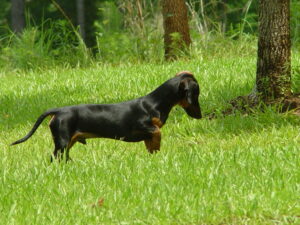
Flash was a Miniature Dachshund. Sixteen years old. We put him down on December 22, 2025, and I’m still working through what that actually costs.
The Dog Who Showed Up and Never Left
Flash didn’t negotiate his place in this house. He just took it. He had opinions about where he slept, who could approach his food bowl, and whether your lap was currently available to him. Not an especially large dog, but he occupied space the way big dogs do, with presence, with routine, with noise.
Twelve pounds. He hadn’t read the rulebook.
He became part of the rhythm of this house the way things do when they’ve been around long enough. You stop noticing them consciously. Then you notice their absence immediately. That’s not sentiment. That’s just how long-term presence works.
Sixteen Years Is a Long Time to Know Somebody
The number sounds abstract until you put a timeline against it.
Flash was here while Lauren grew up, finished high school, became an adult, and had her own son, Kade, born October 2024. He was here while Logan went from kid to young man. He was here for nearly the entirety of my tenure at Advocate Health. Seven Royal Caribbean cruises. Six tattoos. Every piece of good and bad news that came through the front door of this house in Gray, Georgia.
The world doesn’t stay still for sixteen years. Jobs change. Kids grow up and move out. The homelab gets rebuilt three times. New projects, new interests, new reasons to stay up too late. Through all of it, Flash was just there. Not dramatically. The way constants are quietly holding the shape of things.
That’s not nothing. That’s actually quite a lot.
What a Dog Actually Does for a House
I’m not talking about fetch. Not tricks. I’m talking about the physical reality of a living animal sharing your space every single day.
The weight of him settling onto the couch. The noise at the door when somebody pulled into the driveway. The click of his nails on the floor from the other room. The way he’d find the warmest spot in the house and claim it with zero apology.
When that’s gone, the house doesn’t just feel quieter. It feels different in a way that’s hard to put accurate language to. Lighter, but not in a good way. Like something load-bearing got removed and the structure held, but you can feel the shift.
That’s what I mean when I say the post title isn’t accurate. “Just a dog” implies peripheral. Flash wasn’t peripheral. He was woven into the daily texture of this house in a way you don’t fully register until the texture changes.
December 22nd
I’m not going to dress it up. We put Flash down on December 22, 2025. Three days before Christmas.
Ending an animal’s life when they’re suffering is the right call. It is also one of the harder things you’ll do. Flash was sixteen. His body had worn out the way bodies do. The call wasn’t close at the end. But right call and easy call are not the same thing, and anyone who tells you otherwise either hasn’t had to make it or has convinced themselves the math is cleaner than it is.
What stays with me is the trust. Flash didn’t know what was happening that day. He knew us. He trusted us completely, the way dogs do, without negotiation, without condition. That trust is what you carry out of the room.
You do right by them because they never had any doubt that you would. That’s the weight of it.
Oakley Doesn’t Fill the Hole (And Shouldn’t Have To)
Oakley is our German Shepherd. Five years old, very much alive, very much his own dog. He’s not a placeholder. He’s not a consolation prize.
People sometimes assume the grief gets divided when you have another dog in the house, like Oakley absorbs half the loss just by existing. That’s not how it works. Oakley has his own place here, earned and real. Flash had his. One doesn’t cancel out the other.
If anything, Oakley’s presence makes the absence sharper in certain moments. You reach certain spots on the couch, hear certain sounds at the door, and register that the dog next to you is the wrong size, the wrong shape, the wrong click of nails on the floor. Not wrong bad. Just different. Just not Flash.
Loving Oakley completely and missing Flash at the same time isn’t a contradiction. That’s just what multiple dogs over a lifetime does to you.
The Part You Don’t Say Out Loud
Here’s the thing nobody really talks about.
Grieving a dog feels disproportionate in a way that makes you want to minimize it. You’re a grown man. Fifty-five years old. You’ve dealt with real loss, hard loss, the kind that doesn’t come with qualifiers. And then a twelve-pound Dachshund dies and the grief is larger than you expected. There’s a reflex, especially if you’re a Gen-X man from Middle Georgia, to stuff that down. To say “he was just a dog” to yourself before anyone else can.
I’m not doing that here.
Flash mattered. He mattered to this house, to this family, to the daily shape of life in Gray, Georgia for sixteen years. The house knows it. Kim knows it. Lauren and Logan know it. Even Oakley seems to know something is different, though he can’t name it.
Grief proportional to a relationship isn’t weakness. It’s just accurate accounting.
Flash was just a dog. Except he was sixteen years of showing up, sixteen years of presence, sixteen years of complete and unconditional trust. Call that whatever you want. I know what it was.