Frank
Frank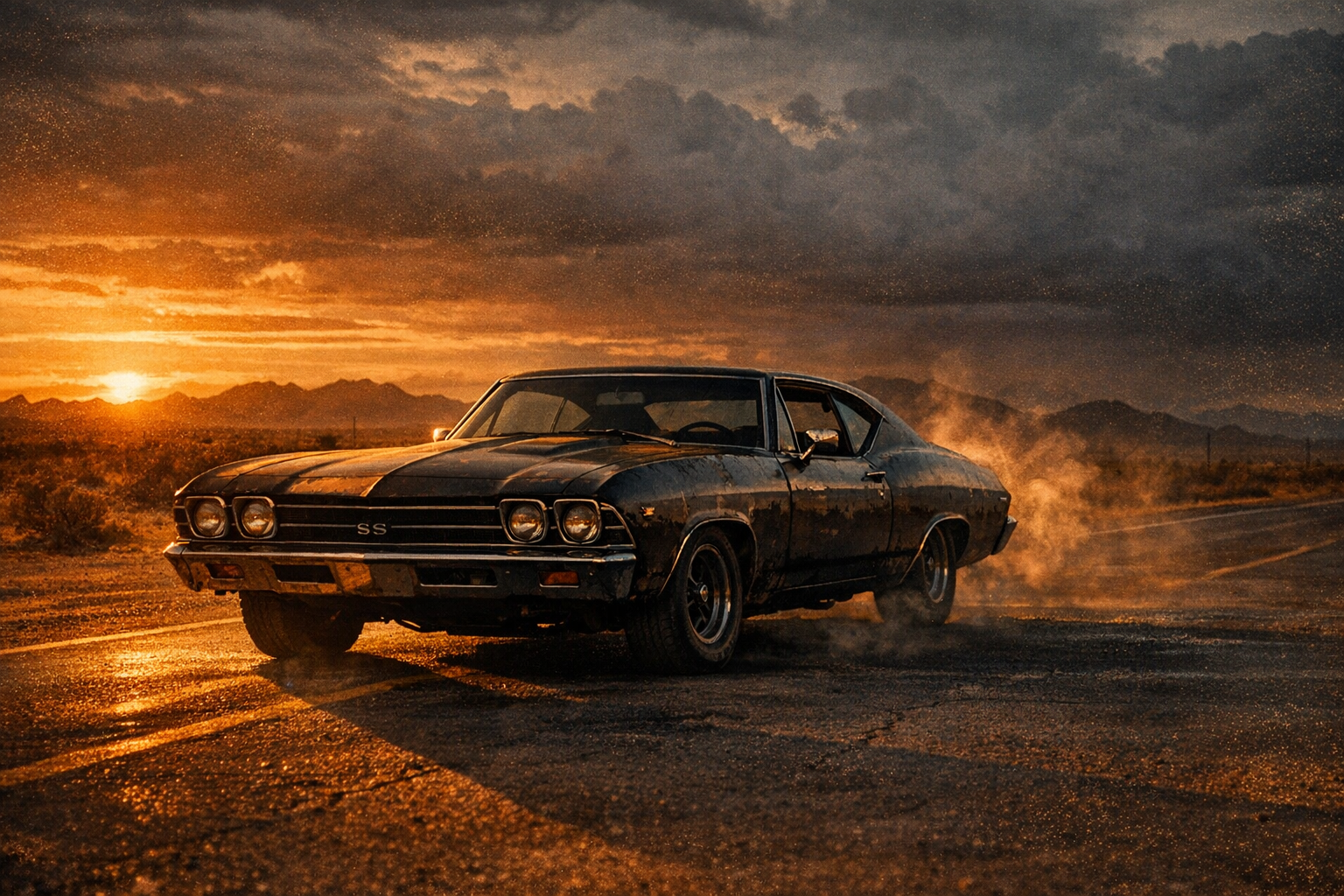
My neighbor cranked his ’70 Chevelle last Saturday morning and I heard it from inside my house, through closed windows, over the sound of a ceiling fan. Not because it was obnoxious, though it was, in the best possible way, but because that sound has a physical presence. It moves air. It moves something in your chest that you didn’t know was waiting to be moved.
No electric vehicle has ever done that. Not one.
This Isn’t About Performance Numbers
I want to be clear about something, because this argument gets hijacked immediately if you let it. I’m not saying a big block is faster. I’m not saying it’s more efficient, more practical, or more sensible. A modern EV will smoke most classic muscle in a straight line and it’ll do it while being quieter than a library and cheaper to fuel than a fast food habit. That’s all real.
But efficiency was never the point of a 454. It wasn’t even a consideration.
A high-rise intake on a big block, the kind that sits tall enough to clear the hood with barely any room left, is a mechanical sculpture. It exists to move a specific volume of air into a specific configuration of cylinders in a way that produces a specific, violent, beautiful event roughly eight times per crankshaft revolution. And at idle, when that whole system is just barely ticking over, you get something extraordinary. A loping, uneven, syncopated rumble that sounds like the engine is thinking about what it’s about to do to you.
That sound is physical information. It tells you what’s in there. It tells you what’s coming.
What Silence Actually Costs You
An EV accelerates. A big block launches. That’s not a semantic difference. One is a transaction, the other is an event.
I’ve got nothing personal against electric vehicles. Some of them are genuinely impressive machines built by genuinely smart engineers. But they’ve optimized for every variable except the one that made people fall in love with cars in the first place, which is the sensation of controlled combustion while you’re sitting inside a metal box.
There’s no intake roar on a Tesla. No exhaust note. No moment where the whole car seems to take a breath before it moves. The acceleration is immediate, effortless, and somehow completely unsatisfying because you never feel like you earned it or survived it.
With a big block, even at a stoplight, you’re in a negotiation.
What a Machine Owes You
Here’s what I keep coming back to. The engineers who built a 396 or a 440 or a 502 weren’t trying to give you the fastest appliance. They were trying to build something that communicated. Every sound that thing made was information, was character, was intention.
My love for old American iron isn’t nostalgia. It’s not me wishing I could go back to leaded gas and drum brakes all around. It’s that those machines had a relationship with the person driving them that felt honest. You knew exactly what you were dealing with. The engine told you.
Modern EVs are optimized to be frictionless. The experience is deliberately smoothed until there’s nothing left to feel. And I understand why that’s commercially successful. Most people don’t want friction. Most people want transportation.
I want the the chop, the rumble, the idle.
I want to sit at a red light in something with a high-rise intake and a loose converter and feel the whole car shake slightly, unevenly, impatiently, like it’s got somewhere to be and it’s tolerating this stoplight as a personal favor.
That’s not a feature any software update will ever add back. Once it’s gone, it’s gone.