Frank
Frank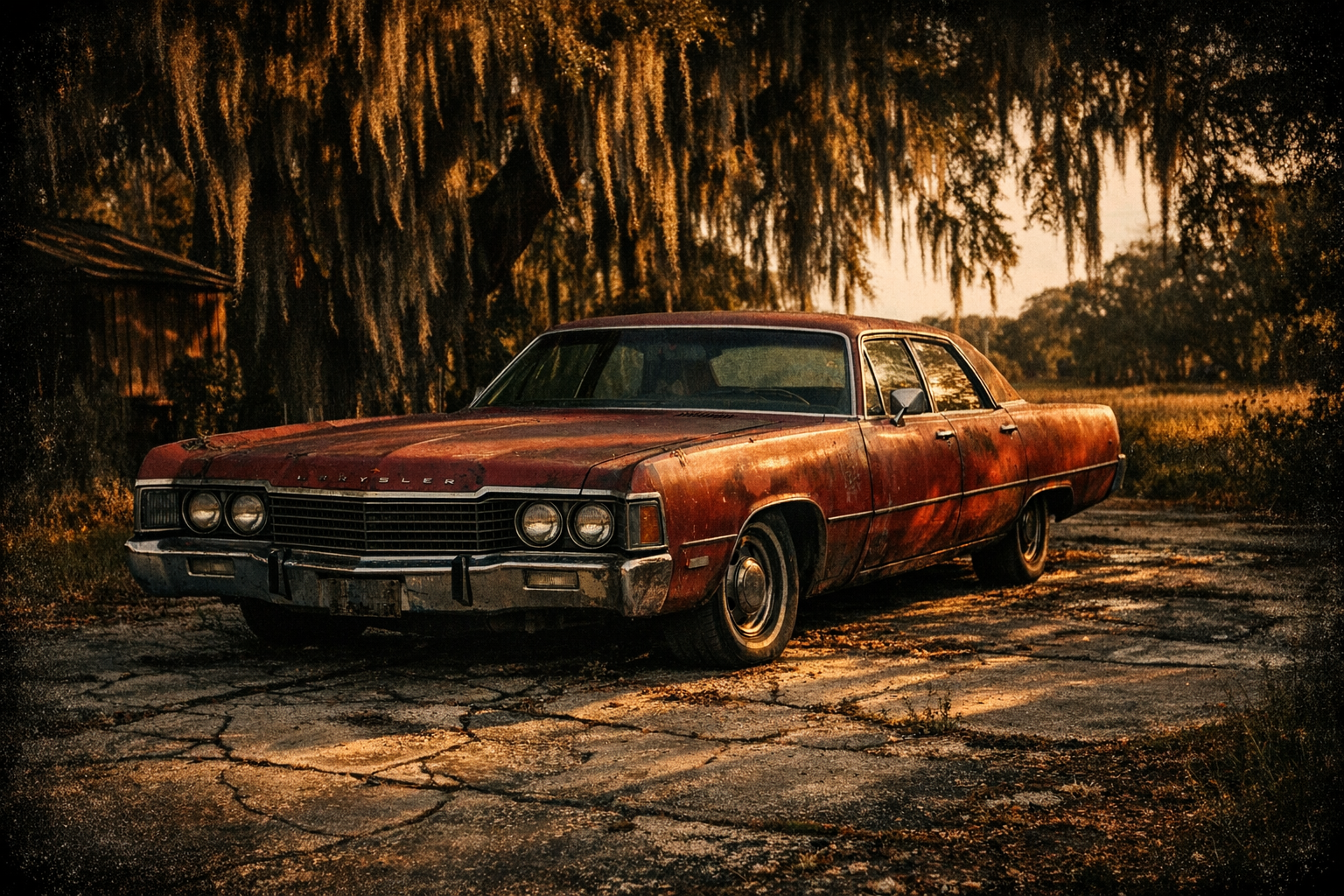
Nobody at Chrysler sat down in the late 1960s and said, “Let’s build a legend.” They sat down and said, “Let’s build something a guy making foreman wages can actually afford.” That distinction matters more than people realize. It’s the reason the Newport is still worth talking about fifty years later while a lot of its fancier siblings have faded into collector footnotes.
The Newport didn’t earn its reputation by trying. It earned it by not bothering to try at all.
What the Newport Actually Was (And What It Wasn’t)
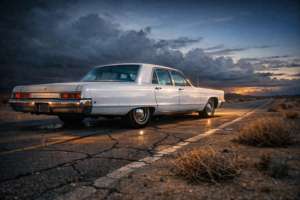
Let’s be clear. The Newport was Chrysler’s entry-level full-size car. It sat below the 300 and well below the New Yorker. It was the car you bought when you wanted a Chrysler, but your wallet had opinions about which one.
That sounds like a knock. It isn’t.
The Newport was honest about what it was. It didn’t pretend to be a 300. It didn’t compete with the New Yorker on prestige. It just offered you a big, solid, American automobile at a price that didn’t require you to explain yourself to your wife for six months.
That honesty is the foundation everything else gets built on.
Detroit’s Accidental Formula – When Less Becomes More
Here’s the thing about stripping away the top-tier trim: sometimes you strip away the noise, too.
The Newport ran the same basic body architecture as the flagship Chrysler models. Big car. Wide stance. Proper American proportions. But it didn’t get loaded down with layered chrome and excess ornamentation that turned some of the luxury variants into rolling exercises in too-much. The Newport was cleaner. Not stripped bare — uncluttered in a way that let the actual design breathe.
That pattern shows up all over classic American iron. The base-model Chevelles. The plain-jane Fords the factory didn’t waste much effort on. The ones built without ego, without a marketing brief attached to every body line, often aged better than the ones trying to announce themselves to everyone in the parking lot.
The Newport fits that mold. It was designed to exist, not to impress. That restraint reads as confidence now in a way that the overwrought stuff simply doesn’t.
The Street-Level Reality – Who Actually Drove These Things?
I grew up in Middle Georgia. Baldwin County. The cars in people’s driveways out there weren’t exotic, but they were serious. Full-size American iron was just part of life.
Newports showed up at church on Sunday and hauled whatever needed hauling on Monday. They belonged to the guy who ran a small business, worked a trade, or farmed a piece of land. He needed something dependable, something with room for the family, and something he didn’t have to baby. The Newport fit that brief without complaint.
That working-man context matters because it shaped what the Newport became in the culture. It wasn’t a showroom trophy. It was a tool that happened to look like a car worth respecting. People drove them hard and they held together. That reputation doesn’t come from a press release. It comes from a hundred thousand driveways across the South and Midwest where somebody put real miles on one and didn’t regret it.
The cars that show up in those stories stick around in the memory differently than the ones always meant to be admired from a safe distance.
Why Cool Can’t Be Engineered – It Has to Happen to You
This is where I want to make a real argument, not just tell old car stories.
Chrysler did not engineer the Newport’s cultural cachet. They couldn’t have. Cool isn’t a spec sheet item. You can’t order it from the supplier and bolt it on in the third quarter.
What Chrysler actually did was build a straightforward car without pretension, put it in front of real people, and let time do the rest. The Newport’s reputation is entirely downstream of that. The factory had nothing to do with it.
Contrast that with what the industry does now. Every manufacturer with a heritage model line is running “legacy editions” and “heritage badging” and commissioning design language meant to evoke nostalgia for eras they’re trying to buy into. It’s transparent. Gearheads can smell it instantly.
The Newport never needed a campaign. No “Born from the working man” marketing push. It just existed, did its job, and let fifty years of reality build the case for it. That’s not a strategy. That’s what happens when you build something genuine and leave it alone.
The Collector Reckoning – Why the Market Finally Noticed
Newport values have been climbing. If you’ve been watching the barn find and auction circuits over the last several years, you already know this.
Part of it is simple scarcity. Survivors get rarer every year. Part of it is that the generation of guys who grew up seeing these cars in their neighborhoods or in their parents’ driveways, are now in their fifties and sixties and have the resources to chase what they remember. I understand that impulse completely.
But something else is happening too. People are tired of looking at modern crossovers. Tired of vehicles that look like they were designed by algorithm to offend no one. A well-kept Newport parked in a driveway in 2025 still stops people. It has presence in a way that a modern vehicle simply doesn’t, regardless of the sticker price.
Scarcity and nostalgia are accelerants. The underlying reason the market noticed is that the car genuinely deserves attention. The market is just catching up to what the driveways already knew.
What the Newport Teaches Us About American Car Culture
The cars that last in the culture aren’t always the quickest or the most expensive. Sometimes it’s the honest ones that endure.
The Newport wasn’t built to be a legend. It was built to be useful, accessible, and real. It didn’t perform its identity. It just had one.
That might be the most Detroit thing about it, the old Detroit anyway, when they were still building cars for people who needed cars rather than cars for people who needed a statement.
The Newport made no promises it couldn’t keep. It showed up, did the work, and let fifty years of Saturday mornings and church parking lots and long Georgia highways do the talking.
You can’t manufacture that. You can only recognize it when you’re lucky enough to find one sitting under a tarp in somebody’s barn, waiting for someone who still knows what they’re looking at.