Frank
Frank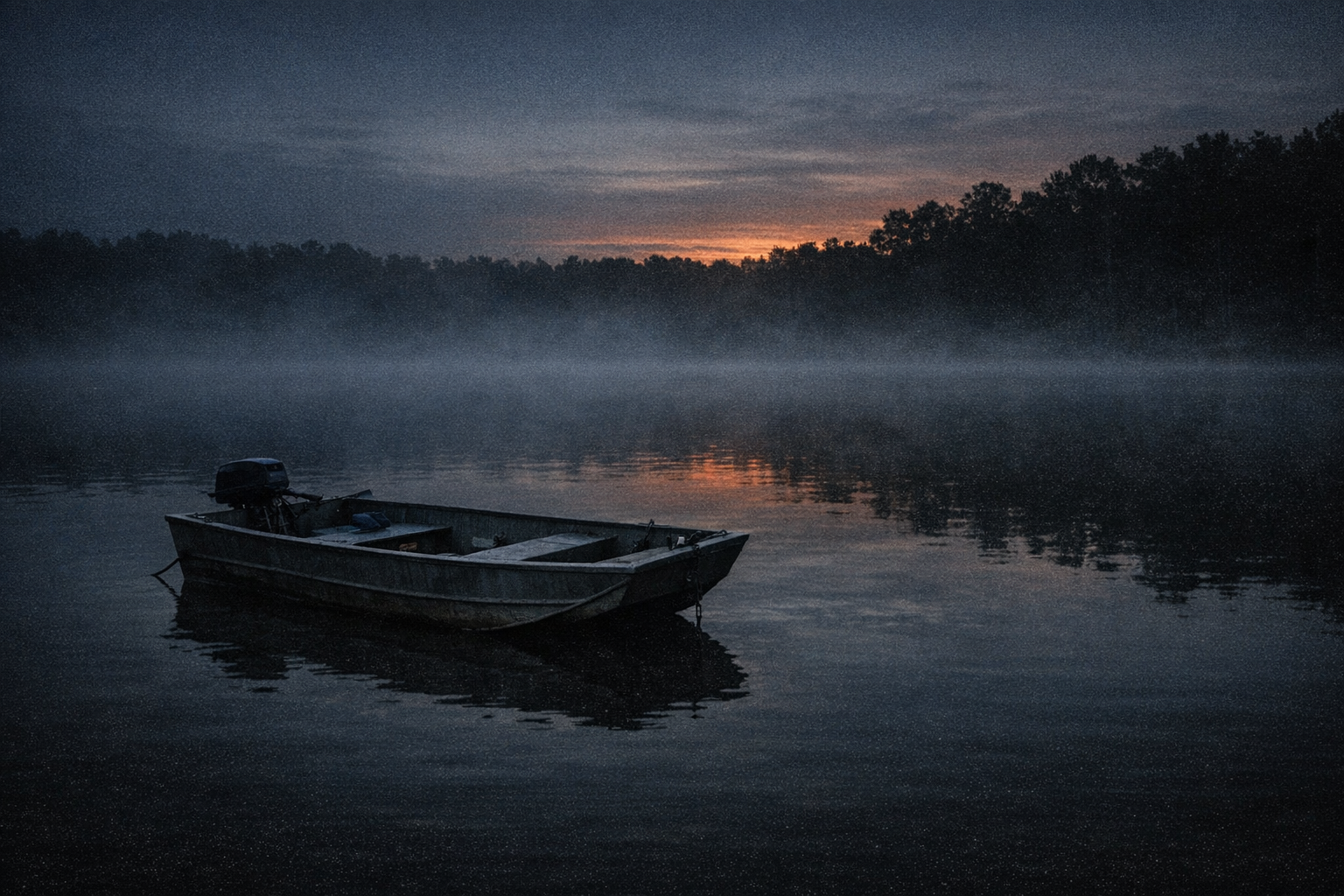
Nobody who has sat in a flat-bottomed boat on a Georgia lake at four-thirty in the morning ever comes back needing it explained. That part is true. But what doesn’t get talked about is what it actually costs to be there, and whether the silence is as clean as people make it sound.
It isn’t. Not always.
Getting on the water before sunrise means getting up before three. It means loading gear in the dark, backing a trailer you can barely see, and launching at a ramp that’s just dark enough to make you nervous about what you might be stepping on. It means your coffee is already cold before you even clear the cove. And it means you made all those decisions the night before, half-awake, probably while whatever you were watching on the TV put you to sleep on the couch.
That’s the part nobody posts about.
The fishing itself, when it’s right, is genuinely its own thing. Largemouth bass in Georgia in the early morning are not the same fish you’re going to fight at noon. The water’s cooler, the surface is flat, and they’re feeding shallow. You can hear a topwater strike before you feel it. That sound carries across still water in a way that doesn’t happen at any other time of day. It’s sharp, sudden, and your whole nervous system responds before your brain catches up.
But to get that moment, you gave something up. You gave up sleep that your body actually needed. You gave up a morning at home where the coffee is hot and nobody is asking you to back a trailer in the dark. You gave up the part of your morning that was quiet in a comfortable way, not in an earned way.
The silence on the water is real. I won’t take that back. But it’s not free. It has a price tag, and the price is everything that happens between ten PM the night before and the moment you actually cut the trolling motor and just sit there.
There’s also the part about being alone with your own thoughts for that long, with no notifications, no task list, nothing to build or fix or automate. I build systems and tools specifically so future-me has less to do. That is a genuine, functional coping mechanism. Being on the water at four-thirty with zero systems, zero automation, and a spinning rod is the opposite of that. It’s just you, a dark lake, and whatever you’ve been putting off thinking about.
That’s not always a comfortable inventory.
Middle Georgia has no shortage of reservoirs. Lake Sinclair is basically in Milledgeville’s backyard. Lake Juliette, Lake Oconee, Tobesofkee, they’re all close enough to reach before the sun even thinks about coming up. The fish are there. The access is there. But the version of this experience that lives on Instagram and hunting-and-fishing YouTube is trimmed down to the good part, the glassy water, the fog, the bent rod, the lift of a four-pound bass over the side of the boat.
What gets cut out is the guy who backed the truck into the mud at the launch because he was half asleep. The one who forgot the net. The one who got out there and sat for two hours without a single strike because the pressure changed overnight and the fish went deep and did not cooperate with his sunrise narrative.
That happens more than people admit.
And even when it goes right, even when the fish are active and the morning behaves itself and the fog sits just low enough to make the whole thing look like a photograph, there is still a moment when you look at the tree line and realize you’re going to be tired for the rest of the day. Not a good tired. Just tired. The kind your body files under a long string of small debts you keep taking on.
The silence on a Georgia reservoir before the sun comes up is genuinely unlike most other things. It’s not the same as the woods being quiet, or a house being quiet. It has weight and texture to it. You can hear things moving in the water that you never bother to notice otherwise. You can hear your own breathing. You can hear the line hit the surface forty yards out.
But here’s what’s honest: I don’t go fishing at 4am, never have, and it’s not because I don’t love it.
It’s because I know what it actually costs, and I’m more careful about what I’m willing to pay for.