Frank
Frank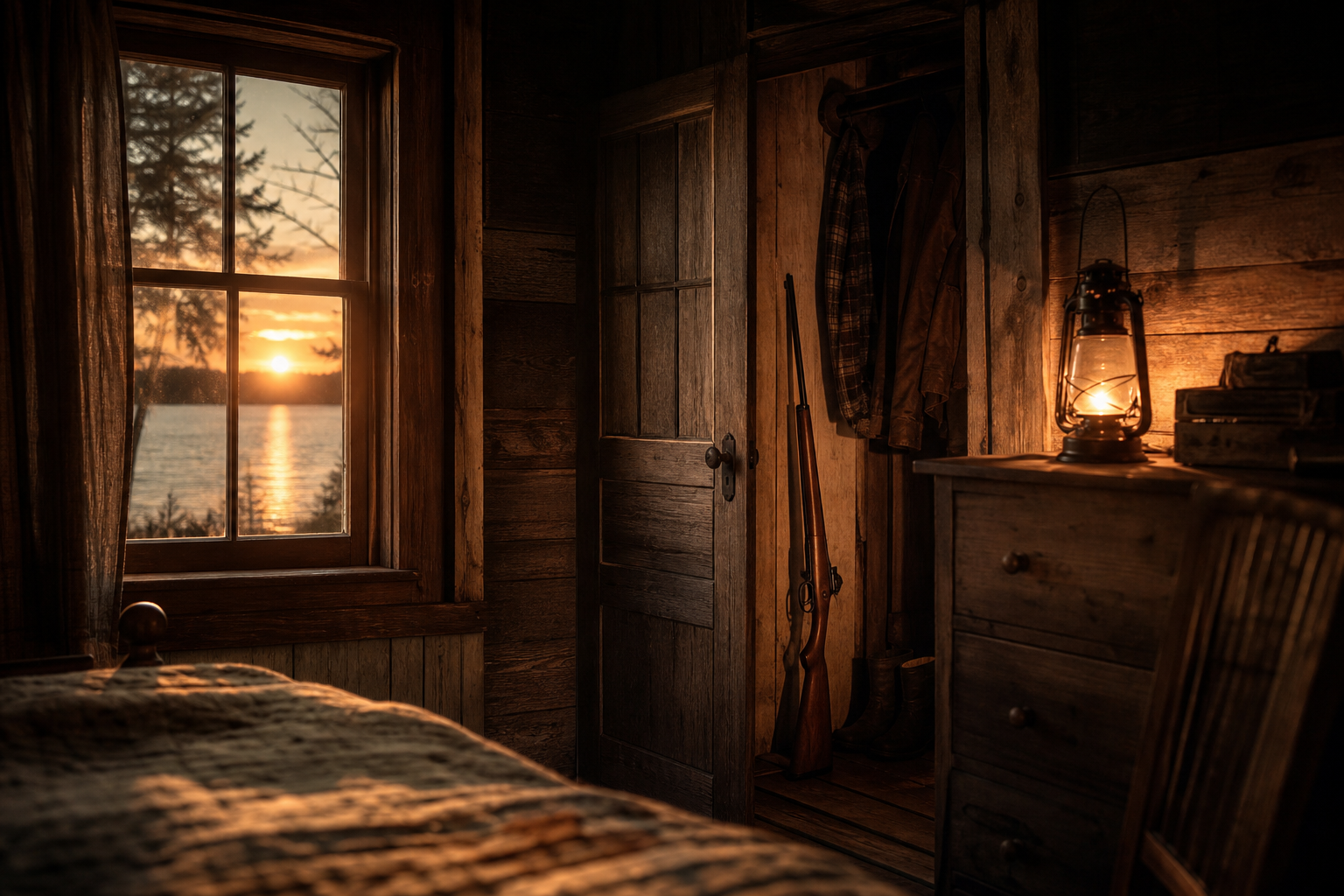
My dad had a .22 rifle leaning in the corner of the bedroom closet when I was growing up on Lakeside Drive. Nobody made a big deal about it. It wasn’t a symbol of anything. It wasn’t a political statement. It was a tool, the same as the chainsaw in the shed or the fishing rods in the garage. You didn’t touch it without permission and you didn’t point it at anything you weren’t prepared to destroy. That was the whole lesson. That was the whole policy.
I grew up in Milledgeville, Georgia. Baldwin County. Middle Georgia. We weren’t rich, we weren’t farmers exactly, but we were country enough that guns were just part of the furniture of life. Some of the guys I ran with as a kid, the Lakeside Drive crew, their dads hunted deer every November like it was a sacrament. We shot cans in the woods with BB Guns. We learned what a gun could do to a squirrel at close range and that knowledge had a way of making you respect the thing in your hands.
That context matters, because I’ve noticed that a lot of the loudest conversations about guns in this country happen between people who’ve never held one and people who’ve never examined why they hold one. Both groups talk past each other constantly and neither one is actually talking about guns. They’re talking about what guns mean to them, which is a completely different conversation.
What a Gun Is, Out Here
Here in Gray, I’m still in that same general world. Jones County. Rural Middle Georgia. My neighbors hunt. I hunt when I can get out there. Oakley would lose his mind in the woods. I keep firearms in my house and I am completely comfortable with that, because I was raised to be comfortable with it the right way.
The self-defense argument is real, but it’s not the whole thing. Out here, the nearest sheriff’s deputy might be fifteen minutes away on a good night. That’s just geography, not politics. You are your own first responder whether you like it or not. A firearm isn’t paranoia in that context, it’s math.
But beyond that, there’s something that’s harder to explain to someone who didn’t grow up with it. Guns are tied up in a certain kind of self-reliance that still runs through this part of the country. The idea that you are responsible for your own food, your own property, your own protection, your own life. That you don’t wait on someone else to come solve your problem. I know that sounds like a bumper sticker but I mean it in the most unglamorous, practical way possible. My brother William carried a firearm every day as a Baldwin County deputy. He didn’t carry it because he was excited about guns. He carried it because the job required it and he took the responsibility seriously.
I think about that a lot.
There’s a certain kind of gun culture I don’t particularly love, the one that’s all performance and no substance. The guys who’ve never hunted a day in their lives but have seventeen AR-pattern rifles and a collection of tactical gear they use to cosplay at the range. The ones who treat it like a personality rather than a responsibility. That stuff has always annoyed me. A tool is a tool. Know how to use it, respect what it can do, store it properly, and don’t be an idiot. That’s it.
I’m not going to write about legislation here, because frankly I’m tired of that argument and I don’t think either side is actually listening. What I’ll say is this: any framework that doesn’t start from the reality of how guns actually exist in rural Southern life, practically and culturally and historically, is going to miss the mark badly. You can’t regulate the culture out of the conversation and pretend you’re just talking about hardware.
My dad’s old .22 is still around somewhere, I think. My brother Tom may have it. I couldn’t tell you the last time it was fired. But it’s there, the same as it always was. Not loaded, not displayed, not fetishized. Just there.
That’s about right.