Frank
Frank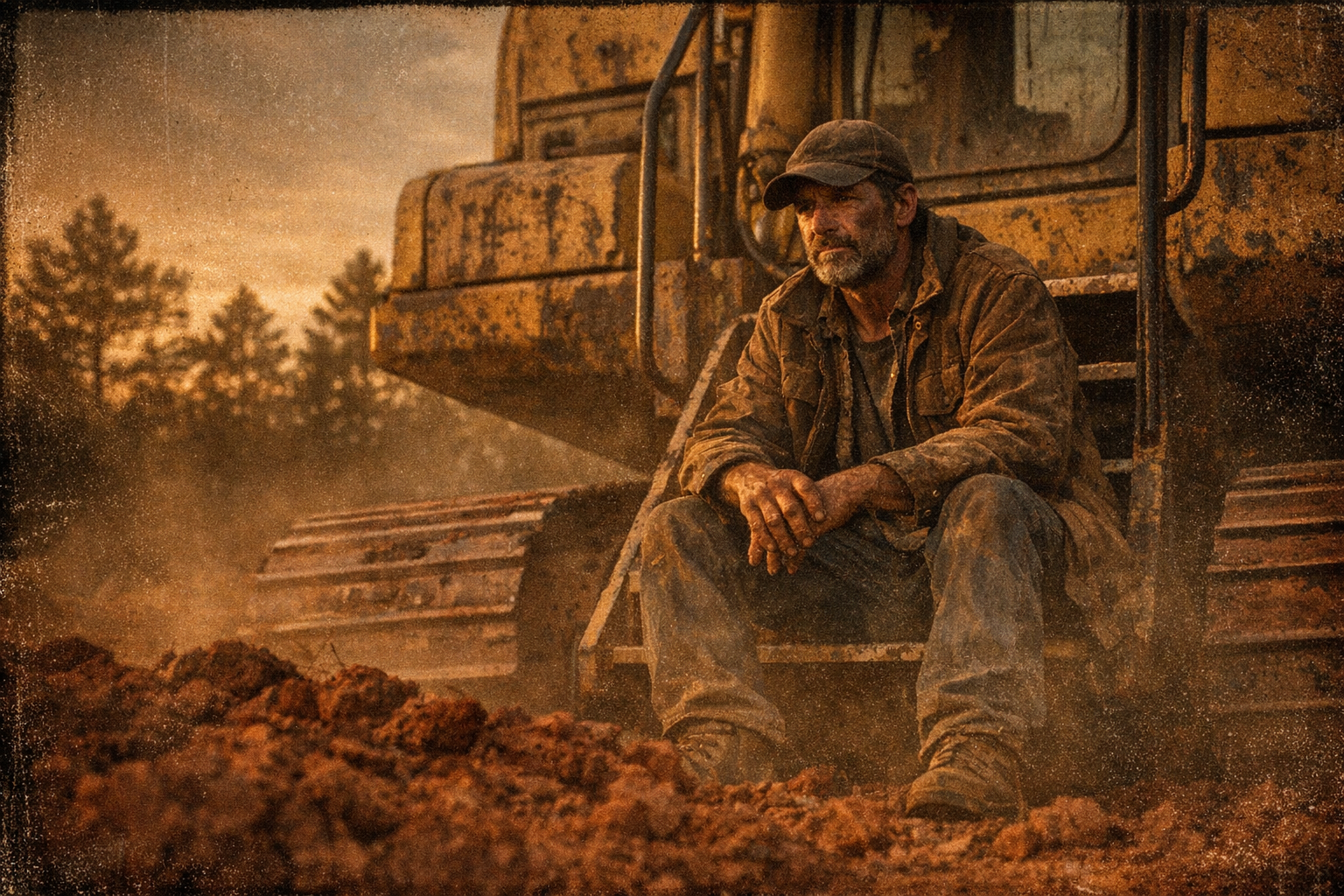
Do you ever look at somebody doing something completely unrelated to your career and think, “that’s it, that’s the thing I was actually supposed to do with my life”?
I do. Every single time I see a excavator parked on the side of a Georgia highway.
I’m 55 years old. I’ve spent 28 years in IT. I can troubleshoot a hybrid Exchange environment in my sleep, I’ve built containerized home lab services that would impress people who know what that means, and I’ve written PowerShell scripts that automated things my employer didn’t even know could be automated. By most reasonable measures, I picked a pretty good career.
And I still think I should have been running a Caterpillar 390 on a road crew in Middle Georgia.
The Thing Nobody Tells You About “Good With Computers”
When you grow up in a small town in the 80s and you’re decent with machines, the adults around you steer you toward computers. It was the future. It was clean work. It didn’t involve sunscreen and Gatorade and coming home with red clay caked into your boots.
That was the pitch anyway.
What nobody mentioned was that “good with machines” and “good with computers” are two completely different things that happen to share a word. I’m good with computers because I taught myself to be, out of stubbornness mostly. But I was naturally good with mechanical things. Always. There’s a difference between what you grind yourself into and what you actually are.
I grew up in Milledgeville, Georgia. I know what a dozer looks like when somebody who understands it is behind the controls. There’s a feel to it. An instinct. You’re not just pushing a button, you’re reading the ground, reading the grade, compensating for conditions that change every ten feet. That’s not so different from what I do in IT, except the feedback is immediate, the result is visible, and at the end of the day you can look at what you moved.
Try explaining that feeling to someone after you’ve fixed a mail flow issue in a 162,000-person health system. “What did you do today?” “I fixed some email routing.” Great. Thanks for that.
The Dirt Doesn’t Gaslight You
Here’s what I’ve decided after nearly three decades of troubleshooting things that exist in the abstract: physical work has a honesty to it that technology absolutely does not.
When you grade a pad site and the water drains wrong, you know it immediately. The ground tells you. When you compact a sub-base and the load test comes back wrong, there’s no mystery about what happened. Something went wrong, you fix the something, and the result changes.
IT is a hall of mirrors by comparison. You make a change and then you wait. And hope. And check logs. And run tests. And then, maybe three days later, a user emails you to say something is acting weird in a way that seems completely unrelated to what you changed but probably isn’t. And you start over.
I’m not complaining about IT. It pays well and it kept my family fed for almost thirty years. I’m just saying: there’s a reason guys who run heavy equipment walk different. They spend their days doing work that answers back honestly.
The Romantic Version vs. The Real Version
Now, I know what I’m doing here. I’m romanticizing it.
I have never once operated a 50-ton excavator in July humidity in Georgia. I have never had to replace a final drive on a D8 in a muddy field at 6am because the job starts at 7. I have never dealt with a hydraulic line failure on a motor grader or tried to figure out why a machine won’t track straight on a gravel slope. I haven’t done any of that. I just think it looks satisfying from the outside.
That’s a real thing to acknowledge. Every career looks better from the outside when yours is giving you grief.
But here’s where I’ll push back on myself a little: I’ve been a hardware guy my whole career. When everybody else in IT goes straight for the software, I go for the physical layer first. I like the part of the job that involves actual things. Cables. Cards. Drives. Rack units. There’s a reason I still get more satisfaction from building a server than from writing code. Code is invisible. A server you can touch.
That instinct had to come from somewhere. And I think it came from the same place that makes me slow down every time I drive past a site where somebody’s running equipment.
What I Actually Regret
I don’t regret going into IT. That would be a waste of energy at 55, and honestly I’ve been around long enough to know that regret is mostly just imagination pretending to be useful.
What I actually regret is never giving it a real thought. It was simply never on the table. Not because I investigated it and decided against it, but because the path was already pointed somewhere else and I just walked it. That’s different.
I went to Georgia College (for 8 years), got a business degree, already had an IT job lined up by the time I graduated, and the whole thing just sort of happened in sequence. Nobody ever sat me down and said, “what do you actually want to do with your body and your hands for forty years?” I’m not sure anyone thought to ask.
And yes, I know I’m the guy who starts a lot of projects, forgets why he started them, and even less frequently finishes them. So maybe the version of me that became a heavy equipment operator would’ve spent twenty years trying to get his CDL and operator certifications across six different programs without completing any of them. That’s a real possibility.
The Version of Me Living in a Different Zip Code
Sometimes I think about this parallel version of Frank who went to work for a grading company out of high school, got his operator certs, spent thirty years building roads and site work across Middle Georgia, and comes home at the end of the day with dirt under his fingernails and a very clear answer to the question “what did you do today.”
That guy probably doesn’t have a home lab. He definitely doesn’t have a React app running in Docker. He might not even own a laptop.
But I’d bet serious money he sleeps better.
The truth is I ended up in IT because I was good at it, not because I chose it with any real intention. Most people land in careers that way. The question worth sitting with, even at 55, isn’t whether you made the right call thirty years ago. It’s whether the thing you do every day still has the same pull as a machine that moves the earth.
For me, some days it does. Some days it really doesn’t.
And on those days, I take the long way home past the road construction on 16 and watch whoever’s running the blade work a crown into a fresh gravel surface.
That never gets old.