Frank
Frank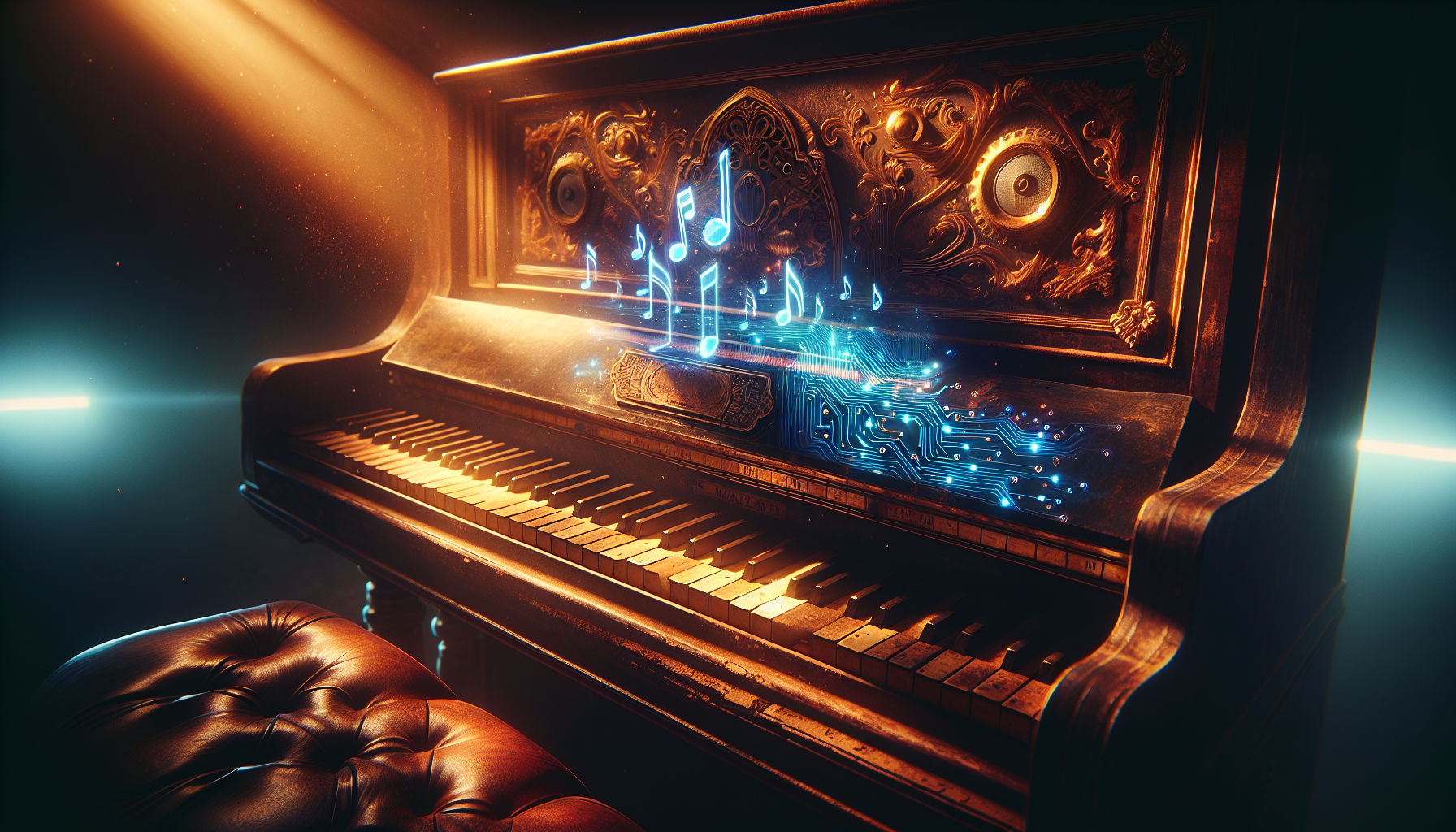
Y’all, we need to talk about AI music. And I mean really talk about it, not just the surface-level “robots are stealing our jobs” nonsense you hear from folks who still think the internet is a fad.
I’ve been tinkering with Suno for the better part of six months now, and let me tell you something – this ain’t your granddaddy’s music box. This is the real deal, and it’s moving faster than gossip at a church potluck.
What’s All This Fuss About AI Music?
For those living under a digital rock, AI music generation has exploded in the past year. Tools like Suno, Udio, and others are letting regular folks create full songs – vocals, instruments, the whole nine yards – just by typing in a few prompts. It’s like having a Nashville studio session in your browser, except the session musicians are made of math and pixels.
Now, I know what some of y’all are thinking: “Frank, this sounds like cheating with extra steps.” And I get it. There’s something that feels off about telling a computer “make me a bluegrass song about lost love” and getting back something that could fool your mama into thinking it’s the real thing.
But here’s the thing – and this is where my Southern practicality kicks in – judging AI music by whether it’s “real” or not is like judging a hammer by whether it grew on a tree. Tools are tools, and the question isn’t whether they’re natural, it’s whether they’re useful.
The Technical Sweet Spot
Let’s get into the weeds for a minute. Suno (my current weapon of choice) uses what’s essentially a transformer model trained on a massive dataset of music. Think of it like this: if you fed every song from the last 50 years to the smartest kid in music theory class, then gave that kid the ability to play every instrument perfectly, you’d get something close to what we’re dealing with.
The quality jump from even six months ago is staggering. We’re talking about going from “sounds like a robot having a fever dream” to “wait, did a human actually make this?” And the speed? Brother, I can generate a complete song in under two minutes. Compare that to booking studio time, hiring musicians, and going through the traditional process.
Where the Magic (And Problems) Live
Here’s where it gets interesting. The AI doesn’t just randomly throw notes together – it’s learned patterns, structures, and the invisible grammar of music that makes our brains go “yeah, that works.” It understands that a verse usually leads to a chorus, that certain chord progressions make us feel nostalgic, and that a good hook needs to hit at just the right moment.
But (and this is a big but), it’s also learned some bad habits. Feed it enough pop songs, and it’ll give you back the musical equivalent of fast food – technically satisfying but lacking that special sauce that makes you remember it three days later.
The real skill isn’t in the prompting (though that matters). It’s in the curation, the editing, and knowing when something has that spark versus when it’s just technically competent background noise.
The Creativity Question
Now, let’s address the elephant in the room: Is this actually creative, or are we just playing with a very sophisticated music jukebox?
I’ve wrestled with this question more than a pig in mud, and here’s where I’ve landed: creativity isn’t about starting from nothing. It’s about making connections, combining ideas in new ways, and expressing something that resonates with people.
When I use Suno, I’m not just hitting a “make music” button. I’m crafting prompts, iterating on ideas, combining different generations, and making choices about what works and what doesn’t. It’s collaborative creativity – like jamming with a bandmate who happens to be made of algorithms instead of flesh and bone.
What This Means for the Future
Here’s my prediction, and you can quote me on this: AI music isn’t going to replace human musicians any more than calculators replaced mathematicians. What it’s going to do is lower the barrier to entry and let more people participate in music creation.
Think about it like this – not everyone can afford a studio, hire session musicians, or spend years learning every instrument. But almost everyone has a computer and an internet connection. AI music tools are democratizing music creation in the same way that smartphones democratized photography.
Will there be some disruption? Absolutely. Stock music libraries are probably sweating bullets right now, and rightfully so. But the human elements – live performance, personal connection, cultural commentary, and genuine emotional expression – those aren’t going anywhere.
My Take on the Ethics
Look, I’m not naive about this. There are real questions about training data, artist compensation, and copyright that need sorting out. The industry is moving fast and breaking things, which is fine for a social media app but gets complicated when you’re dealing with people’s livelihoods.
But here’s the thing – this technology exists now. We can either figure out how to use it responsibly and integrate it into our creative workflows, or we can stick our heads in the sand while others race ahead.
Bottom Line
AI music is here, it’s getting better every day, and it’s not going anywhere. As someone who’s spent countless hours tinkering with it, I can tell you it’s both more limited and more powerful than most people realize.
It won’t write the next “Sweet Home Alabama” – that takes human experience, cultural context, and a kind of lightning-in-a-bottle magic that doesn’t come from training data. But it might help some kid in rural Alabama create their first demo, learn about song structure, or discover they have an ear for music they never knew existed.
And honestly? In a world where we’re constantly told that creativity is reserved for the chosen few, any tool that lets more people express themselves musically sounds pretty good to me.
Now if you’ll excuse me, I’ve got some prompts to craft and some digital music to make.