Frank
Frank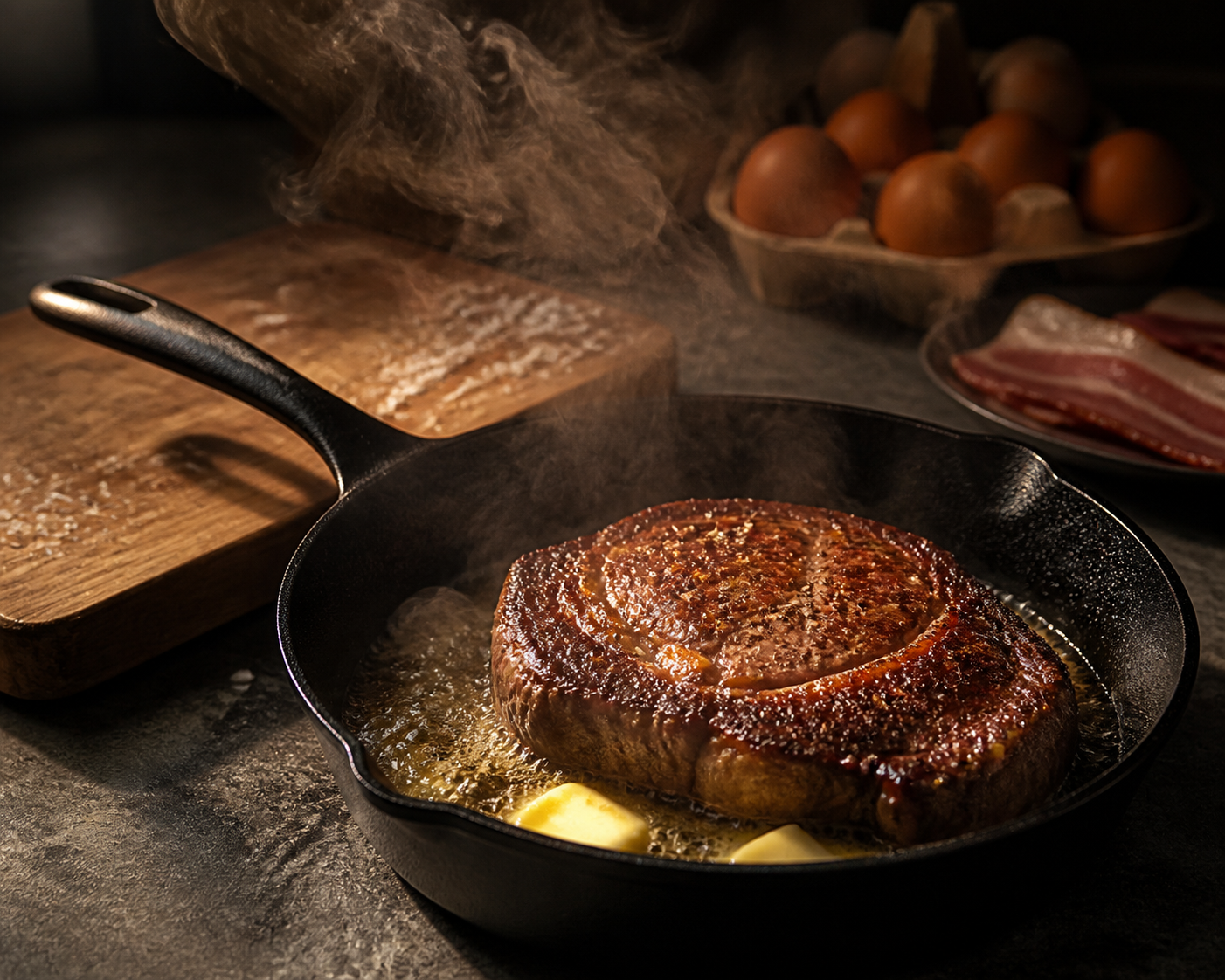
The carnivore diet eliminates all plant-based foods, allowing only animal products such as beef, eggs, butter, and fish. The diet works by shifting the body’s fuel source from glucose to fat through ketosis, but the transition period involves real physical symptoms including fatigue, headaches, and mental fog lasting roughly five to seven days.
Practical success depends on eating enough fat, salting food heavily to compensate for sodium loss, and preparing meals in advance to avoid situations where no compliant food is available. Committing to a full thirty days, rather than quitting early, is emphasized as essential since most people stop before the adaptation period completes.
Carnivore Diet: What It Actually Is, What It Actually Does to You, and How to Survive the First Month
Six in the Morning, a Ribeye, and a Look That Said Everything
I stood in the kitchen at six in the morning, staring at a ribeye I had pulled out of the freezer the night before, and I thought: this is either the smartest thing I’ve ever done or I’ve completely lost my mind. The ribeye was already in the pan. Butter was melting. The smell of beef fat hitting a hot cast iron at six a.m. is not subtle. It fills the whole house. Kimberly walked in, looked at the steak, looked at me, and walked back out without saying a single word. That felt like a blessing, honestly, because I did not have a good answer ready.
That was day one of the carnivore diet. I’m not here to sell you on it. I’m here to tell you what it actually is, what it actually does to you in those first brutal weeks, and what I learned doing it. If you’re thinking about trying it, read this first. If you already started and you feel like death warmed over, keep reading. That part is normal, and I’m going to explain exactly why.
A Little Background, Because It Matters
I’ve had a complicated relationship with my body my entire life. Fifty-five years old, powerlifting background, and I still look in the mirror and see something that doesn’t match what I think I should look like. That’s body dysmorphia doing what body dysmorphia does, which is lie to you constantly and never take a day off. Add in the AuDHD that I spent most of my life not knowing I had, and you end up with a guy who has always had a chaotic relationship with food. Either I was locked in completely, tracking macros, meal prepping on Sundays, eating like a machine, or I was eating like a garbage disposal for six weeks straight with no brakes and no guilt until the guilt hit all at once. No middle gear. The spectrum doesn’t do moderation well. That’s just the truth of it.
I had tried keto before. Low-carb stuff. All of it. Counted macros for years. Done elimination diets. Tried intermittent fasting. The carnivore diet is different. Not different in a gimmick sense, not different like a new brand of the same old thing. Different in that it is the most stripped-down, zero-ambiguity approach to eating I have ever encountered. And for a brain like mine that gets overwhelmed by too many choices and too many rules with too many exceptions, that stripped-down quality actually matters more than I expected it to.
What Carnivore Actually Is
Here is what the carnivore diet is in plain terms. You eat animal products. That’s it. Beef, pork, chicken, fish, eggs, butter, and some people include dairy. You eat nothing that came from the ground. No vegetables, no fruit, no grains, no legumes, no sugar, no bread, no pasta, no rice. Nothing from the plant kingdom, at all, period.
The logic behind it is that plants contain antinutrients and various compounds, things like oxalates, lectins, and phytates, that create inflammation in some people, and that human beings evolved eating primarily animals for a very long time before agriculture existed. When you remove carbohydrates entirely, your body shifts from burning glucose as its primary fuel to burning fat, a state called ketosis. That metabolic shift is real, it’s measurable, and it works. The problem is that the transition to get there is where most people quit, usually right before it actually kicks in.
So let’s talk about how to do this without quitting.
How to Start Without Immediately Failing
Commit to Thirty Days, Not Seven
First thing you do is commit to thirty days. Not a week, not two weeks. Thirty days. Your body needs time to actually shift its fuel source from glucose to fat, and that process takes longer than most people expect. I’ve seen people quit on day ten saying “it didn’t work,” and I want to reach through the screen and explain that they probably quit four or five days before things turned around. Set thirty days as your floor and don’t negotiate with yourself about it. Treat it like a work project with a hard deadline, not a mood.
Stock the Right Things and Remove the Obvious Temptations
Clean out the obvious junk. I’m not saying throw everything in your house into the trash can. I’m saying don’t keep a bag of chips on the counter and then wonder why you ate the whole thing at ten o’clock on a Wednesday. The environment matters. Make it easy on yourself.
Stock the refrigerator with ribeyes, ground beef, eggs, bacon, and butter. That’s your starting lineup. You don’t need a complicated shopping list with seventeen specialty items. That’s actually one of the genuinely good parts of this diet: grocery shopping becomes absurdly simple. I walk past about eighty percent of the store now. I skip the entire middle of the store, most of the produce section, the bread aisle, all of it. I go to the meat department, grab eggs, grab butter, and leave. It takes maybe fifteen minutes.
Go Fatty. This Is Not Optional.
On the meat side, go fatty. This is important and I want to be direct about it. Lean chicken breast every single day is going to make you miserable and you will quit. Your body needs fat on this diet because fat becomes your primary fuel source when glucose isn’t available. If you pull the fat off your steak, you are removing the thing your body is trying to run on. That’s like draining the gas tank and wondering why the truck won’t start.
Ribeye is the gold standard for most carnivore people, and for good reason. It’s got a solid fat-to-protein ratio and it actually tastes like something. 80/20 ground beef is affordable and easy to cook in big batches. Pork belly, bacon, salmon, lamb chops if you can find them at a decent price, all of that is fair game. Don’t be scared of the fat. The fat is the point.
Eggs Are Your Best Friend and They Cost Almost Nothing
Eggs are cheap, fast, versatile, and deeply underrated on this diet. Scrambled in butter, fried in bacon grease, hard-boiled and thrown in a bag for work. I eat eggs almost every single day and I genuinely do not get tired of them. Some people do hit egg fatigue around week two, and if that’s you, just swap in more ground beef in the mornings. There are no rules about what a meal has to look like at a certain time of day. A burger patty with a fried egg at seven in the morning is perfectly legal and honestly a pretty solid start to the day.
Salt Everything. More Than You Think You Need.
Salt your food heavily. This is not optional advice and it is not just a flavor suggestion. When you cut carbohydrates, your kidneys flush sodium at a significantly higher rate than they did before. You will feel terrible if you don’t replace it, and you will probably blame the diet when the actual problem is electrolytes. Headaches, fatigue, muscle cramps, brain fog that won’t lift, all of that can be caused by low sodium, not by something fundamentally wrong with the approach.
I use a heavy hand with salt on everything. On days when I feel off, I drink beef broth. The actual stuff with real sodium in it, not the low-sodium version that has had everything useful removed. A cup of salted broth usually fixes the dragging feeling within an hour. If you want to go further, some carnivore people add a small amount of potassium and magnesium. I’ve done that occasionally. It helps. But start with salt and broth before you go buying a bunch of supplements.
The Headache Nobody Warns You About Adequately
I’m going to warn you adequately, because most carnivore content skips this part or mentions it so briefly you don’t take it seriously.
Around day three or four, most people hit what some call the keto flu. On carnivore, it can come in harder than on regular low-carb keto, because you are removing absolutely everything at once rather than just reducing carbs. Your body has been running on glucose your entire life. Glucose is the easy fuel, the fast fuel, the fuel your body knows how to grab and burn immediately. Fat metabolism is a different process entirely, and your body has to essentially rebuild its metabolic machinery to do it efficiently. That transition period is not comfortable. I want to be very clear about that.
The headache is real. For some people it’s a dull pressure that sits behind the eyes all day like low-grade static. For others, it’s a full migraine-level event. Depends on the person, depends on how hard your body was leaning on carbohydrates before you started. You’re also going to be tired in a way that’s hard to describe until you experience it. Not regular tired. More like someone quietly disconnected a battery you didn’t know was running critical systems. I sat at my desk on day four staring at an Exchange admin console I have used for sixteen years and it looked like someone had swapped in a foreign language overnight. My brain was just offline. Slow. Uncooperative. That was carbohydrate withdrawal doing its thing.
Here is what I need you to understand about that phase. It ends. It is not permanent. It is not your body sending you a message that this is wrong or dangerous. It is your body going through a fuel source transition and complaining loudly about it for a few days, the way any system complains when you change its operating parameters significantly. You stay hydrated, you salt everything, you drink some broth, you sleep when you can, and you push through it. For most people it breaks somewhere between day five and day seven.
The morning you wake up on the other side of it, you will notice. I had a day around day eight where I woke up before my alarm, wasn’t foggy, wasn’t dragging, and just felt like myself in a way I hadn’t in a while. Not euphoric, not some dramatic transformation, just clear. That was the moment I understood what people meant when they talked about mental clarity on this diet. It’s not hype. It’s just that you’d forgotten what the baseline was supposed to feel like.
What You Cannot Eat
The no list is short and has no gray area, which I appreciate more than I can explain.
- No bread, pasta, rice, or any grain product
- No potatoes, sweet potatoes, or root vegetables of any kind
- No fruit, no fruit juice, nothing sweetened with fruit
- No legumes: no beans, no lentils, no chickpeas, no peanuts
- No sugar in any form, including honey, maple syrup, agave, and everything else people try to pass off as “natural”
- No alcohol
- No vegetable oils: canola, soybean, sunflower, corn oil, all of it goes
- No condiments with sugar, which is most condiments if you read the label
- No processed foods
That last one takes care of itself pretty naturally, because there aren’t many processed foods made purely from animal products. The processed food industry runs almost entirely on grain, seed oils, and sugar, so when you remove those things, you remove most of the processed food landscape by default.
Where the Lines Get Debated
Some people do strict carnivore: beef, salt, water, nothing else. Some people are what they call animal-based, which allows some fruit and raw honey. I land somewhere in the middle. I don’t eat fruit, but I’m not going to have a breakdown over a trace of vinegar in hot sauce on my eggs. You have to find your own line. But for the first thirty days, I’d recommend staying as strict as you can reasonably manage. Loopholes are where diets go to die. If you’re already negotiating exceptions on day six, you’re not doing thirty days of carnivore, you’re doing something else.
Dairy is the ongoing debate in carnivore circles. Heavy cream in coffee, hard cheeses, and butter are generally considered acceptable by most people doing this. Milk is higher in sugar, so strict carnivore folks skip it. I use butter and occasionally some aged cheese. I skip milk entirely. If you have autoimmune issues or anything inflammatory going on, I’d do a strict no-dairy version for the first thirty days and then reintroduce it slowly to see how your body actually responds. Dairy is one of the more common hidden triggers and you won’t know if it’s a problem for you until you remove it and add it back deliberately.
Practical Things I Wish Someone Had Told Me
Eat Enough. Seriously.
One of the most common early mistakes is under-eating. Before carnivore, you were probably filling a significant portion of your plate with vegetables, bread, rice, or other bulk items. Remove all of that and suddenly a small piece of protein looks like a meal when it isn’t. You eat a chicken breast and call it lunch and then wonder why you’re hungry two hours later and feel like garbage. Eat until you are actually full. A pound of ground beef cooked up for lunch is not too much. Two scrambled eggs is not enough for most people. Eat like you mean it.
Stop Worrying About Meal Timing
Don’t obsess over eating at scheduled times. Carnivore naturally shifts a lot of people toward fewer meals because protein and fat are genuinely satiating in a way that carbohydrates are not. A lot of people end up eating twice a day without even trying or thinking about it. Don’t force three meals if you’re not hungry. Don’t skip eating if you are hungry because you think you’re supposed to be doing intermittent fasting. Just eat when you’re hungry and stop when you’re full. That sounds stupidly simple, but after a lifetime of calorie tracking and meal timing windows and all of that, it takes real adjustment to actually let your hunger signals work again without overthinking them.
Cook Extra Every Single Time
This is the most practical survival tip I can give you. When you cook dinner, cook double. When you grill steaks, grill an extra one. When you brown ground beef, brown a full two pounds. Pack the leftovers for the next day. One of the things that’ll derail you fastest is being at work with nothing on-plan available and a vending machine full of garbage ten feet away and a cafeteria full of things you can’t eat. The solution is dead simple: cold leftover steak is still a perfectly good lunch. Hard-boiled eggs travel anywhere and require no refrigeration for a few hours. Burger patties you cooked the night before reheat in three minutes in a microwave.
I work in a large hospital system. There is food absolutely everywhere in that building. Most of it is completely off limits on this diet. Hot bar, sandwich stations, vending machines on every floor, a Starbucks in the lobby. When I have to go to the office, I pack my lunch every.single.time. It takes about five minutes the night before because I always cook extra. The alternative is standing in the cafeteria reading ingredient labels on things I already know I can’t eat.
The Scale Is Going to Do Weird Things. Ignore It.
Don’t get discouraged when the scale behaves strangely in the first two weeks. When you deplete glycogen stores, your body sheds a significant amount of water weight fast. We’re talking sometimes five to ten pounds in the first week that is mostly water, not fat. That looks dramatic and encouraging on the scale early. Then it slows down, or stalls completely for a few days, which feels discouraging. Then it starts moving again once you’re actually fat-adapted.
The scale is measuring one variable. Your inflammation markers are changing. Your energy systems are being rebuilt. Your relationship with food is being fundamentally restructured. A stall on the scale while all of that is happening doesn’t mean nothing is working. It means one number isn’t moving while other things are.
Say as Little as Possible About It in Social Situations
The social part of this diet is honestly the hardest part for some people, and it’s not the food itself. Ordering a plain steak at a restaurant while everyone else has bread and pasta and dessert is fine. You figure that out quickly. It’s explaining to relatives at the family reunion why you’re not eating your aunt’s potato salad that gets uncomfortable. People take food personally when you don’t eat what they made.
My advice is to say as little as possible. You don’t owe anyone a detailed explanation about what you eat. “Not hungry for that right now” and a shrug handles the majority of situations. If someone pushes harder, “doctor’s