Frank
Frank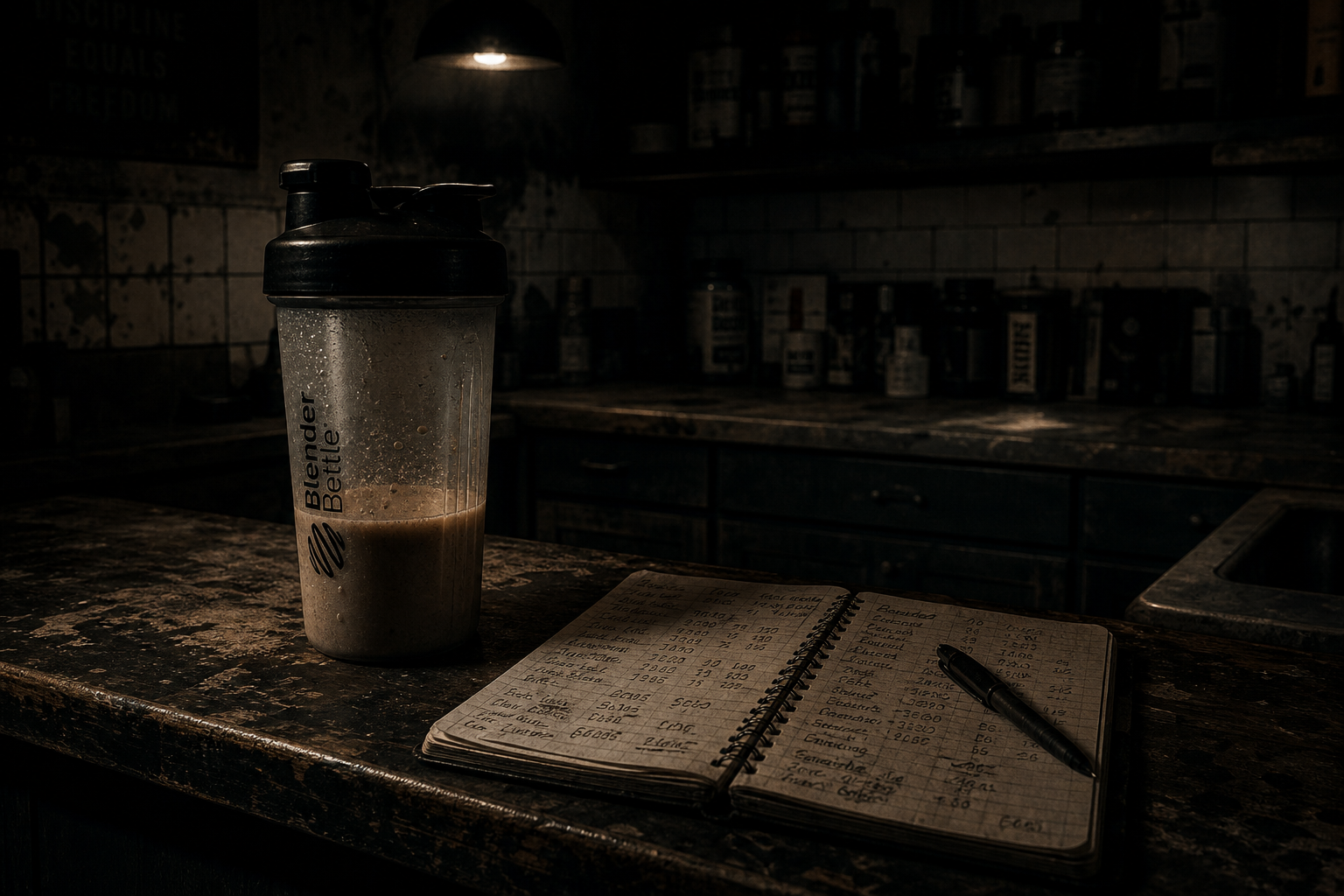
There’s a version of this problem that sounds embarrassing to admit out loud. You know how much protein you need. You’ve known for years. You’ve read the same articles, watched the same videos, run the same math a hundred times. And yet you still end up standing in front of the refrigerator at 9:47 PM, tired as hell, staring at leftovers, trying to remember if that chicken at lunch was six ounces or eight.
That gap, the one between knowing something and actually executing it consistently, that’s the whole problem. And I wasted a lot of time thinking it was a motivation problem when it was really just an accounting problem I kept putting off until I was too tired to do it right.
Think of it like a bar tab. When you walk into a place and you’re fresh and the night is young, you know roughly what you’re spending. You’re keeping mental count. But by the third or fourth round, that running total in your head gets foggy. Not because the math changed, but because you’re not as sharp as you were two hours ago. Protein tracking works exactly the same way. Early in the day, when you’re rested and deliberate, it’s almost automatic. By 8 PM, after a full shift at work and whatever else life threw at you, that same simple addition feels like filling out a tax form.
I spent a while blaming my diet when the actual problem was when I was trying to manage it.
Here’s what I mean. Most days I was doing fine through lunch. Getting a decent amount in, on track, feeling like I had it handled. Then the afternoon would hit. Work would get complicated, something would need fixing, and food became whatever was fast and available. By dinner I’d be fifty to seventy grams behind and not hungry anymore, which is the cruelest combination in fitness. The only way to close that gap at that point is to force yourself to eat when you don’t want to, which is miserable, or accept the deficit and try again tomorrow.
The bar tab analogy holds all the way through, because the fix is the same too. You don’t solve a bar tab problem by getting better at math. You solve it by checking the running total before you’re too far gone to care.
I had to front-load my accounting, not my eating necessarily, but my awareness. Check where I am at noon. Not before I go to bed. Not at dinner. At noon, when I still have half a day to course-correct without it being a scramble. If I’m on track, fine. If I’m already behind, I know it early enough to actually do something about it without forcing a protein shake down my throat at ten o’clock at night.
The second thing I wasted time on was trying to track everything with perfect accuracy instead of close enough to matter. I spent weeks logging everything in an app, down to the gram, and it was exhausting. Eventually I’d have a day where I didn’t have time to log properly and the whole system fell apart because I missed one entry and couldn’t reconstruct it. The bar tab died in the middle of the night and I had no idea what I owed.
Rough math maintained consistently beats perfect math maintained occasionally. Always. If you know your chicken breast is roughly forty grams, and your eggs are about six each, and your Greek yogurt is somewhere around fifteen, you don’t need a scale. You need a habit. Precision is the enemy of sustainability when you’re already operating on a full schedule and a half-empty tank of patience.
The other thing nobody told me, and I really wish someone had, is that some days the calories and the protein are going to fight each other. You can hit your protein number and completely blow past your calorie target if you’re not paying attention to what’s carrying the protein. Cheese is sneaky. Peanut butter is sneaky. Certain protein bars are basically candy bars that went to college. You think you’re winning on one side of the ledger and then you look at the total and wonder where everything went sideways.
I’m skeptical of simple answers to complicated problems, and the fitness world is full of people selling simple answers. Eat more protein. Track your macros. Just be consistent. All of that is technically correct and practically useless if nobody tells you what it actually feels like to try to execute it on a Tuesday when you’ve had four hours of sleep, work was a tire fire, and dinner was whatever you could get in under fifteen minutes.
The real advice I’d give myself five years ago is this: build the structure when you’re not tired. Figure out three or four meals that hit your numbers without requiring you to think, and eat those on the hard days. Save the variety and experimentation for the days when you have bandwidth. Don’t try to freestyle a high-protein diet at the end of a long day. You will lose every time.
The math really is simple. Twenty grams here, forty there, keep a rough tally, check it midday. The problem was never the math. The problem was I kept trying to do math when I was already too deep in the night, too far down the tab, to get an honest count.