 Frank
Frank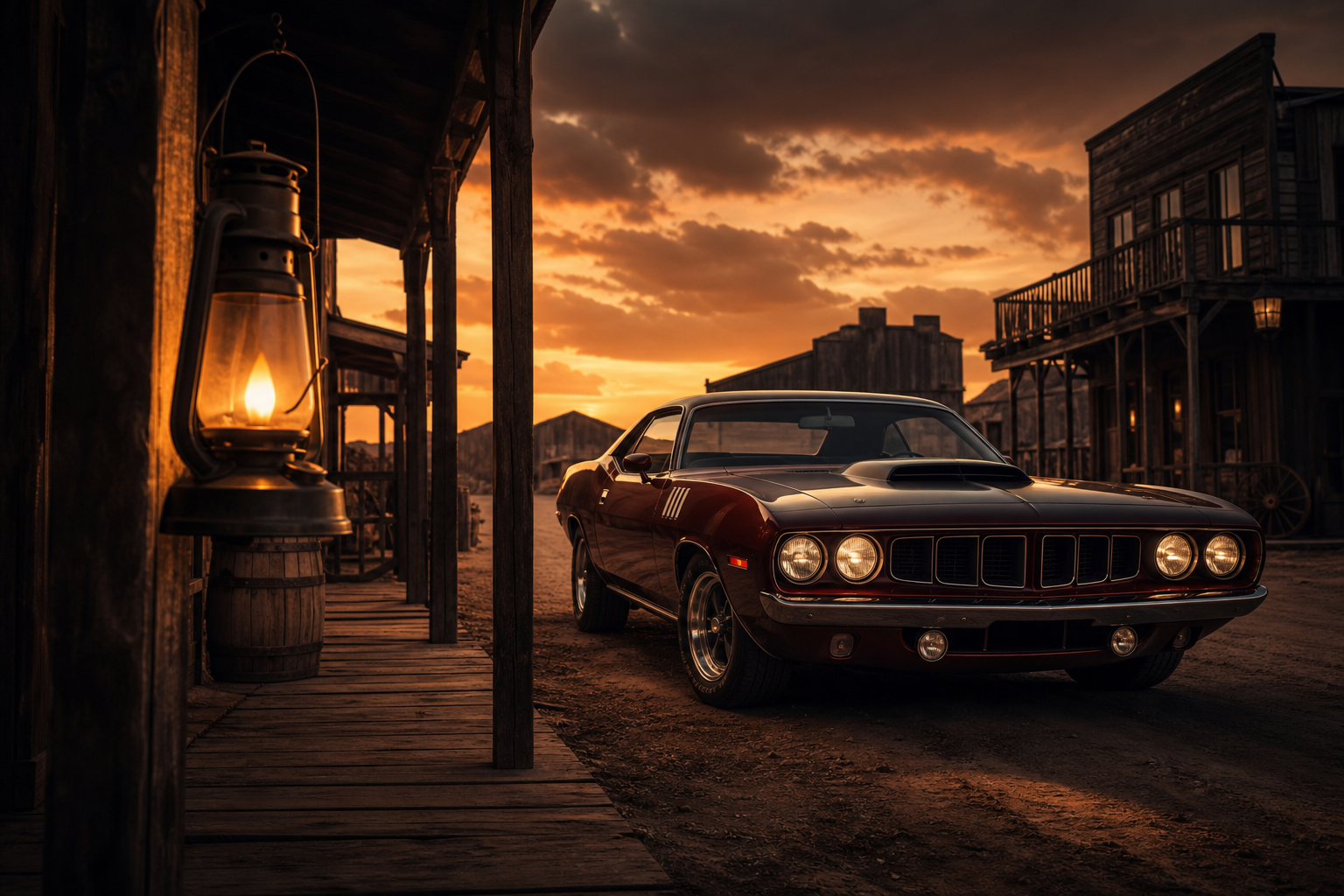
There are muscle cars, and then there are statements. The 1970 Plymouth Hemi ‘Cuda is a statement. It’s the kind of car that doesn’t just turn heads, it stops time. If you’ve ever seen one in person, you know what I mean. There’s a moment that happens when you’re standing next to a Hemi ‘Cuda where your brain quietly registers that you are in the presence of something that should not exist. Something too loud, too wide, too aggressive, too much for the world it was built into. Plymouth looked at the muscle car landscape in 1970 and decided that subtlety was for somebody else’s problem.
I opened this series in Part 1 by laying out my case for what makes a car a legend, not just a fast car or a collectible, but a machine that carries cultural weight, that changed what people believed was possible. And in Part 2, we talked about the soft, comfortable, chrome-laden world Detroit was building before the muscle era forced a reckoning. The Hemi ‘Cuda is that reckoning made metal. It is the culmination of everything Chrysler’s engineers had been working toward, wearing a body that could have been designed by someone who genuinely did not care about your feelings.
This is the car I had to write about first among the legends. Let’s get into it.
The ‘Cuda Story: How Plymouth Got Here
To understand the Hemi ‘Cuda, you have to understand the Barracuda, and to understand the Barracuda, you have to understand that Plymouth spent most of the 1960s trying to figure out what it actually wanted to be.
The original Barracuda launched in 1964, the same week as the Mustang, and while Ford was busy inventing the pony car market, Plymouth released a fastback variant of the Valiant with a massive rear window and called it a day. It was not a bad car. It was a perfectly reasonable compact. But it wasn’t a Mustang, and the market made that very clear.
Second generation, 1967 to 1969, improved the situation. Better proportions, more power options, but still built on the Valiant’s A-body platform. The problem was simple physics: the A-body was too narrow to fit big-block engines properly. You could get a 383 in there, but it was a tight fit, and the 426 Hemi was completely out of the question. Chrysler knew they had a problem.
The third generation arrived in 1970 on the new E-body platform, shared with the Dodge Challenger, and everything changed. The E-body was wider, longer, and purpose-built to accept the full range of Chrysler’s engine lineup including, critically, the 426 Hemi. Plymouth finally had a pony car that could back up its attitude with hardware. They also introduced the ‘Cuda sub-model as the performance variant, giving it specific styling, hood treatments, and trim that separated it from the base Barracuda.
The timing was almost too perfect, and also, viewed from the other direction, exactly wrong. 1970 was the apex of the muscle car era, but it was also the beginning of the end. Insurance rates were climbing. Emissions regulations were appearing on the horizon. The 1971 model year would bring compression ratio reductions. By 1972, the Hemi would be gone. The 1970 Hemi ‘Cuda was one of those cars that arrives at the exact moment the window is closing, squeezes through, and defines everything that came before it.
The 426 Hemi: An Engine That Deserves Its Own Legend
Let’s talk about the elephant in the engine bay, because if you’re going to write about the Hemi ‘Cuda, you can’t be casual about the powerplant.
The 426 Hemi was not a street engine that found its way into racing. It was the opposite. Chrysler developed the 426 as a pure racing engine for the 1964 NASCAR season, where it dominated so thoroughly that NASCAR banned it after one year. One year. When an engine is too fast for NASCAR, you are in the presence of something special.
The street version arrived in 1966, detuned just enough to be nominally streetable, and I use that word loosely. The street Hemi made an officially rated 425 horsepower and 490 lb-ft of torque. Those numbers were almost certainly conservative, a common practice at the time when insurance actuaries were starting to pay attention to horsepower figures. Dyno testing on bone-stock street Hemis has produced numbers well north of 425 on multiple occasions. Some estimates put actual output closer to 475 to 500 horsepower.
The hemispherical combustion chamber design, which gives the engine its name, isn’t just marketing. It’s geometry doing real work. The dome-shaped chamber allows for larger valves positioned at opposing angles, which improves airflow dramatically. The spark plug sits at the center of the combustion event, which means more complete and efficient burning of the fuel charge. The result is an engine that breathes better, burns cleaner at the combustion level, and produces more power per cubic inch than most of its flat-head and wedge-head contemporaries.
In the ‘Cuda, the Hemi came with dual four-barrel carburetors on a cross-ram intake manifold. Cold start on a Hemi ‘Cuda is an event. The engine shakes the whole car on startup, settles into a lope that is unmistakable, and communicates immediately that you are not dealing with a grocery-getter that happens to be painted a bright color.
The transmission options were a four-speed manual or the TorqueFlite automatic, both capable of handling the Hemi’s output. Quarter-mile times in the mid-13-second range were achievable with a competent driver. With tuning, the car could dip into the 12s. For a street-legal automobile in 1970, those numbers were, and remain, remarkable.
The Body: Aggression as Design Philosophy
Even if you pulled the Hemi out and replaced it with a cooking four-cylinder, the 1970 ‘Cuda body would still be worth writing about.
The E-body design was handled by Chrysler’s design team under Elwood Engel, and the ‘Cuda wore it differently than the Challenger did. Where the Challenger had a certain elegance to its proportions, a hint of European influence in its long hood and recessed tail, the ‘Cuda was blunter. More American. The shaker hood scoop, standard on Hemi cars, punched through a hole in the hood and connected directly to the air cleaner, visually connecting the outside world to the engine below. When you revved a Hemi ‘Cuda, the scoop visibly shook. It wasn’t subtle. It wasn’t trying to be.
Plymouth offered the ‘Cuda in a range of colors that felt designed by people who had run out of patience with conservative taste. Lemon Twist. In-Violet. Tor-Red. Vitamin C. Moulin Rouge. These weren’t just names; they were colors that could be spotted from the other end of a shopping center parking lot. The High Impact color palette was one of the defining visual elements of the 1970 Plymouth lineup, and on a ‘Cuda, they worked. A Hemi ‘Cuda in Tor-Red with a black shaker scoop and hockey stick stripe isn’t making a subtle argument. It’s giving a presentation.
The side profile featured a long hood, short rear deck, and the signature ‘Cuda hockey stick stripes that ran along the lower body and kicked up over the rear wheels. The rear quarters were wide and muscular in a way that the A-body Barracuda could never have achieved. Standing behind a ‘Cuda and looking at those haunches, you understand why these cars have the reputation they do.
The Numbers Game: Rarity and What It Means
Here’s where the Hemi ‘Cuda becomes something more than just a fast car: the production numbers.
In 1970, Plymouth built 652 Hemi ‘Cudas with the hardtop body. They built 14 convertibles. Fourteen. There were more people working on the assembly line that built these cars than there were Hemi ‘Cuda convertibles produced. That level of scarcity, combined with the car’s performance pedigree and visual identity, is what created the valuation trajectory that has made these cars some of the most expensive American automobiles ever sold at auction.
In 2014, a 1970 Hemi ‘Cuda convertible sold at Barrett-Jackson for $3.5 million. That’s not a misprint. A domestic production car from 1970 sold for three and a half million dollars. Comparable sales have followed in the years since, and pristine examples continue to break records.
But here’s what I want to say about those numbers, and it’s something I think gets lost in the auction coverage: the rarity isn’t why the car matters. The rarity is a consequence of the fact that the car was too much for most people in 1970. The Hemi option cost over $870 on top of the base car price. The total sticker on a loaded Hemi ‘Cuda could exceed $4,000, which was significant money in 1970. The Hemi was loud, thirsty, and difficult to live with in daily driving. Most buyers chose the 440 six-pack or the 340 instead, because those were excellent engines that didn’t require rebuilding your relationship with your fuel budget.
The rarity is the market telling you, in the language of historical record, that this car was beyond what most people were willing to handle. That’s not a weakness. That’s the definition of a thoroughbred.
Cultural Weight: What the Hemi ‘Cuda Meant Then and Now
There’s a reason this car appears on posters, die-cast collections, and video game loading screens forty-plus years after the last one rolled off the assembly line. The Hemi ‘Cuda occupied a specific cultural space in 1970 that no other car quite reached.
The Mustang was mainstream by then, four years into its mass-market run and beginning to bloat into something less focused. The Camaro and Firebird were excellent, but they were General Motors products, which meant a certain corporate polish. The ‘Cuda felt different. It felt like Chrysler was genuinely not interested in your opinion about whether this was too much. Here is the car. It will attempt to overpower you. Have a good day.
That attitude resonated with a particular type of buyer, young men mostly, who were living through a complicated moment in American culture. 1970 was Vietnam, Kent State, social upheaval, generational conflict playing out in living rooms and city streets. A car that made no apologies, that refused to be tamed, that announced itself with a mechanical roar and a shaker hood scoop visible from across an intersection, that car meant something. It was a declaration. I am here. I am not quiet. Deal with it.
In the decades since, the Hemi ‘Cuda has become an avatar for that era’s particular brand of excess and confidence. When you see one at a car show today, still wearing its Tor-Red paint and hockey stick stripes, still shaking that scoop on startup, you’re not just looking at an old car. You’re looking at a preserved argument. An argument that said, in 1970, that American engineering could produce something that felt genuinely dangerous in the best possible way.
Closing: Why This One Comes First
I put the Hemi ‘Cuda first in this series, not because it was the best-selling muscle car (it wasn’t), not because it was the most influential on subsequent design (debatable), but because it represents the purest distillation of the muscle car philosophy.
Take the biggest engine. Put it in a body that refuses to be ignored. Make it fast enough that people remember the encounter. Make it rare enough that owning one felt like a privilege. Build it at the exact moment when such a thing is still possible, before the insurance companies and the EPA and the fuel crisis conspire to make it illegal to build anything this uncomplicated about its intentions.
The Hemi ‘Cuda didn’t hedge. It didn’t offer you a comfortable ride with a performance package available if you checked the right box. It was the performance package. Everything else was window dressing.
That’s what a legend looks like. Not compromise dressed up with a stripe kit, but genuine, unfiltered commitment to a single idea: go fast, look extraordinary, and make sure nobody forgets it.
In Part 4, we’re moving from Plymouth to Dodge and looking at a car that took the muscle car ethos and pointed it directly at NASCAR. The 1969 Dodge Charger Daytona didn’t just want to be the fastest thing on the street. It wanted to be the fastest thing on the planet.




Comments [https://news.ycombinator.com/item?id=48887490]