Frank
Frank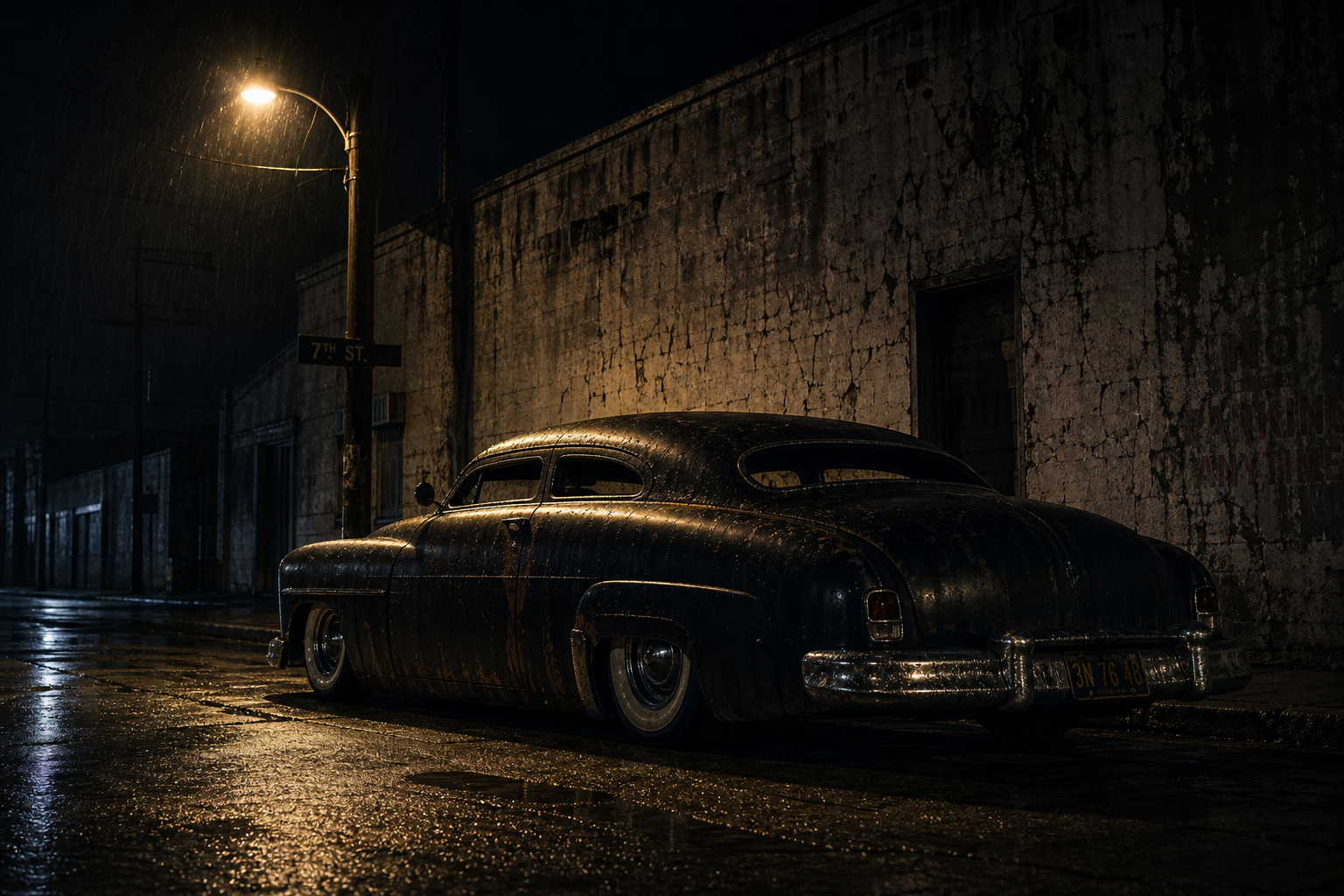
A 1949 Mercury that looked like it was pulled from a drainage ditch quietly became the most influential car in American automotive history, and almost nobody who built one knew what they were actually doing.
The Story
In the early 1950s, Mexican-American teenagers in East Los Angeles were working with almost nothing. No factory sponsorships. No speed shops. No magazine covers. Just beat-up prewar and early postwar sedans, a few hand tools, and a decision to make something out of what everybody else threw away. They took Mercurys, Chevys, and Fords that the mainstream car culture had already written off and started cutting them down. Chopping the tops. Lowering the bodies. Smoothing the lines. Painting them in deep, slow colors that looked like they were wet even when they were dry.
Nobody called it art at the time. The cops called it a nuisance. The city of Los Angeles literally passed laws against driving a car too low to the ground. The Zoot Suit Riots were only a decade old. The culture these kids came from was already under pressure from every direction, and here they were pouring their last few dollars into cars that moved slow on purpose. That was the whole point. Slow. Low. In control.
What happened next is the part that gets left out of most car history. Those "ugly," slow, lowered sedans became the foundational aesthetic for almost everything that followed in American custom car culture. Ed Roth noticed. George Barris noticed. Eventually Detroit noticed. The long, low, raked silhouette that defined American car design through the late 50s and into the 60s, that look came directly from East LA. From kids who were excluded from the mainstream hobby and just built what they wanted anyway.
The Hidden Principle
When you get pushed out of the main room, you sometimes end up building a better room. The lowrider builders weren't optimizing for acceptance. They weren't trying to win a trophy at a sanctioned show. They were building for themselves, which meant every decision was honest. No performance theater. No chasing a rulebook someone else wrote. That kind of freedom produces something that rules-followers can't replicate, because rules-followers are always looking sideways to see if they're doing it right.
The cars were "wrong" by every standard the mainstream hobby used. Too slow. Too low. Too old. And that wrongness, compounded over years of just not caring what the mainstream thought, produced an aesthetic language so strong it rewrote the mainstream from the outside.
What This Means Today
Y'all see this pattern everywhere once you know what to look for. The person working outside the approved system, with limited resources, no institutional backing, and zero incentive to perform for an audience that isn't watching. They make something real. Then the institutions show up later and try to absorb it, package it, and sell it back with a logo on it. It happens in music. It happens in software. It happens in food. It happened to lowrider culture about fifteen times over.
The principle isn't "outsiders are always right." Most outsiders are just wrong in a different direction. The principle is that exclusion removes the incentive to perform for approval, and that changes what you build. When nobody's grading you, you stop building for the grade.
The cars nobody wanted became the cars everybody copied.