Frank
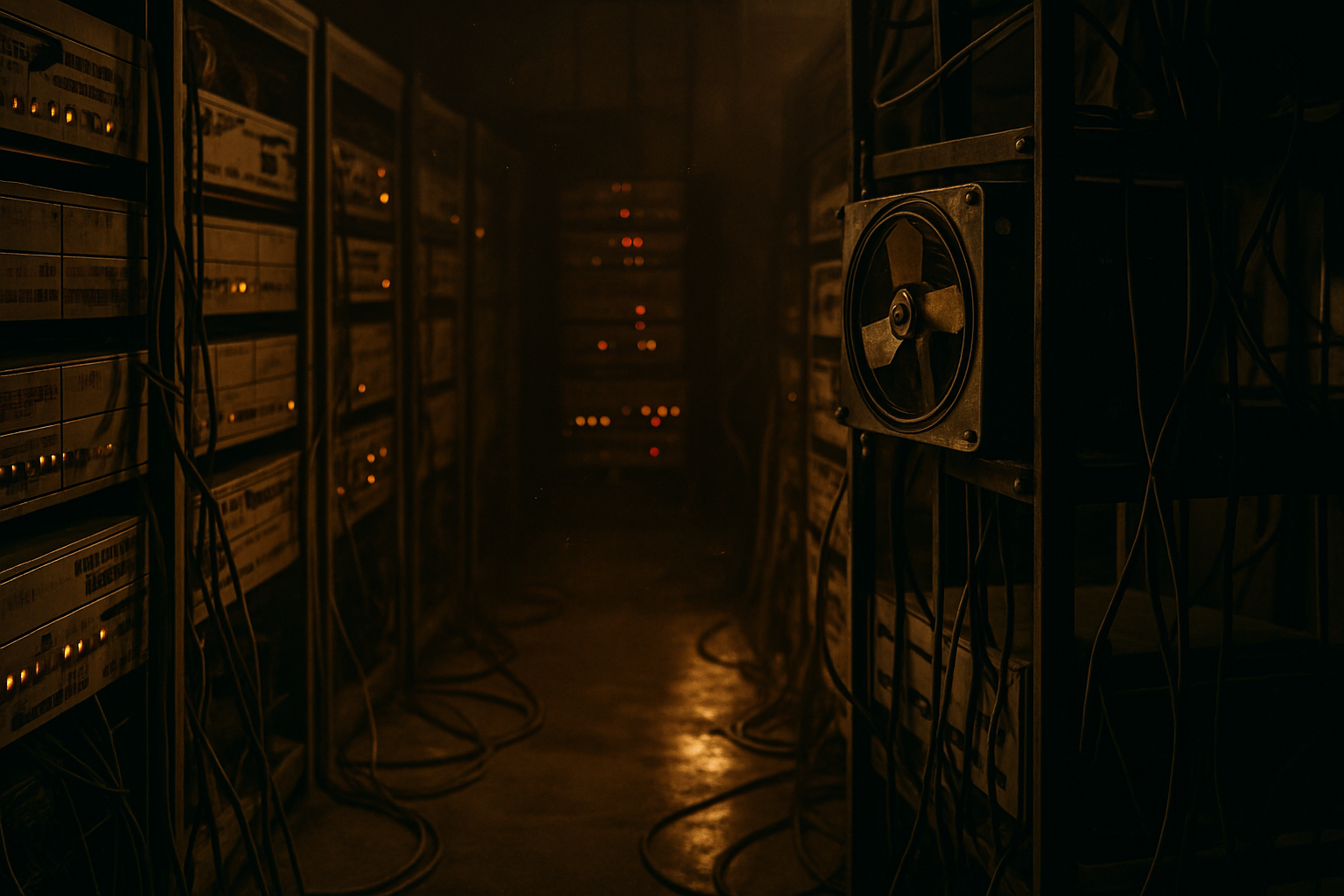
The most critical piece of hardware in America's early computing infrastructure wasn't a processor or a hard drive — it was a $4 fan that a single engineer added without asking permission.
The Story
In 1967, a Navy contractor named James Thornton was doing routine maintenance on one of the early AN/UYK-7 military computers. Nobody told him the machines were running hot. Nobody filed a report. He just noticed, the way you notice a smell before anyone says anything, that the chassis on certain units was warm enough to make him uncomfortable. So he went to a hardware supply catalog, ordered a set of small axial cooling fans, and bolted them to the intake panels himself. He didn't document it. He didn't ask for a budget line. He just fixed the problem.
Those fans were never part of the official spec. When auditors came through, they noted the modifications as unauthorized. There were memos. There was a brief internal argument about it. Nobody actually removed the fans, because the machines with fans kept running and the machines without them kept dying. The math wasn't hard.
The AN/UYK-7 ended up serving in U.S. Navy ships for over three decades. It outlasted several "replacement" systems that were specced, funded, and built to succeed it. Engineers who worked on it later said the thermal stability introduced by those unofficial fans was a significant reason the hardware held up through conditions it was never designed to survive. Saltwater air. Vibration. Heat cycling in ship engine compartments. That one unsanctioned modification quietly extended the lifespan of critical military computing infrastructure by years.
Nobody gave Thornton a medal. The fans don't appear in most histories of the AN/UYK-7. They're just there, bolted on, doing their job.
The Hidden Principle
The official spec is what people agreed on in a conference room. The thing that actually works is usually something a single person did quietly because they couldn't stand watching it fail. Those two things are not the same, and they are almost never documented together.
Systems survive not because of their architects but because of the people close enough to the hardware to feel the heat. Thornton didn't have authority. He had proximity and the good sense to act on what he observed. That's the whole principle. Whoever is physically closest to the problem usually knows the fix before anyone upstairs knows there's a problem.
What This Means Today
In a homelab, this shows up constantly. Your documentation says one thing. Your rack says another. The thing keeping your NAS stable isn't the enterprise-grade solution you read about. It's the $12 USB fan you zip-tied to the side because you noticed the drive temps creeping up at 2am. That fix is real. That fix works. The fact that it looks janky doesn't make it wrong.
Organizations fail at this every single time they centralize decision-making away from the people actually touching the hardware. The person running cable, racking servers, watching logs at midnight, that person knows things the project manager will never write into a ticket. Ignoring that knowledge doesn't make the heat go away. It just means nobody fixes the fan until something burns.
The unauthorized fix is usually the one that keeps the lights on.