Frank
Frank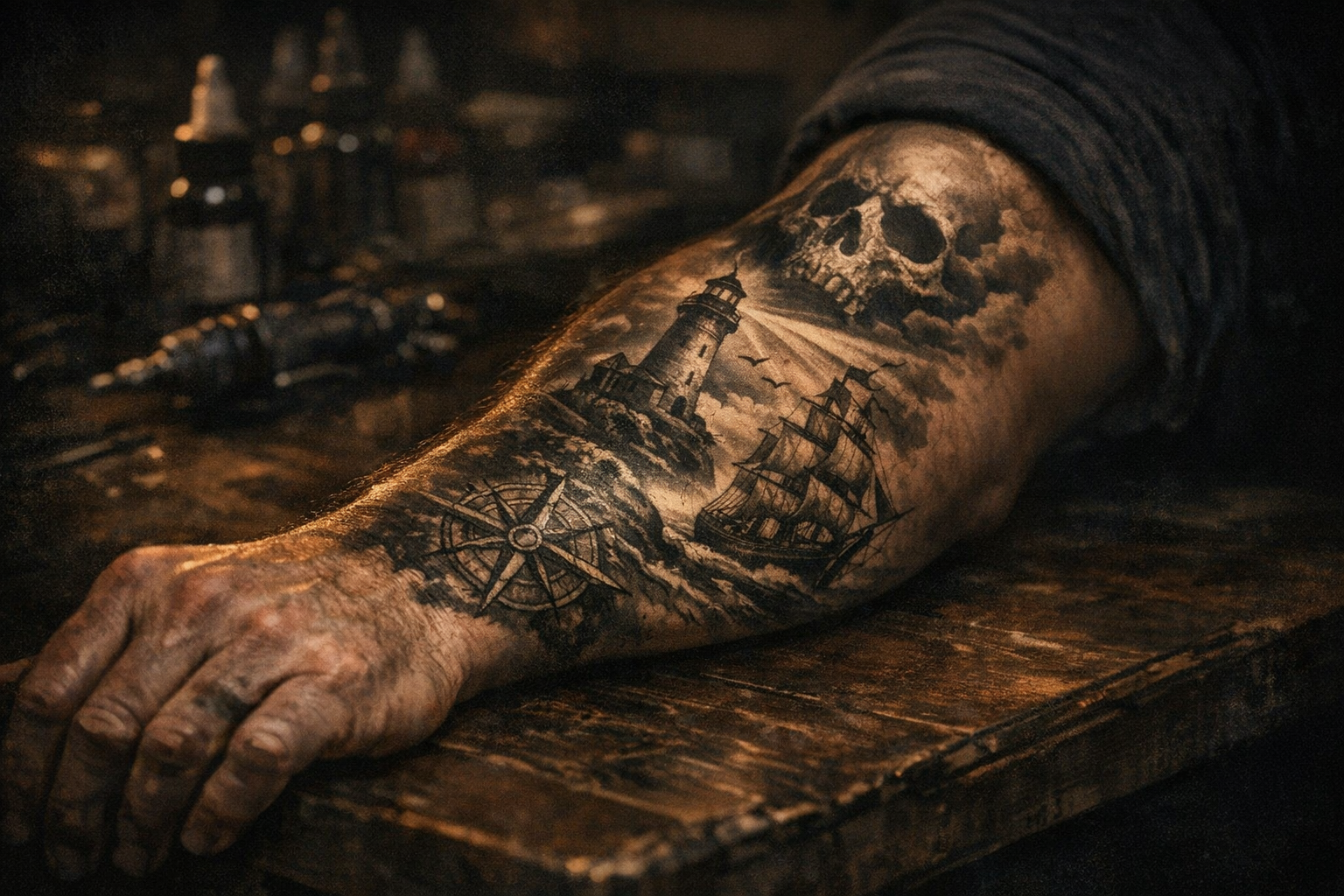
# I Got My First Tattoo at 52 in a Small Town in Georgia and Everyone Had an Opinion About That
My coworker looked at my arm for a solid five seconds, then looked back at me, and said, “You know those are permanent, right?” I’m a systems engineer with 28 years in IT. I’ve been designing enterprise infrastructure longer than some of my coworkers have been alive. But sure. Tell me more about how permanent things work.
That was the reaction that kicked off what I now think of as the Great Tattoo Opinion Season of my early fifties. And it taught me something I didn’t expect to learn from a needle and some ink.
Nobody Gives You a Tattoo Checklist at 52
There’s an unspoken social contract around tattoos, and it goes something like this: you get them young, you maybe regret them later, and that’s the deal. The whole cultural narrative around tattoos assumes you’re in your twenties, possibly making a questionable choice at 2 a.m., probably with your friends daring you.
When you break that script, people don’t know where to put you.
I got my first piece done by David Watson, who at the time, was at Barefoot Ink in Macon, Georgia. Not some trendy studio in Atlanta. Not a parlor in a city where nobody knows you. A shop in a small Middle Georgia town where there’s a reasonable chance the guy running your credit card at the gas station knows your wife’s name. That context matters, because the social radius in a place like that is tight. Word travels. People feel entitled to weigh in.
And weigh in they did.
The opinions split pretty cleanly into two camps. The first camp was genuinely confused, like I’d done something that violated a law of physics. “At your age?” was the phrase I heard most often. As if there’s a biological window for body art, and I’d missed mine by a few decades. The second camp was enthusiastically supportive in a way that felt slightly patronizing, like I’d managed to parallel park on the first try, and they wanted to make sure I knew they noticed.
What almost nobody said was the one thing that would have been the most honest: “I don’t know what to do with that information about you.”
What the Chair Actually Feels Like
Here’s the part that I don’t think gets said plainly enough: getting a tattoo at 52 is a different physical experience than getting one at 22. Not worse, just different. Your skin has more history. It’s been working longer. David has done all seven of my pieces now, and he’s straightforward about what that means technically, how skin behaves differently with age, how that factors into the work.
That conversation, sitting in the chair in Forsyth talking through the design and the placement and what would hold well long-term, was more substantive than most of the opinions I got from people who’d never sat in that chair in their life.
The thing about getting tattooed later is that you know exactly what you want and why. I didn’t walk in with a vague feeling about something that seemed cool. I knew. Years of thinking about it, actual reasons, real meaning attached to the choice. That’s not a defense of the decision. I don’t need to defend it. It’s just an honest description of what the experience is like when you’ve been alive long enough to stop doing things on impulse.
Seven tattoos later, I’m still adding. Still working with David. Still getting opinions I didn’t ask for.
The Real Thing Nobody Wants to Say
Here’s what I eventually figured out about the opinions: most of them weren’t actually about tattoos.
They were about the discomfort people feel when someone they thought they had categorized does something that doesn’t fit the file folder. I’m a 55-year-old IT guy in Gray, Georgia. I work for a huge health system. I drive a sensible pickup. I have a mortgage and a German Shepherd and a grandson. That’s a type. When you do something that doesn’t match the type, people get uncomfortable, and they express that discomfort as concern or confusion because that’s more socially acceptable than saying “you confused me and I don’t like it.”
I’ve spent a career breaking complicated systems down until they actually make sense. IT is full of moments where you have to say, “Let’s set aside what we assumed and look at what’s actually happening.” The tattoo opinions were a human version of that. Once I stopped taking them at face value and looked at what was actually driving them, they became a lot less interesting.
The people whose opinions actually mattered? They asked questions instead of making statements. They wanted to know what the piece meant, who did it, what it felt like. That’s curiosity. That’s real engagement. Everything else was just noise dressed up as concern.
I’m not in the business of performing who I’m supposed to be at any particular age. I’m a Gen-X kid from Middle Georgia who taught himself IT, builds apps in a home lab at midnight, listens to the Allman Brothers and heavy metal with equal conviction, and has seven tattoos that David put on me, exactly like I wanted. All of that is true at the same time, and none of it requires a permission slip.
The needle doesn’t ask how old you are. It just does the work.