Frank
Frank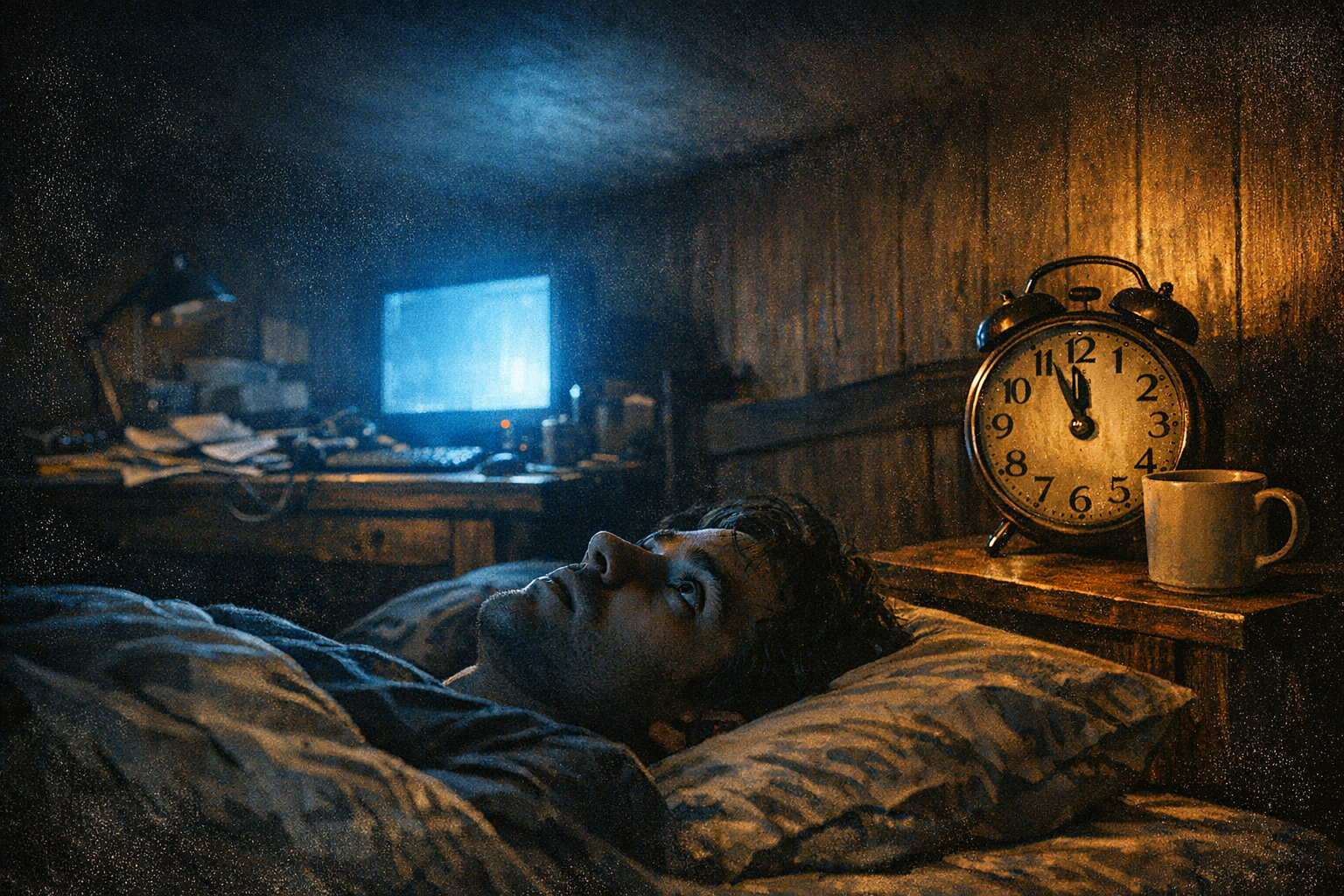
It’s 11:47 PM on a Tuesday. I’m supposed to be asleep. Instead I’m staring at the ceiling running through a PowerShell syntax problem I didn’t finish at work, mentally rebuilding the Caddy config on my home lab reverse proxy, replaying a conversation from three days ago that I probably handled wrong, thinking about what I want for breakfast, and somewhere in the back of all that, there’s a song loop that has been playing since around 2:00 in the afternoon and shows no signs of stopping.
I thought everyone did this. I genuinely, completely, one hundred percent believed that every adult human being on earth laid in bed at night with their head full of competing noise and just, I don’t know, dealt with it.
They don’t, and I know that now.
I’m 55 years old. I was diagnosed with ADHD and Autism, AuDHD, when they occur together, late enough in life that the diagnosis didn’t feel like an answer so much as it felt like someone finally handing me a receipt for 50 years of purchases I didn’t understand.
Here’s the thing about growing up undiagnosed in the 1970s and 80s in small-town Middle Georgia: nobody was looking for this stuff, especially not in boys who made decent grades and could hold a conversation. You weren’t “neurodivergent.” You were “a handful.” You were “not applying yourself.” You were “why can’t you just sit still.” And eventually, if you were smart enough to mask it reasonably well, people just stopped noticing the effort it took to function in a world that wasn’t built for how your brain works.
I masked it for decades. I didn’t know I was doing it. That’s the part that messes with your head when you finally find out.
The ADHD explained the engine always running. The hyperfocus that lets me disappear into a coding problem for six hours and forget to eat, and then the next day I can’t look at the same screen for twenty minutes without checking something else. The way I’ve redesigned workflows just to save thirty seconds later, not because I’m disciplined but because my brain genuinely cannot tolerate inefficiency, it reads it as static. The impulsivity. The projects started and abandoned. The SunoHarvester still sitting incomplete in a folder I haven’t opened in months.
The Part Nobody Tells You About Getting the Answer Late
The Autism piece was harder to accept, honestly. Not because of what it means, but because of what it explains about the last three decades of my life. The sensory stuff I always wrote off as just being particular about things. The way loud crowded environments genuinely wear me out in a physical way, not a social preference way. The reason I’ve always done better with systems and machines than with ambiguous human communication. The reason I still replay conversations from years ago trying to figure out what the other person actually meant.
I lost my brother William in 1995. He was a Baldwin County Deputy, 26 years old, killed in the line of duty. What followed was almost twenty years of trials and appeals and courtrooms and grief that never got to be just grief, it always had to share space with anger and a legal process that dragged us through it over and over. I carried all of that, hard, in ways I never fully processed. And I carried it the way a person carries things when they don’t have the wiring to just let the weight shift naturally, because that’s not how my brain works. Everything sticks. Everything runs on a loop. That’s not character. That’s neurology.
I’m not writing this to tidy it up with a lesson. I don’t have a clean takeaway on this one.
What I have is this: there are people walking around right now who think they’re lazy, or difficult, or stupid, or just bad at life, because nobody ever told them their brain was running different hardware. Some of them are 30. Some of them are my age. Some of them are sitting in a dark room at midnight wondering why they can’t just be normal.
You’re not lazy, difficult or stupid. You’re undiagnosed. And finding out late is genuinely better than never finding out at all, even when the math of all those lost years hits you sideways at 2 AM.
The tabs are still open. They probably always will be. But at least now I know why the machine runs this hot.