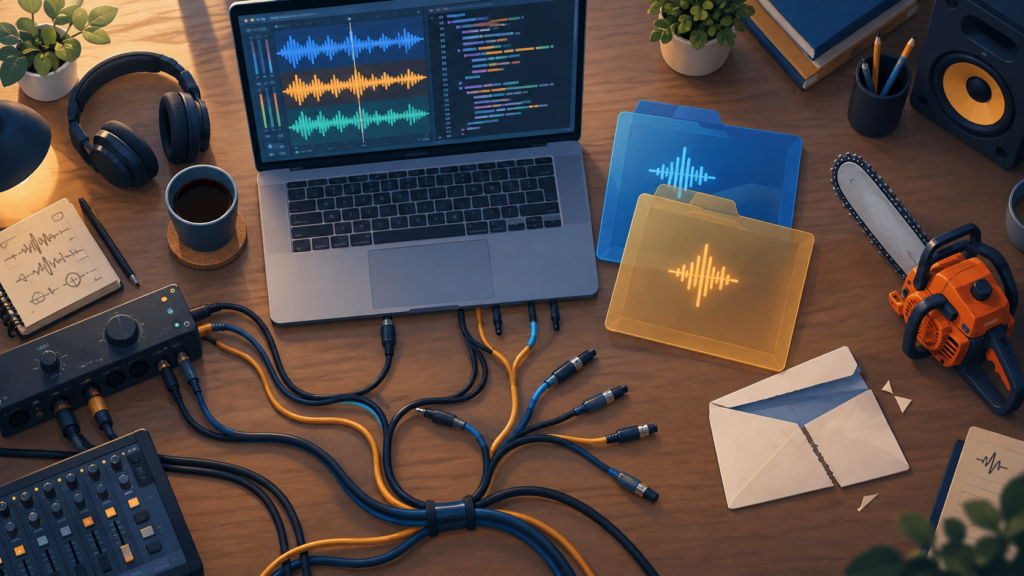
I Forked a Music App Just to Get a Clean WAV File. Here’s What That Actually Cost Me.
Most people build features. I forked an entire project just to solve one audio export problem, and the tradeoffs were more complicated than I expected.
Most people build features. I forked an entire project just to solve one audio export problem, and the tradeoffs were more complicated than I expected.

In the world of AI music production, the difference between a generic “AI-sounding” track and a professional-grade composition often comes down to one thing: structure. Enter the SUNO V5 Studio Team…

Jimmy Jam and Terry Lewis weren’t just producing hits in the 1980s – they were engineering a specific kind of tension that most modern AI music tools can’t even recognize as a goal, let alone achieve.

Everyone talks about what Suno and tools like it can do. Nobody talks about what they quietly take from you in return.
You’re not issuing commands to Suno, you’re describing a vibe to something that learned everything it knows by listening. Once that distinction clicks, the whole way you approach prompting changes.

There’s a line between messing with AI music and making AI music. I crossed it without noticing, and it changed how I hear everything I build.

I’ve made over a thousand songs with Suno. The ones that surprised me most weren’t the best ones technically, they were the ones that told me something about myself I wasn’t expecting.

An in-depth look at the technology, the copyright wars, and the centuries-old tradition of telling regular people they have no business making music.

AI music generators like Suno are changing the game faster than a moonshine runner on back roads. But is artificial intelligence killing creativity, or just democratizing it?

We’re living through the most exciting and terrifying time in music history, where machines can craft melodies that’ll make you weep or headbang. Let’s talk about what’s really happening in the AI music frontier.