Frank
Frank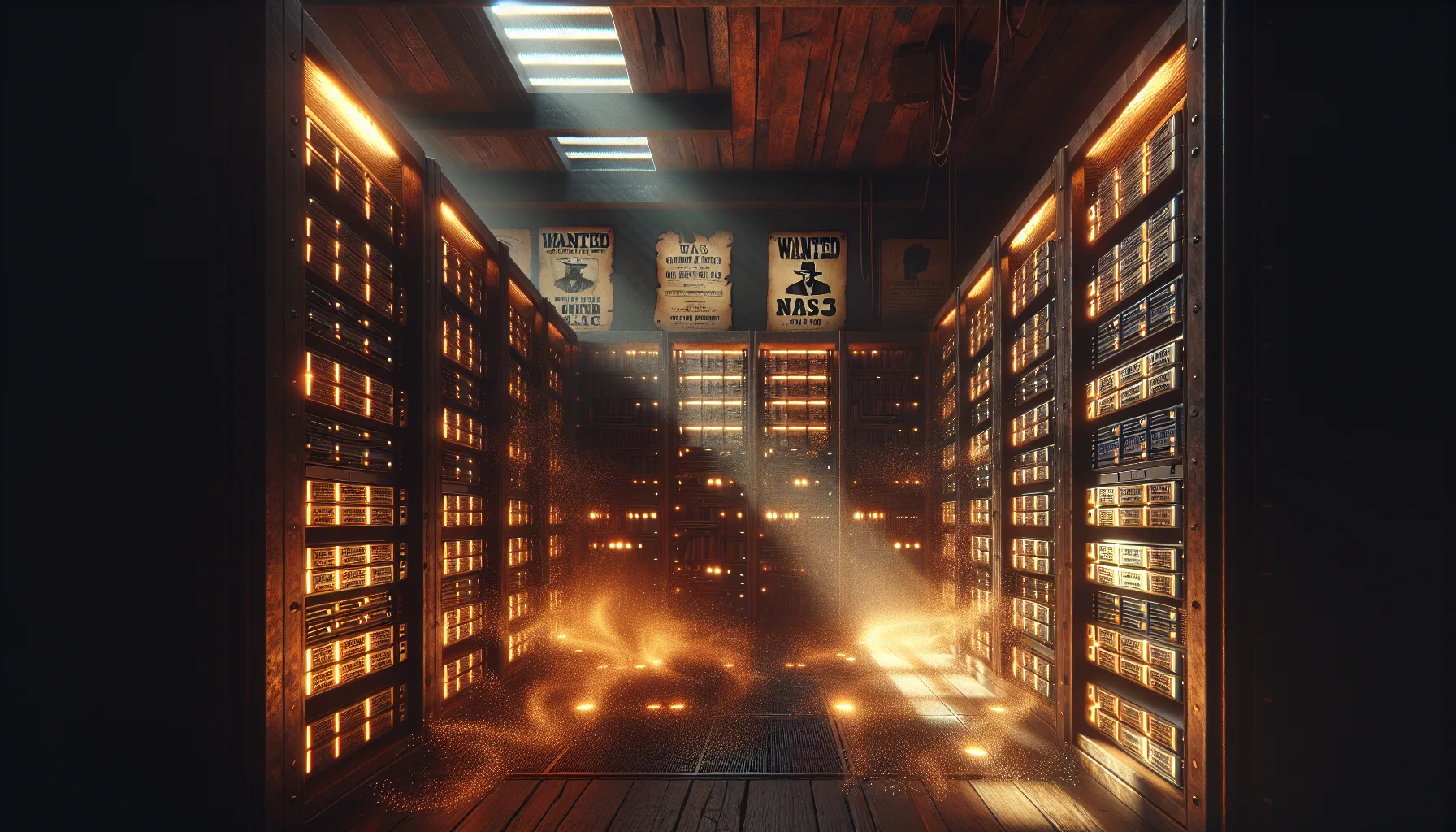
Rollo holds the movies. Lamont keeps the documents and pictures. Grady handles TV shows alongside a Trilium production install. FredG is dedicated to classic cartoons and eBooks. Four Synology and QNAP boxes, all named, all running, all wired into my homelab like a small regional library system built in a garage in Gray, Georgia.
Kimberly mostly watches movies she specifically asks for. She occasionally throws in a short 30 minute sitcom or Netflix.
That’s the story, really. But let me back up.
The Architecture Nobody Asked For
Building this out wasn’t a single decision. It was twenty small decisions made over years that turned into a surprisingly coherent system by accident.
I run Emby as the media server. Everything funnels through it. The NAS units are storage tiers with defined purposes — not just “big drives I threw content at.” Rollo on the QNAP handles the main movie and TV library plus general storage. Lamont stores family photos and documents. Grady carries a chunk of the TV shows and runs Trilium in production. FredG is the archive box: classic cartoons going back to the actual good era of animation, plus eBooks.
The metaphor that fits here is a ranch with different pastures for different livestock. You don’t throw the cattle in with the chickens. You don’t store the hay where you park the trucks. Every box has a job, and that job doesn’t overlap with anyone else’s job.
That separation sounds obvious until you’ve seen what happens when it isn’t done. I’ve talked to people running one massive shared NAS where movies live next to work files, next to backups, next to random downloads from 2017. It’s digital chaos. When something fails or fills up, everything goes down at once. Splitting responsibilities across boxes means a drive issue on Grady doesn’t take out the movie library on Rollo. They’re different pastures.
What the Library Actually Contains
I’m not going to pretend this is a modest setup.
The movie library is deep. Classic American films, every era of hard rock and Southern rock concerts I could find in any format, decades of sports content, foreign films, stuff that’s been out of print long enough that finding it anywhere else requires serious archaeology. The classic cartoon collection on FredG leans heavily toward the era before Saturday morning programming became a toy commercial. If it aired between 1960 and 1990 and was worth watching, it’s probably on there.
The music collection is substantial. I keep a structured catalog target in Trilium Notes, with lyrics, style tags, and metadata. The physical files live on Rollo. Building that out has been a slow ongoing project, not a single upload session.
And then there’s the eBook situation. FredG has a few thousand of those. History, firearms, military, Old West, muscle car manuals, and more fiction than I’ll ever finish reading. Because apparently collecting books you’ll never read is a personality trait that transfers cleanly from paper to digital.
The Gap Between What I Built and What Gets Used
Here is the honest part.
My son Logan will sometimes dig into the movie library and find something genuinely obscure. He appreciates that the collection exists. My daughter Lauren has a newborn, Kade, so her screen time right now is whatever she can watch quietly at 2 a.m. during a feeding. My grandson is 17 months old and has no media preferences I can detect, though he seems calm during certain sounds. I’m choosing to interpret that as early evidence of good taste.
Kimberly has most of it figured out. She doesn’t need my NAS for that. The Christmas movie pipeline runs on its own rails from October through December, and I have learned not to interfere with it.
I watch the most out of anyone. War movies, classic comedy Police/Spy shows, sports archives. I’m the primary user of a system I built for the whole household. That’s not a complaint. It’s just reality.
The ranch analogy holds here too, in a painful way. You can build the nicest pasture on the county road. That doesn’t mean everyone wants to ride horses.
What the Setup Actually Gets Right
Here’s where I’ll defend the whole thing, not on philosophical grounds but on practical ones.
The content is available. Always. No buffering that’s dependent on some company’s CDN. No “this title is no longer available in your region.” No quiet removal of something from a library I thought I owned access to. I can pull up a concert recorded in 1978 at three in the morning without asking anyone’s permission or entering a credit card number.
The Emby interface holds up across devices. It handles metadata well enough that browsing the library doesn’t feel like reading a directory listing. Artwork shows up. Collections organize properly. The experience is clean without requiring me to surrender control to someone else’s server.
And the NAS separation has saved me twice now. Once when a drive started showing SMART errors on one box, and once during a network reconfiguration that required taking a box offline for a few hours. Neither event touched the rest of the library. Rollo kept serving movies while Grady was sitting on the bench.
What I’d Tell Someone Starting From Zero
Don’t buy four NAS units on day one. That’s not advice, that’s biography.
Start with one box, get Emby or Jellyfin running, and actually understand how your family uses media before you start designing a tiered storage architecture. The tier system I have now makes sense for what I’ve accumulated and how I use it. It would be overkill for most people and might even be overkill for me if I’m being honest with myself.
The lesson isn’t “build the biggest system.” It’s “build the right system for how media actually gets consumed in your house, not how you imagine it will get consumed.”
I tested a lot of that theory by just watching what people reached for. Kimberly reached for Hallmark. Logan reached for Netflix half the time anyway. The library got used by the guy who built it.
That’s fine. The pastures are well-organized. The cattle know where they live.
And someday Kade is going to be old enough to sit on the couch with his grandfather and watch something genuinely good, something we picked out together from a library that was waiting for him the whole time.
That’s what I actually built it for.