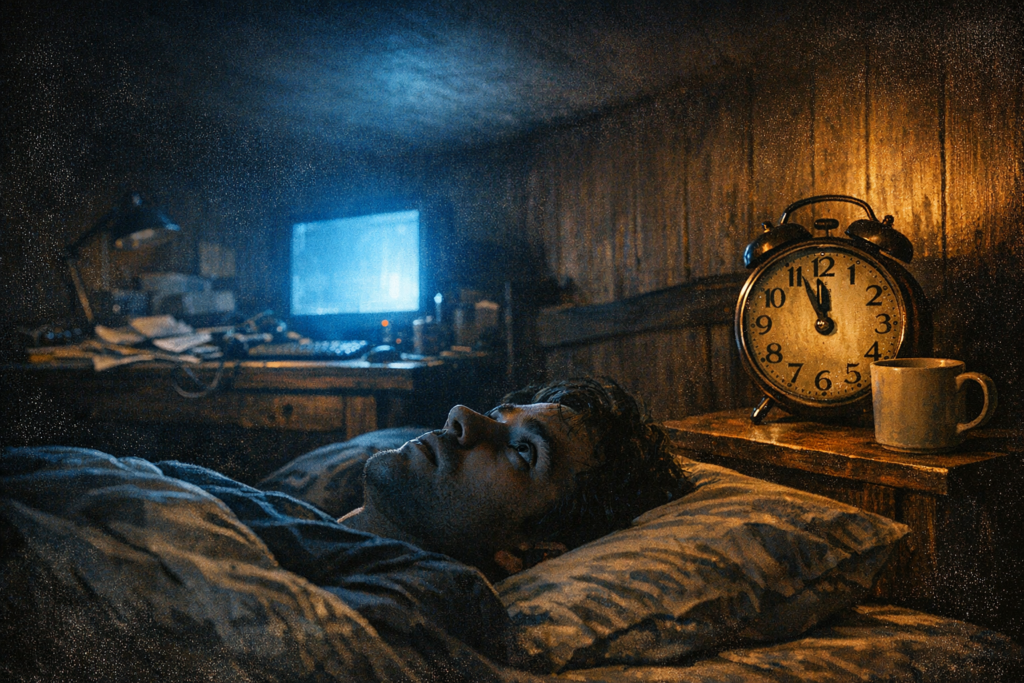
Most Productivity Advice Misdiagnoses the 2AM Idea Machine.
Most productivity advice treats the 2AM idea machine like a malfunction. It isn’t. It’s a scheduling problem, and those have solutions.

The productivity world built its entire mythology around single-tasking. Turns out, for a meaningful slice of the population, that mythology was always wrong — and the people it was wrong about spent decades being told they were broken.
Getting diagnosed with AuDHD at 55 doesn’t rewrite your past. It just finally explains it, which is both a relief and its own kind of grief.
I spent five decades thinking everyone’s brain worked this way, constantly running, never fully quiet, always three problems ahead of the conversation. Turns out that’s not a personality trait. It’s a diagnosis.
Neurotypical systems weren’t designed to be hostile. They were just designed without you in mind, which turns out to feel exactly the same.
Executive dysfunction doesn’t care how capable you are. It targets the start of things, not the ability to do them, and for people in high-stakes technical roles, that gap between knowing and beginning can quietly hollow out everything you think you know about yourself.
I got an AuDHD diagnosis at 54. Not because something was wrong, but because I finally had a name for everything that had always been exactly this way.
A diagnosis doesn’t change who you are. But it does change how much energy you spend pretending to be someone else — and that’s where things get complicated.
Getting diagnosed with both autism and ADHD isn’t a contradiction—it’s finally understanding why your mental hardware has always felt like it’s running competing programs simultaneously.