Frank
Seven Royal Caribbean cruises. I thought I had a type. Turns out I just hadn’t seen enough yet.
Cruise number eight was Princess Cruise Lines, but it was nothing like the previous seven. It started with a flight to Rome. From there the ship took us to Corfu, Greece, then Dubrovnik, Croatia, then Kotor, Montenegro, and finally Naples, Italy, with a side trip into Sorrento while we were docked.
I’ll be straight with you: I did not expect Europe to hit the way it did.
Seven cruises will make you comfortable. You learn the rhythm of embarkation day, you figure out which dining times work, you stop being impressed by the sheer size of the ships. You develop preferences. You think you know what a good port looks like. Then you pull into Kotor, Montenegro, and that whole mental model gets quietly dismantled.
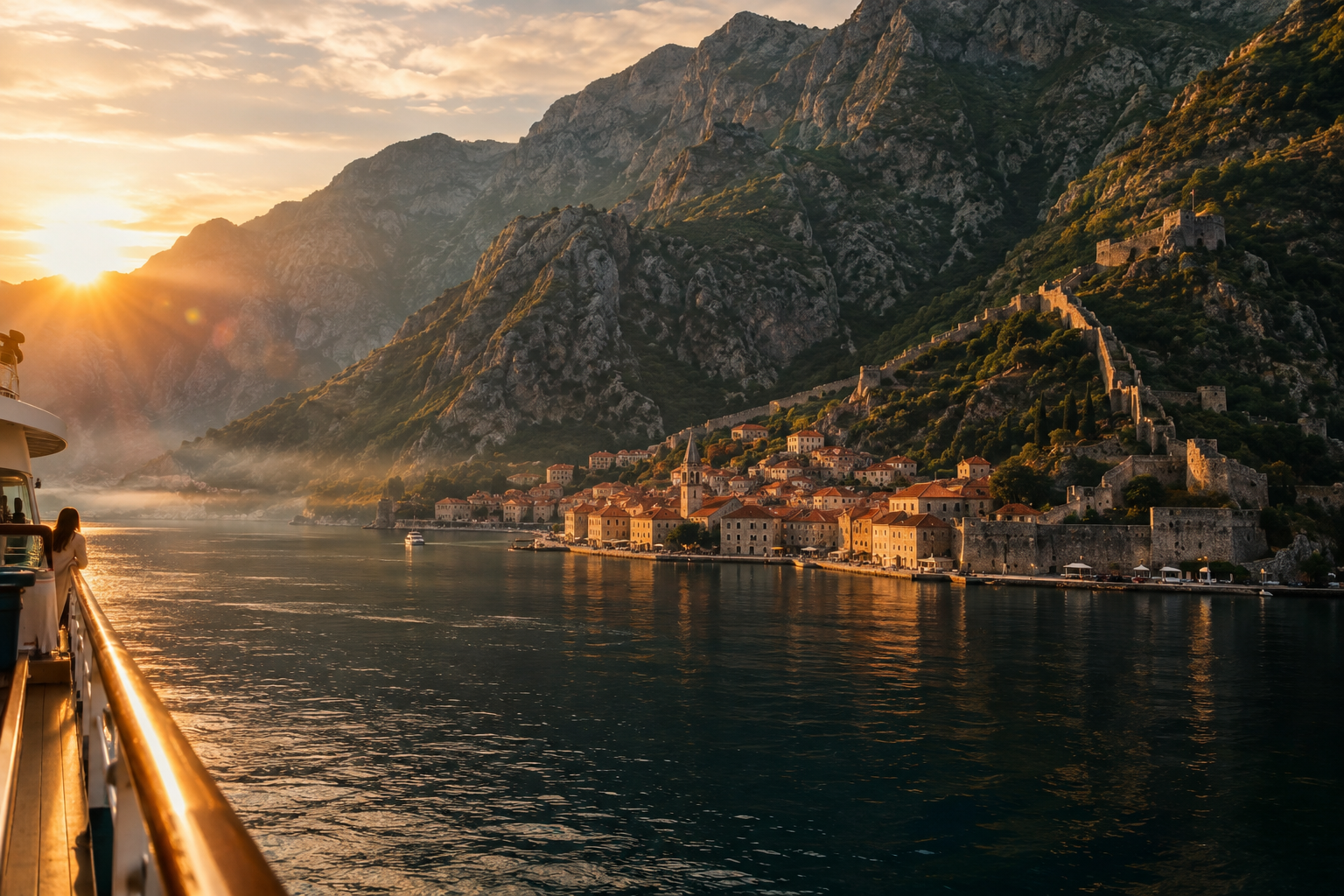
Kotor sits inside a bay that looks like someone folded a mountain range around a medieval city and forgot to tell anyone. The water is dark and still. The old city walls go straight up the hillside behind it. It is the kind of place that doesn’t look real from the ship’s railing, and then you walk into it and it still doesn’t look real. I’ve been to a lot of Caribbean ports. Beautiful places, genuinely. But there’s a different weight to something that’s been standing there for over a thousand years.
What Seven Cruises Didn’t Prepare Me For
The Caribbean is easy. That’s not an insult, it’s just true. The infrastructure around cruise tourism in the Caribbean is so well-developed that nothing really surprises you anymore. Everything is set up for people exactly like me, showing up for exactly this reason. You know what you’re getting.
Europe was different in a way I didn’t anticipate, and not because it was harder. It was actually more accommodating than I expected, not less. That was the surprise. I had some vague assumption, the kind you don’t even realize you’re carrying around, that European ports would feel more complicated, more indifferent, harder to navigate as an American tourist. That was wrong. Every port was welcoming. People were genuinely helpful. Dubrovnik especially, which I expected to feel overrun and touristy, still managed to feel like an actual place with actual history, even with cruise passengers moving through it.
Corfu, Greece was beautiful in a way that felt almost unfair. Naples was chaotic and loud and I loved every minute of it. Sorrento sat up on the cliffs above the water and looked like it was daring you to find something wrong with it. I couldn’t.
Princess, for what it’s worth, handled the whole operation well. Different vibe than a typical Caribbean sailing, a little more deliberate in the pacing, maybe slightly older crowd on this particular itinerary. The ship itself was solid. No complaints. But honestly the ship mattered less on this trip than any of the previous seven, because the ports were doing all the heavy lifting.
The thing nobody tells you about European cruise itineraries is that the distance between ports matters. In the Caribbean you’re hopping between islands that have been purpose-built around tourism for decades. In the Mediterranean you’re moving between cities that existed for centuries before tourism was even a concept, and you can feel that. There’s context to everything you’re looking at. History isn’t a backdrop, it’s the actual thing.
I went in expecting a vacation. I came back having recalibrated what travel can actually be.
Ten out of ten. Worth every penny, and I don’t say that lightly.