#boredom and creativity

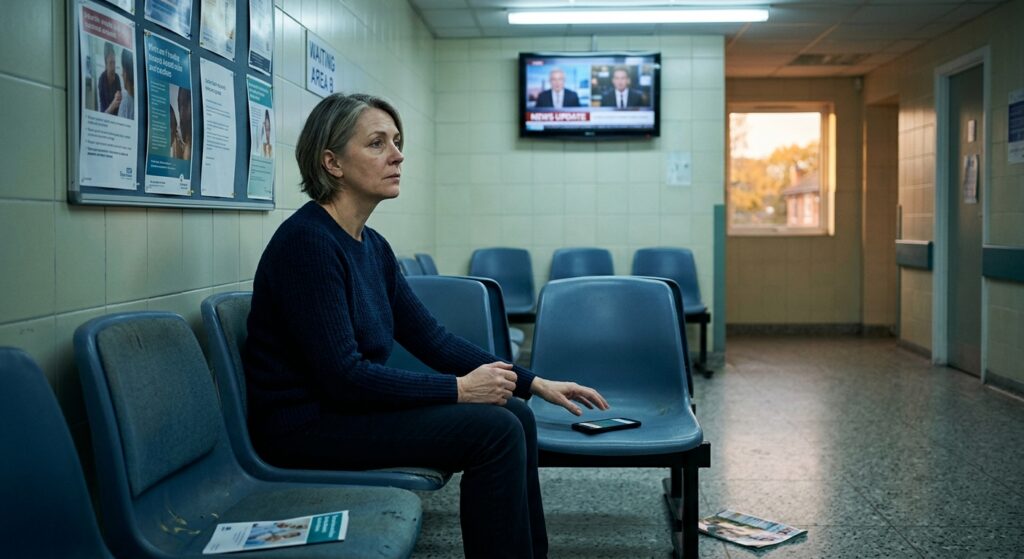
A middle-aged person sitting alone in a sterile hospital waiting room with harsh fluorescent lighting, plastic chairs, and a muted TV on the wall showing blurred news footage. Their hand is frozen mid-reach toward a smartphone resting on the seat beside them, but they have pulled back, choosing instead to sit still with their hands folded in their lap, staring into the middle distance with a contemplative, slightly unsettled expression. The room feels quiet and suspended in time. Through a small window, warm afternoon light filters in, suggesting the world outside moving at a slower, more natural pace. The overall mood is introspective and melancholic, a visual tension between the pull of digital distraction and the rare stillness of an unoccupied mind. Photorealistic editorial style, muted color palette with cool fluorescent blues contrasted against warm amber tones from the window, shallow depth of field. AI & Technology

What has fundamentally changed the world for the worst but us humans haven’t realized?

Boredom was never the enemy. For most of human history, idle time quietly powered memory consolidation, creative insight, and empathy through the brain’s default mode network. Smartphones and algorithmic feeds have colonized those cognitive gaps, training our brains away from depth and sustained thought. Frank argues we didn’t fix boredom — we amputated it, and we’re only beginning to feel what’s gone.

Read More »