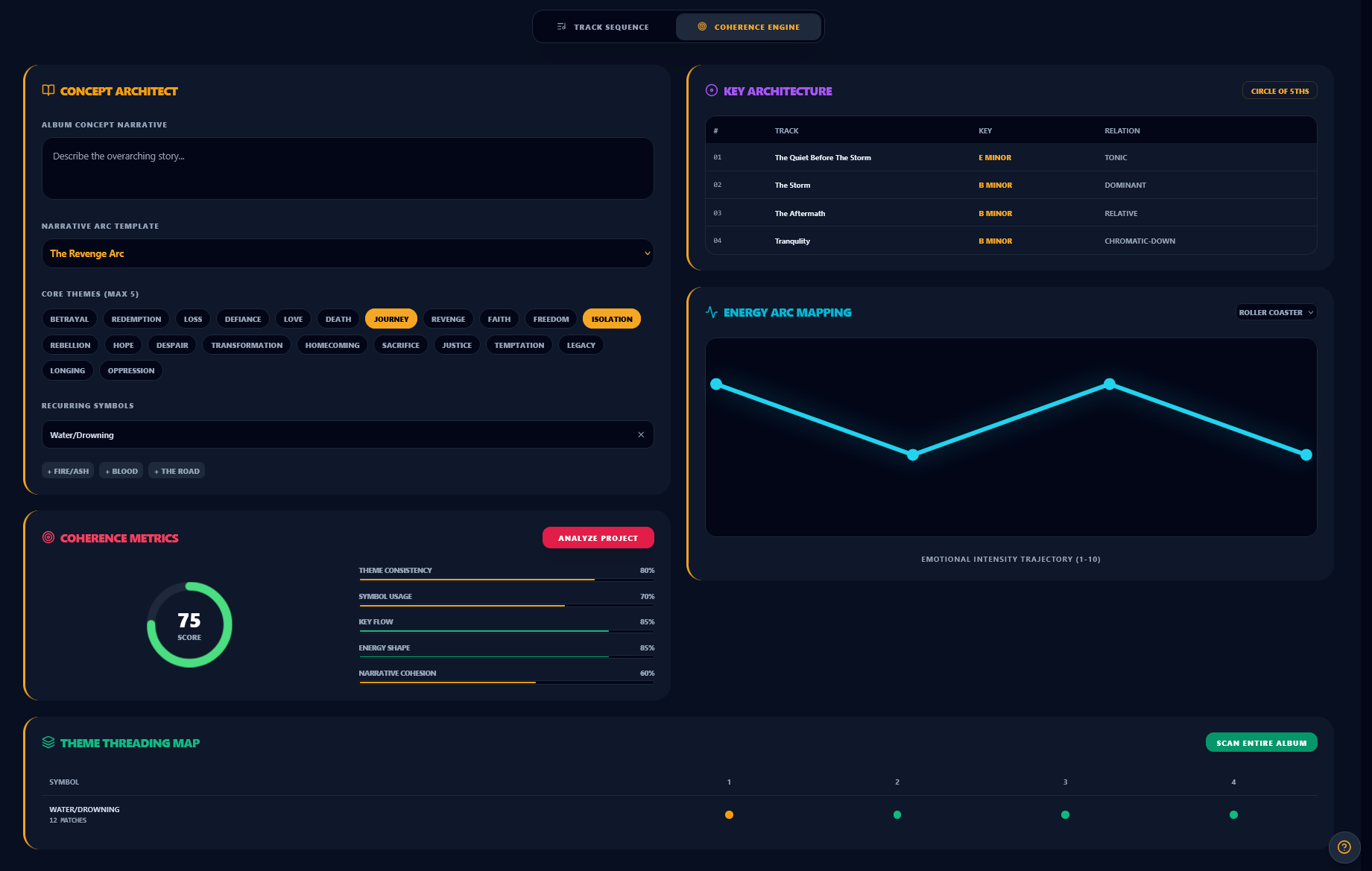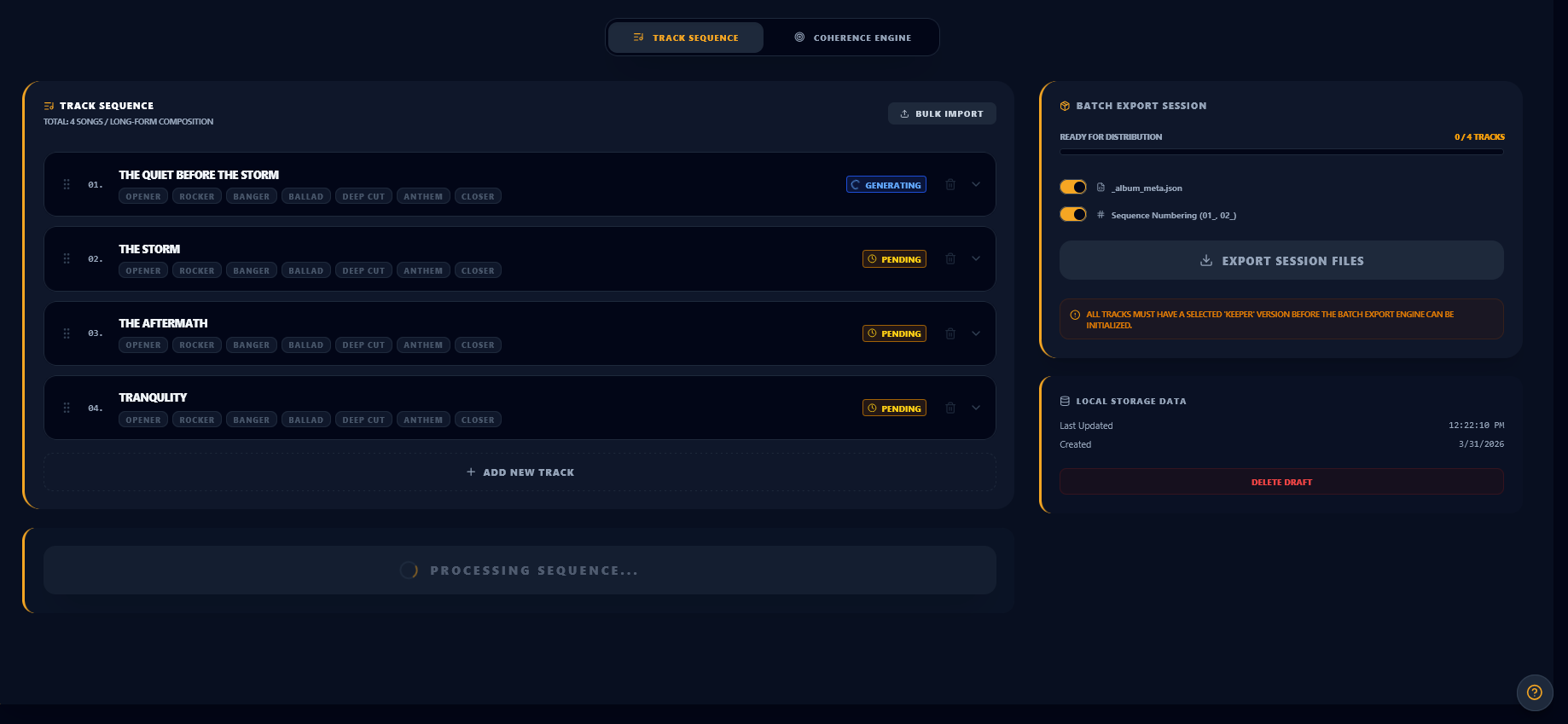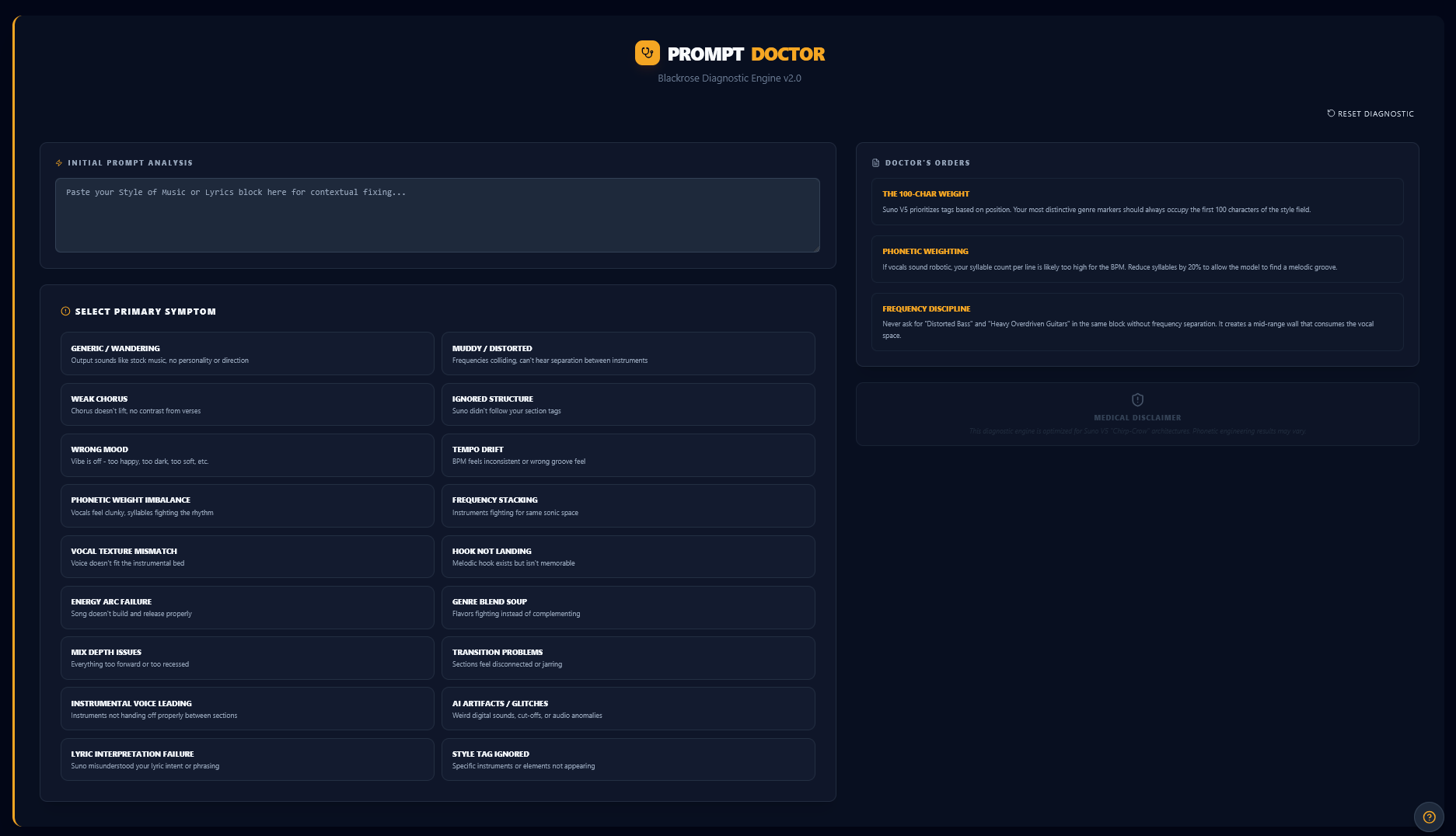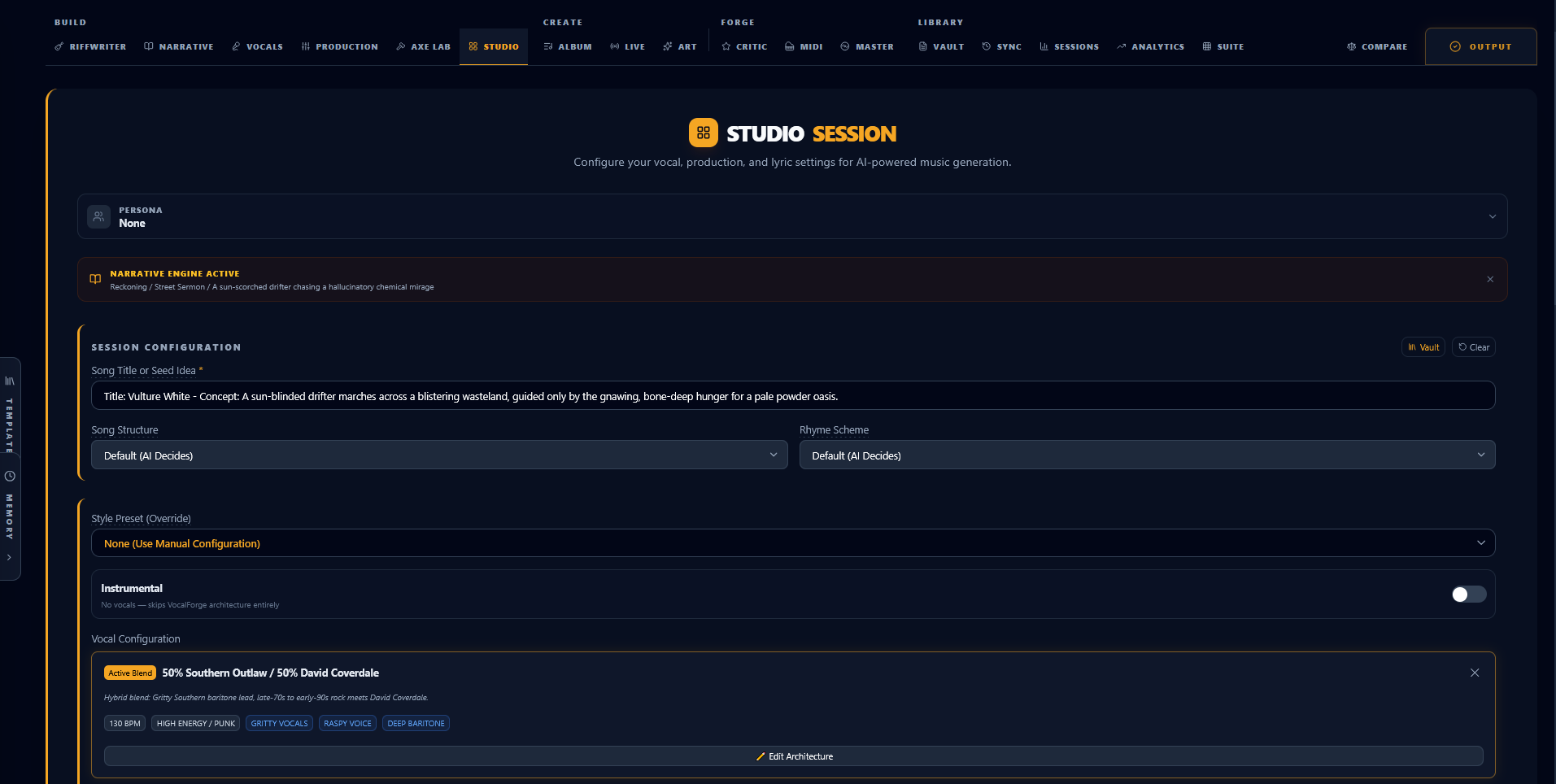
If you haven’t used Suno, it takes a text prompt and outputs an actual song — vocals, instruments, arrangements, the whole thing. The quality is genuinely wild. But writing a good Suno prompt is a craft in itself, and that’s where this started.
How It Got Here
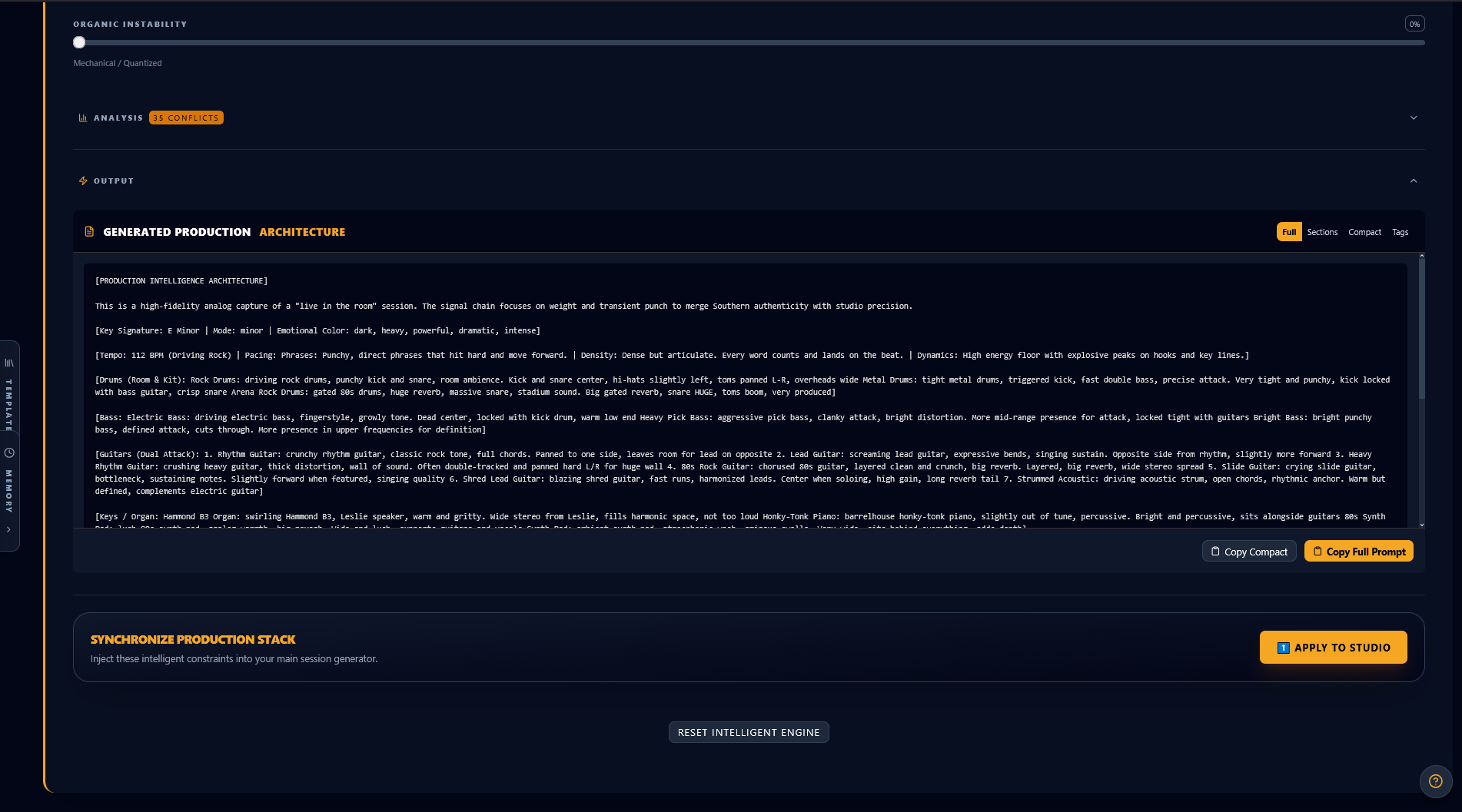
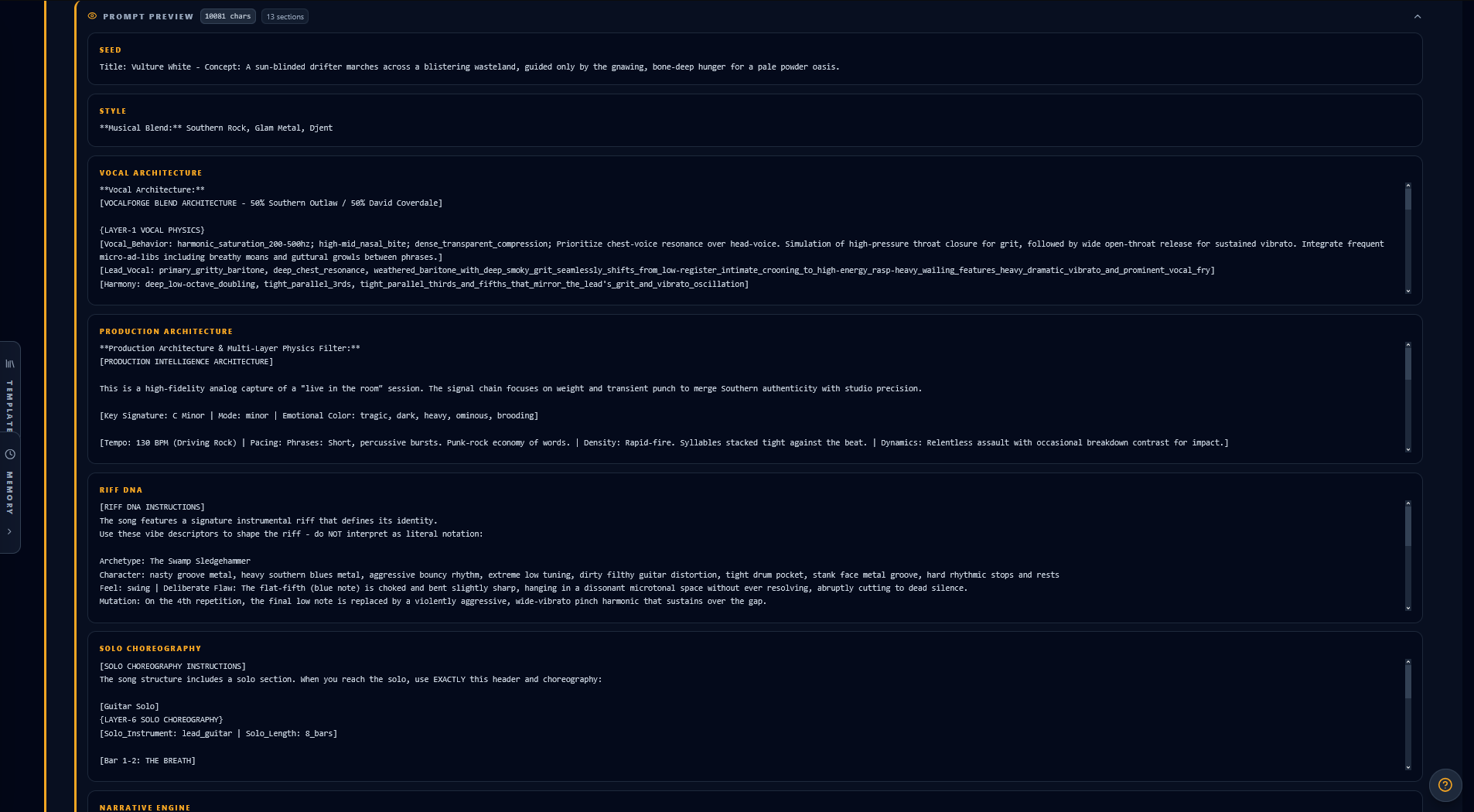
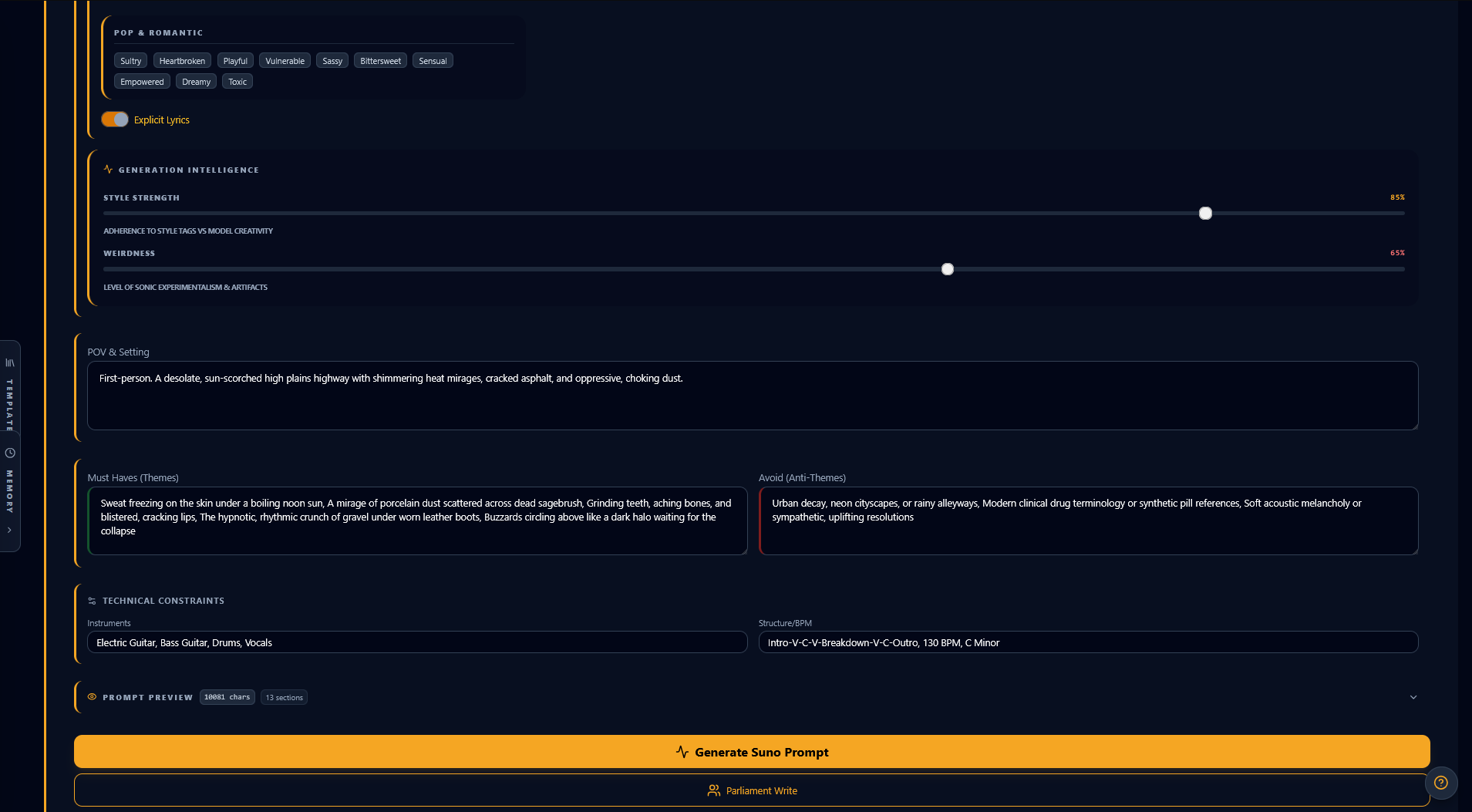
My first real discovery was coming across something called the Blackrose Phonetic Engineering Methodology, a framework around phonetic weight, syllable density, and character count. There is a consistent sweet spot around 4,850–4,920 characters where prompts hit harder. Sounds obsessive. It worked. Once I had that methodology implemented, I wanted to apply it systematically, so I built a prompt builder. Then I wanted genre-specific seed banks. Then vocal profiling. Then a mastering pipeline. Somewhere around month three I looked up and realized I’d accidentally built a real application.
“The difference between a mediocre Suno output and a great one usually isn’t the genre tag — it’s the architecture of the prompt itself.”
What It Actually Does
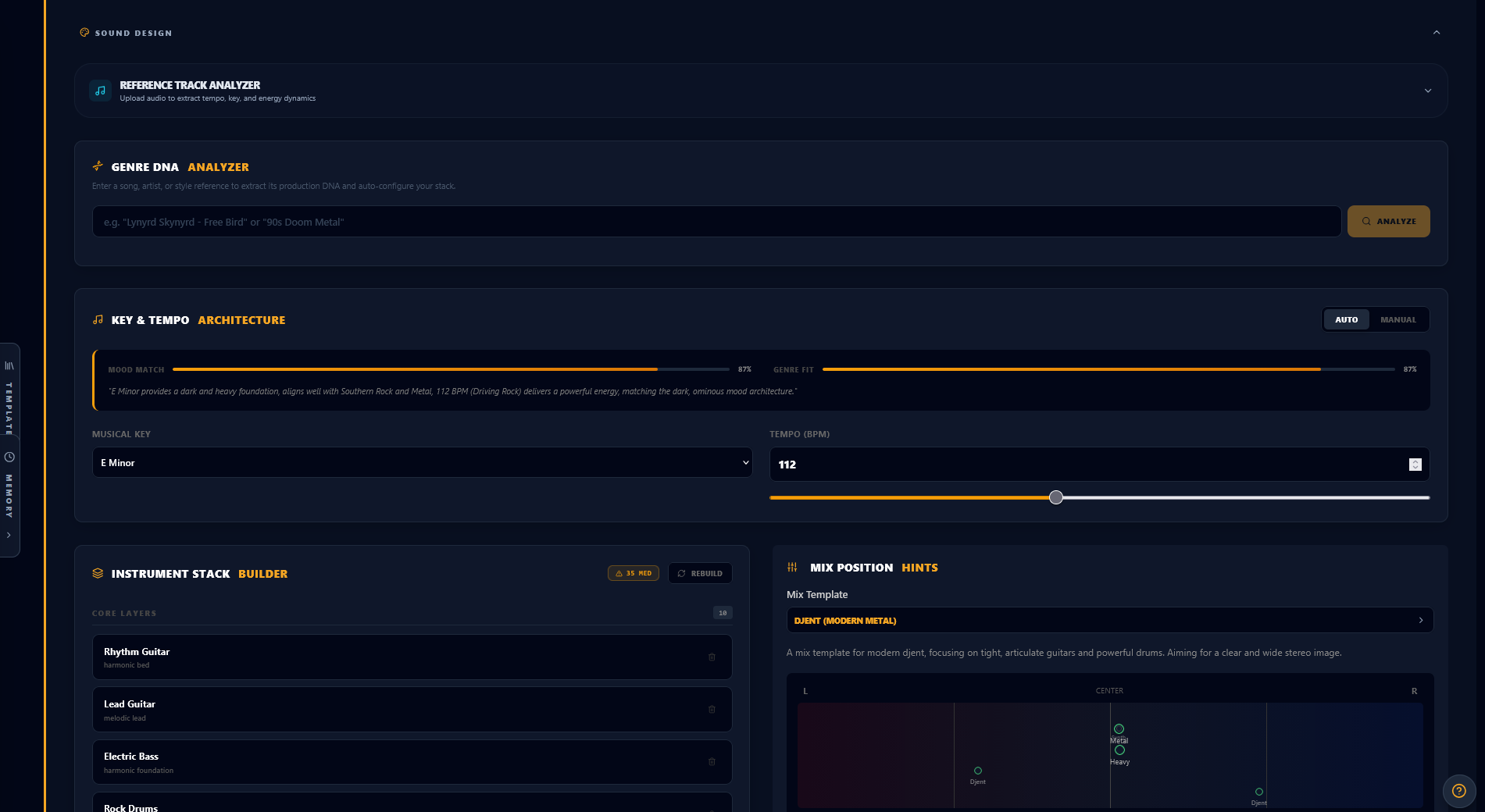
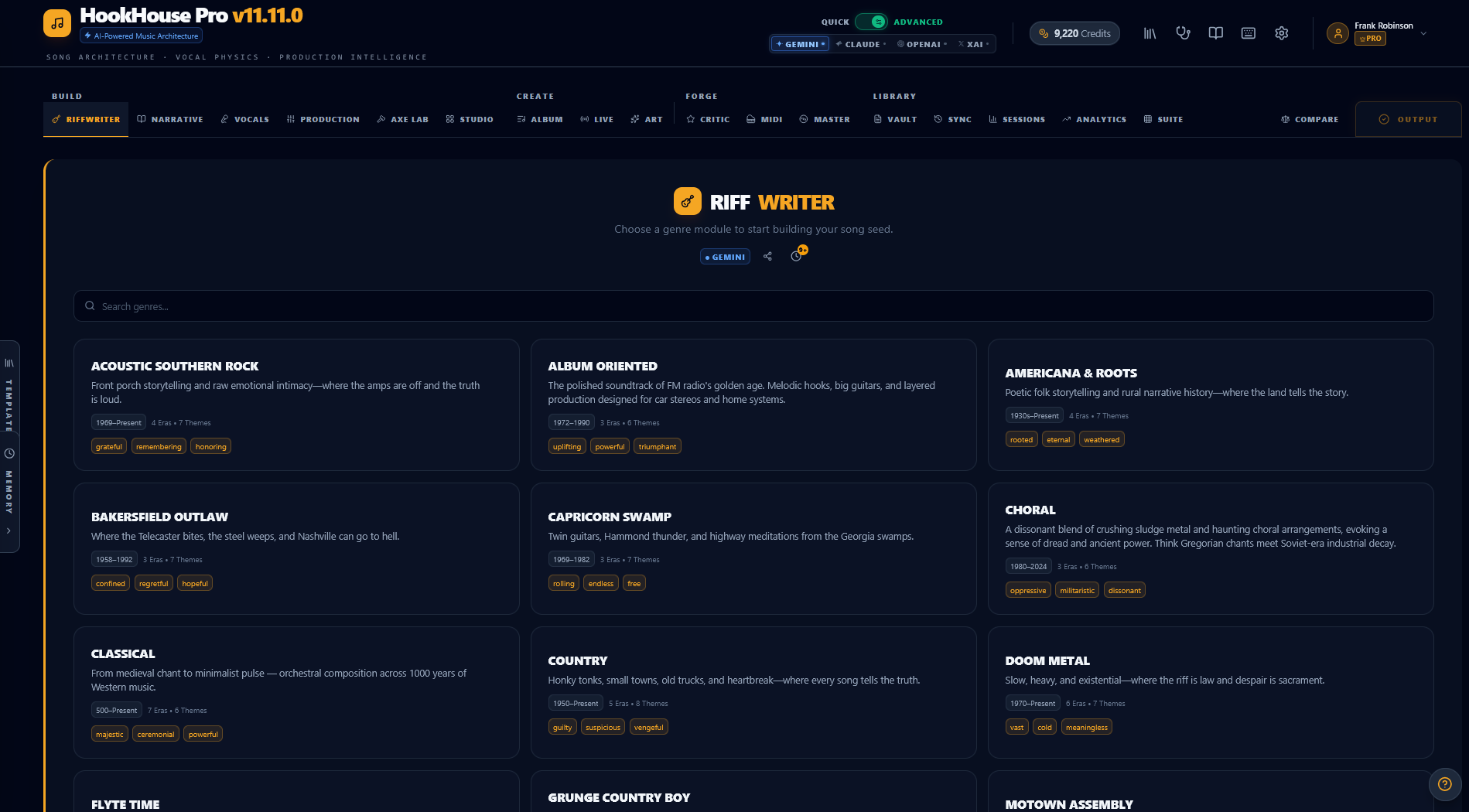
The platform is organized around a production pipeline, the same mental model I’d use thinking about making a real record. The frontend is React 19 with TypeScript 5.8, built on Vite 6 with Tailwind CSS. The backend runs Express.js with Prisma and SQLite, local-first, no cloud dependency. I have four NAS units full of media on my home network; I’m not interested in cloud lock-in for a creative tool.
The Build Group
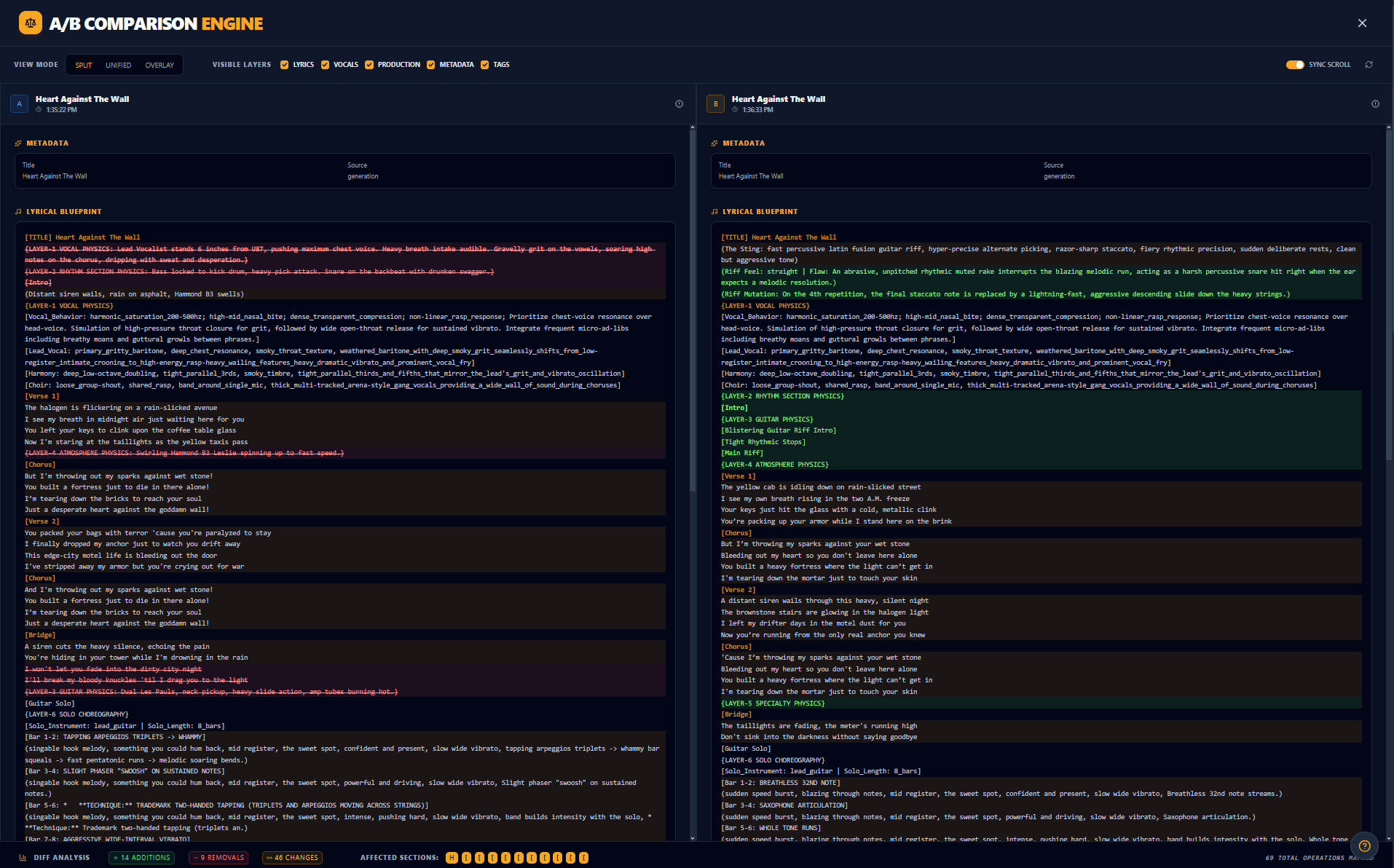
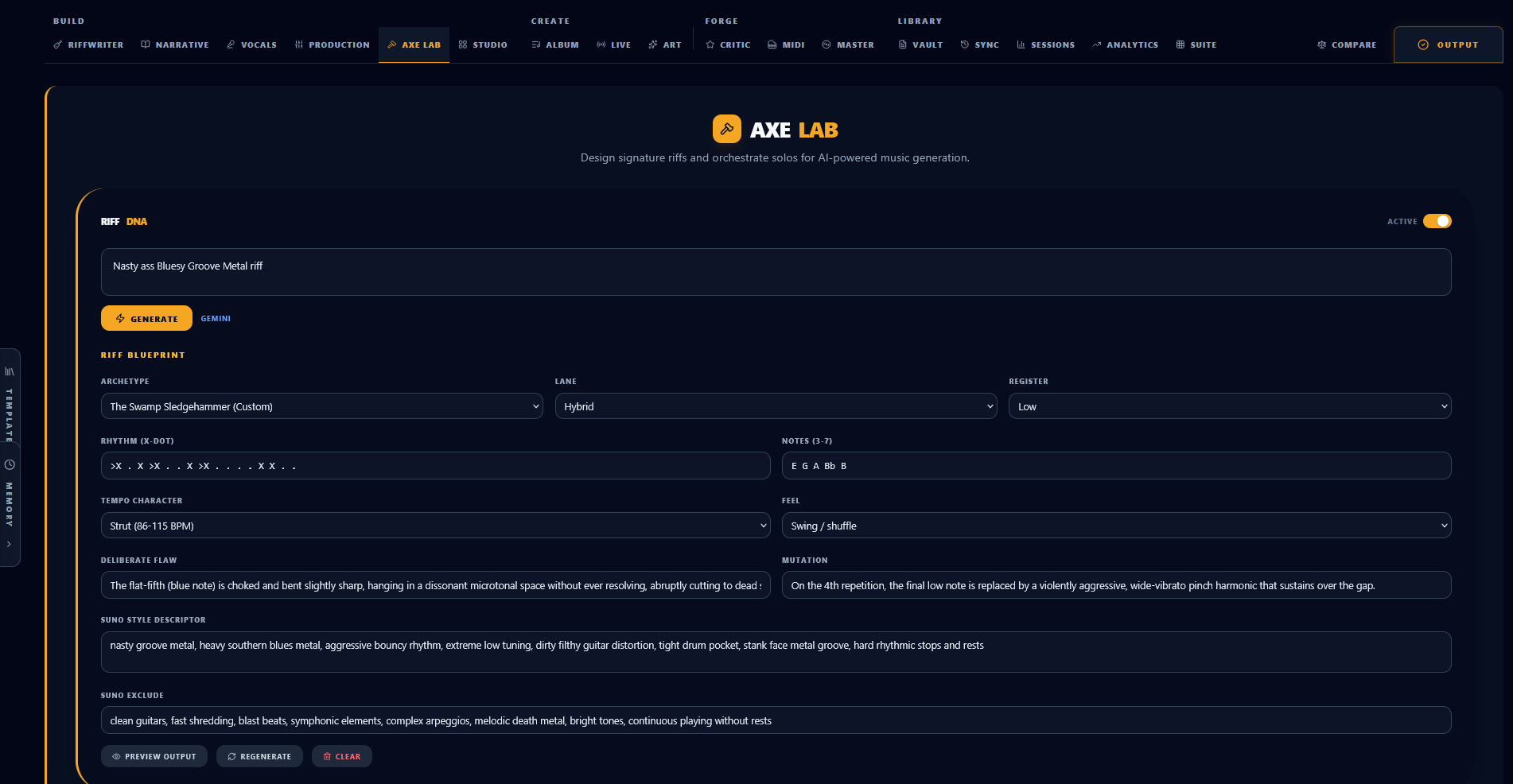
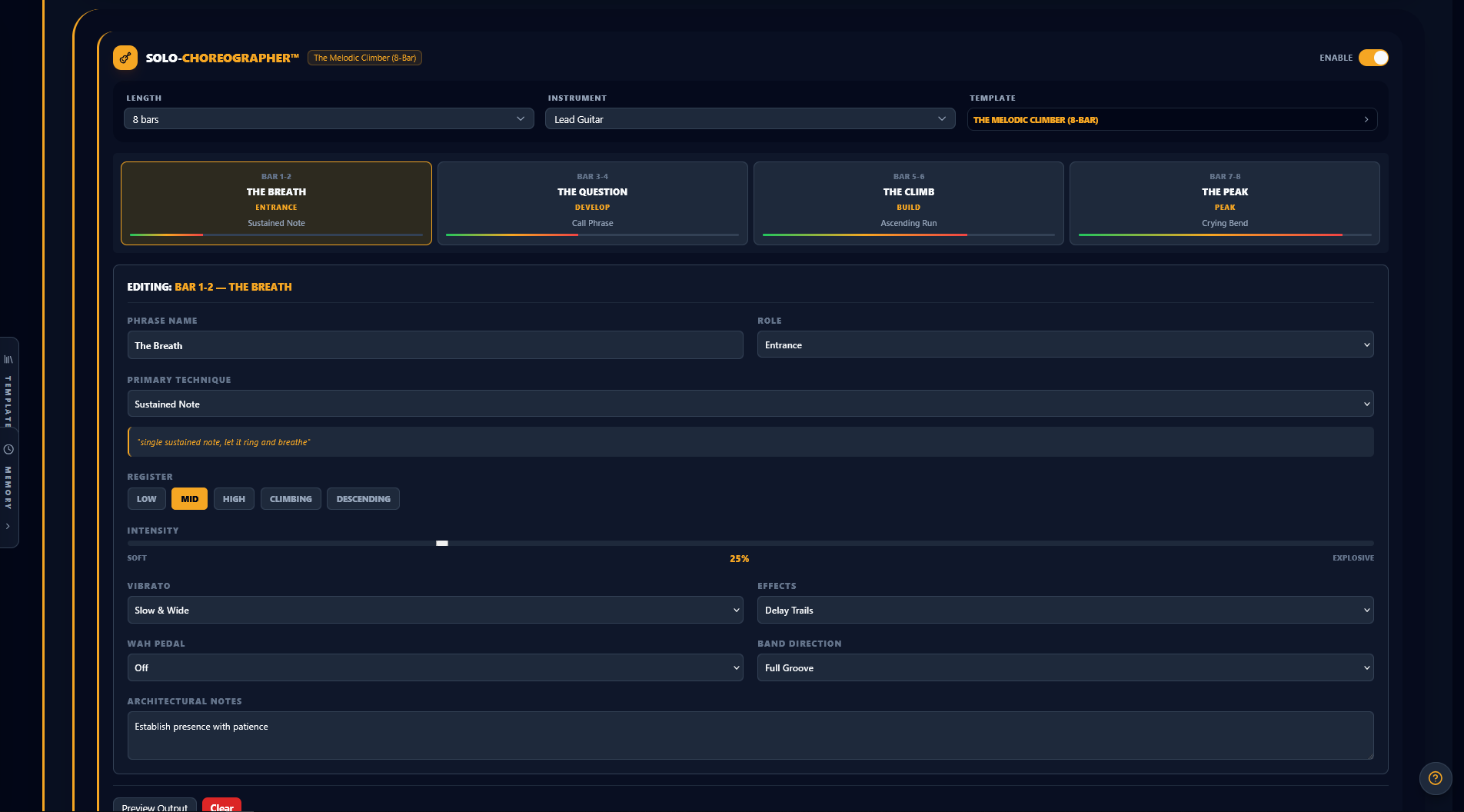
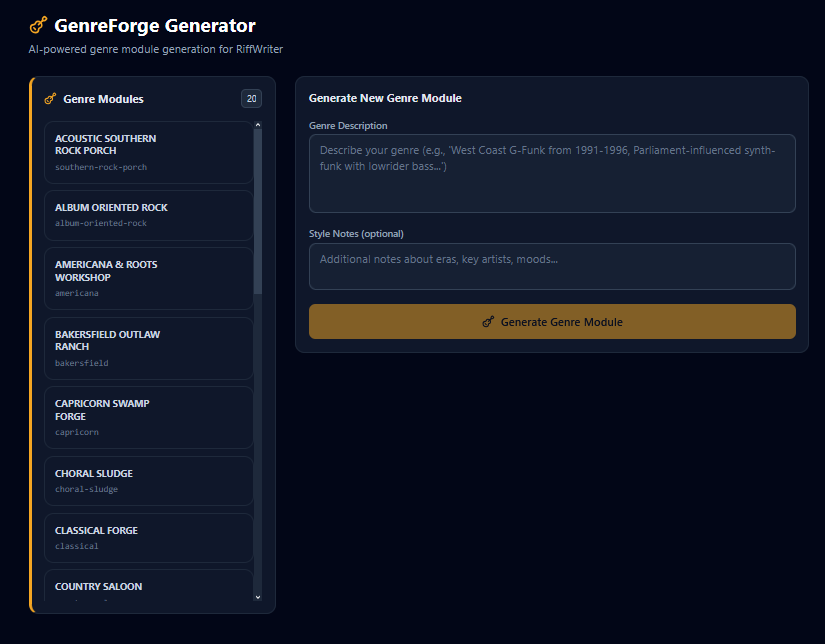
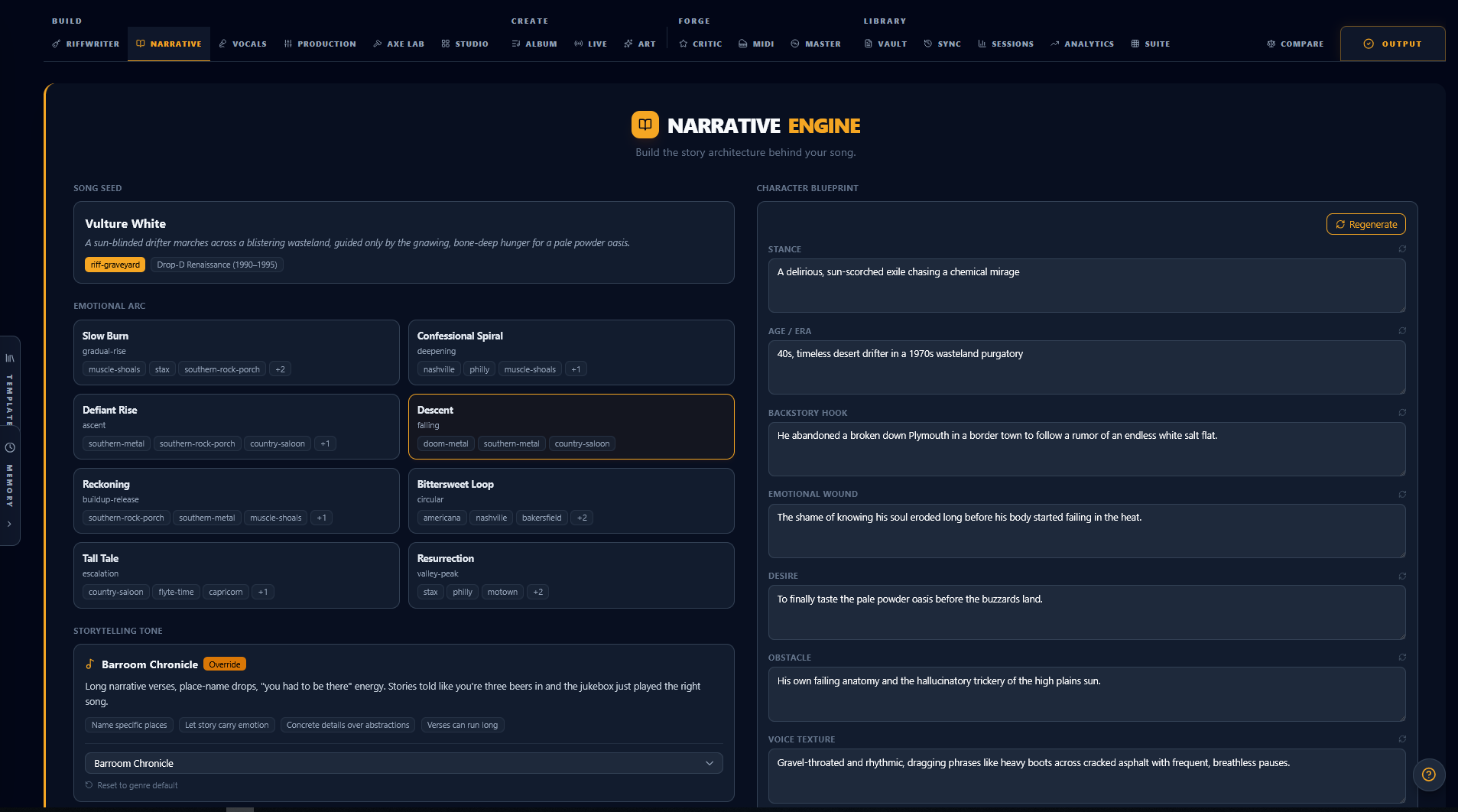
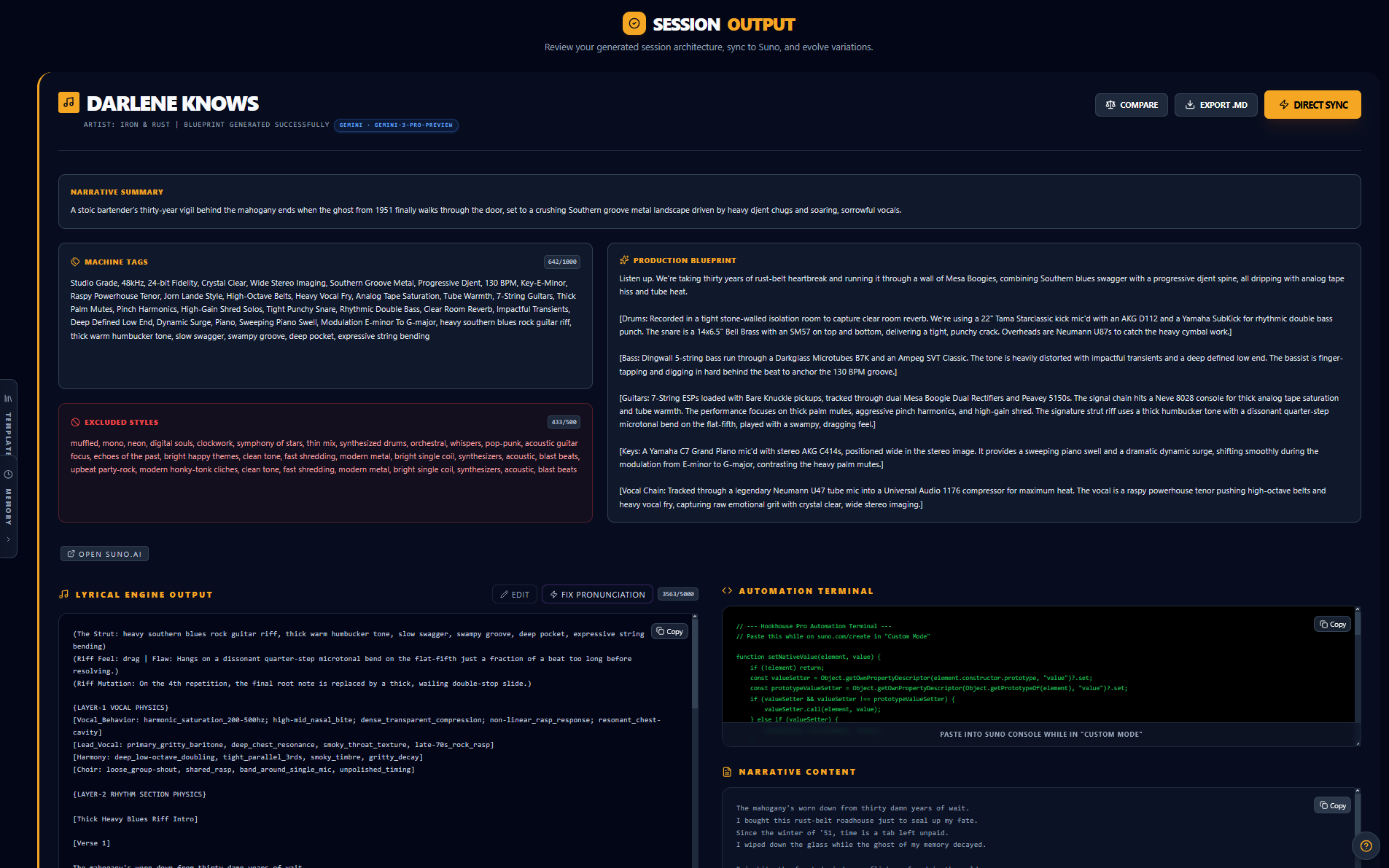
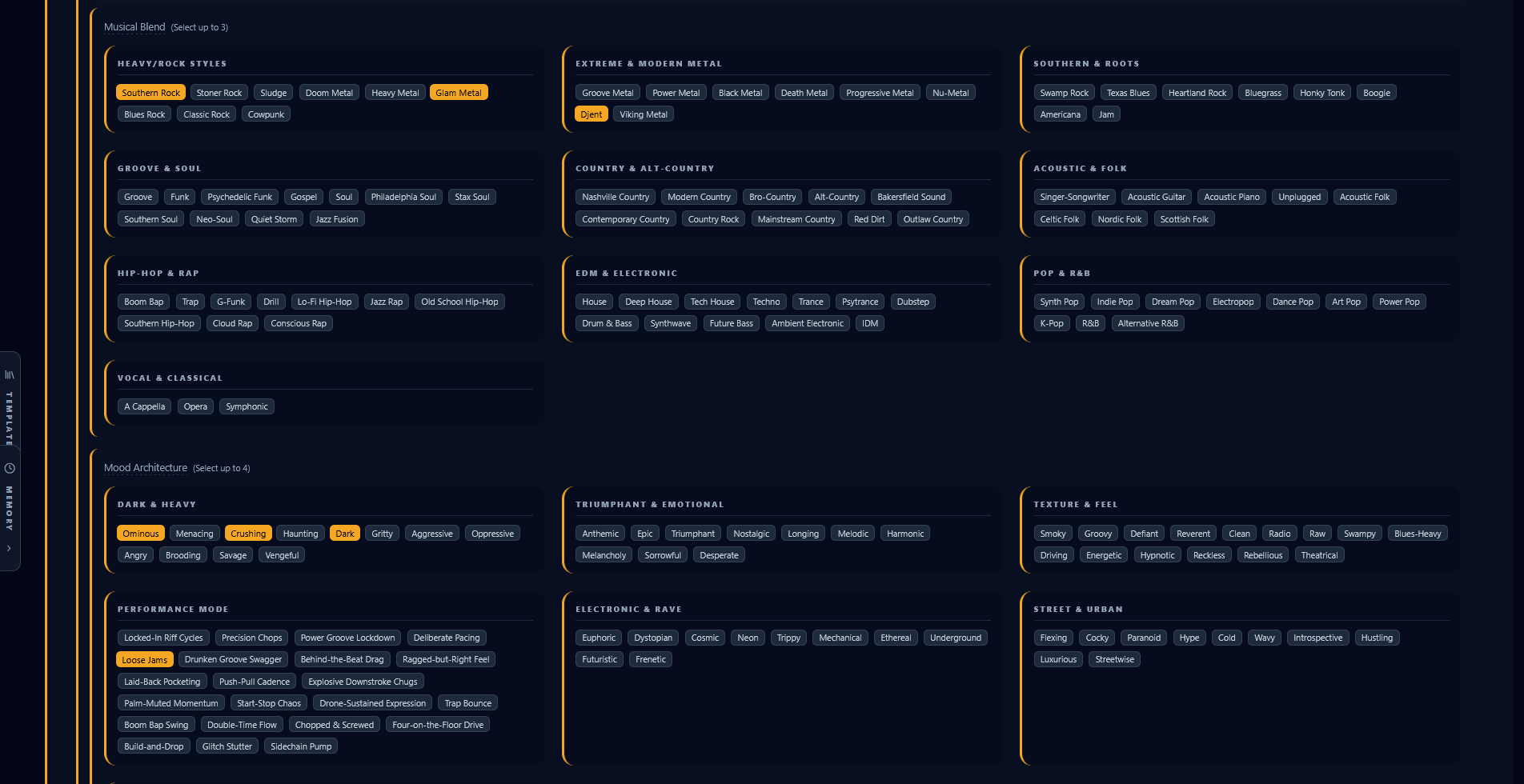
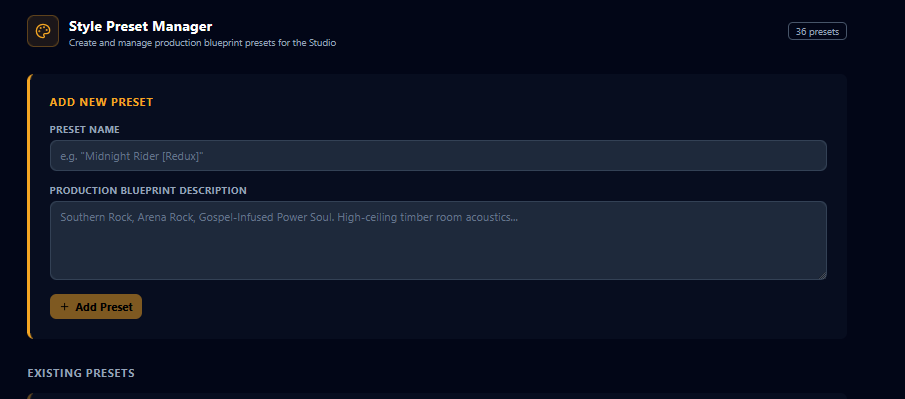
This is where songs get architected. The centerpiece is RiffWriter — 13 genre-specific production modules built around sounds I’ve loved my whole life. Capricorn Swamp Forge is built around the Allman Brothers / Lynyrd Skynyrd Macon sound — slide guitar, Hammond B3, the whole thing. Flyte Time Factory covers the Minneapolis Sound, Jimmy Jam & Terry Lewis territory. The Doom and Metal modules took the most prompt iteration to get right and I’m proudest of those. Alongside RiffWriter is the Narrative Engine for story-arc driven lyrics, and a Parliament Write system where four specialist AI agents draft competing lyrics simultaneously before a synthesizer merges the best sections. That one alone took weeks.
VocalForge
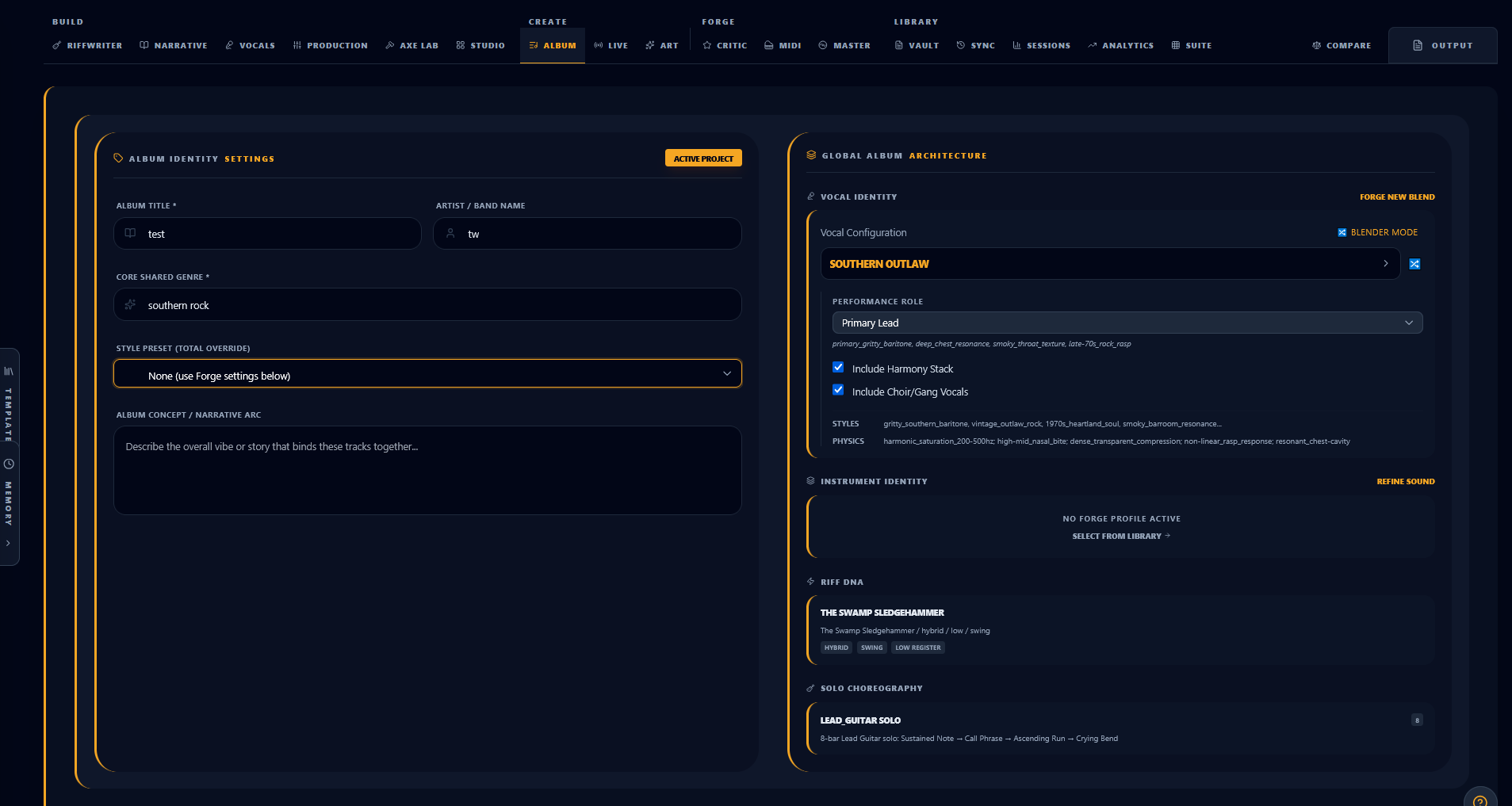
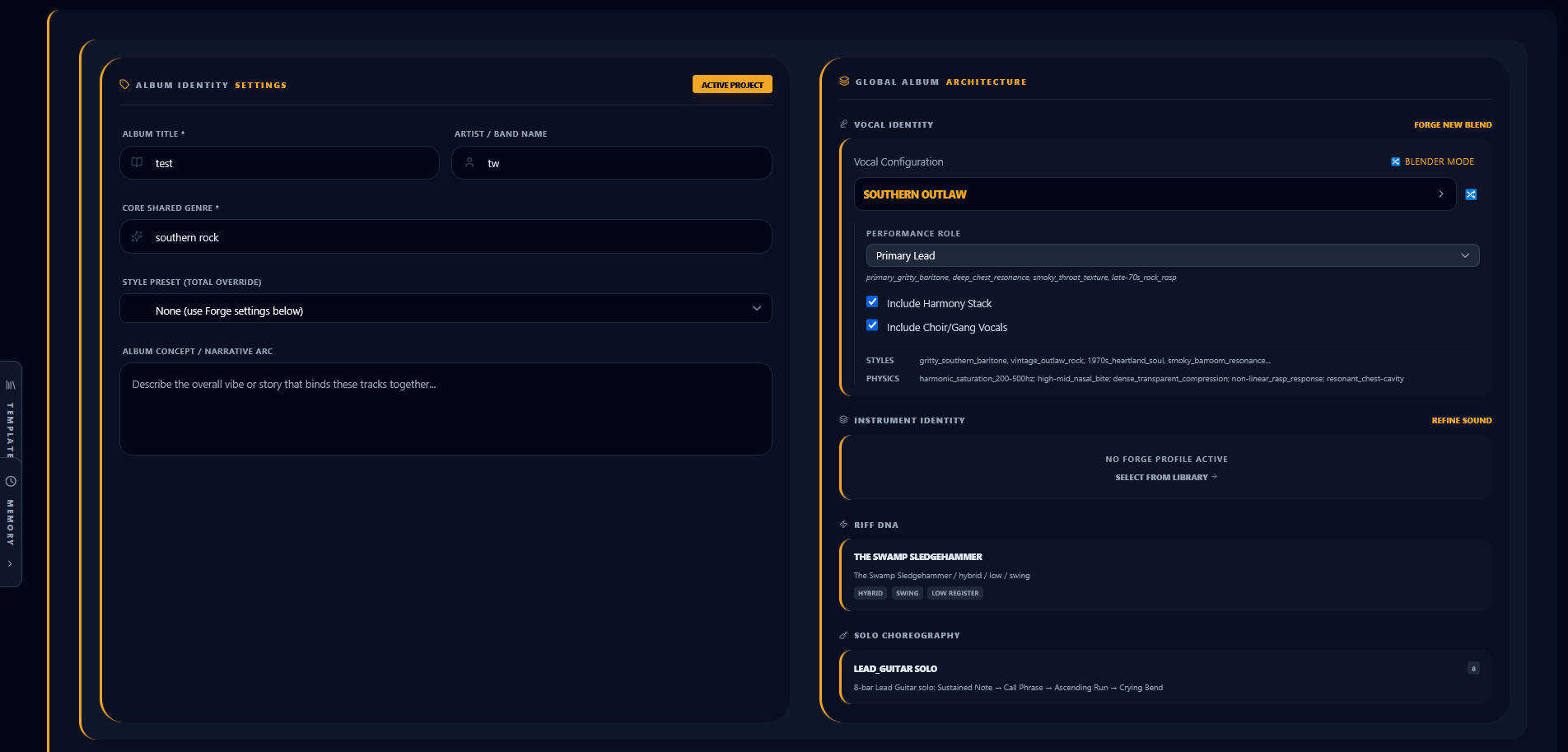
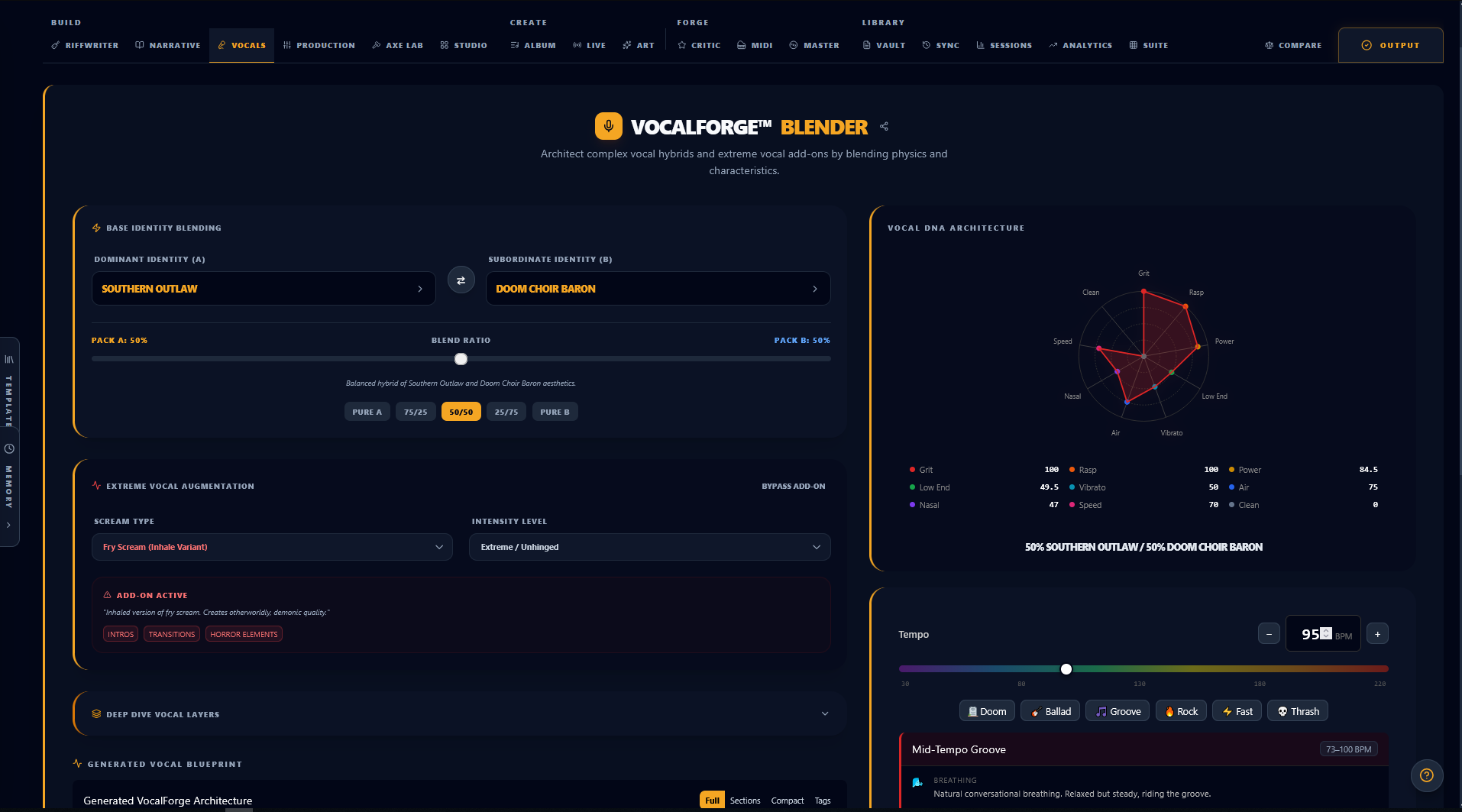
This is where I probably went deepest. Dual vocal pack blending with a “Deep Dive” layer — dialect, aging characteristics, breath patterns, emotional arc across sections. You’re not just picking a voice type, you’re building a character who lives in the song. Generates a TraitRadar visualization so you can see the vocal DNA at a glance.
MidiForge & MasterForge
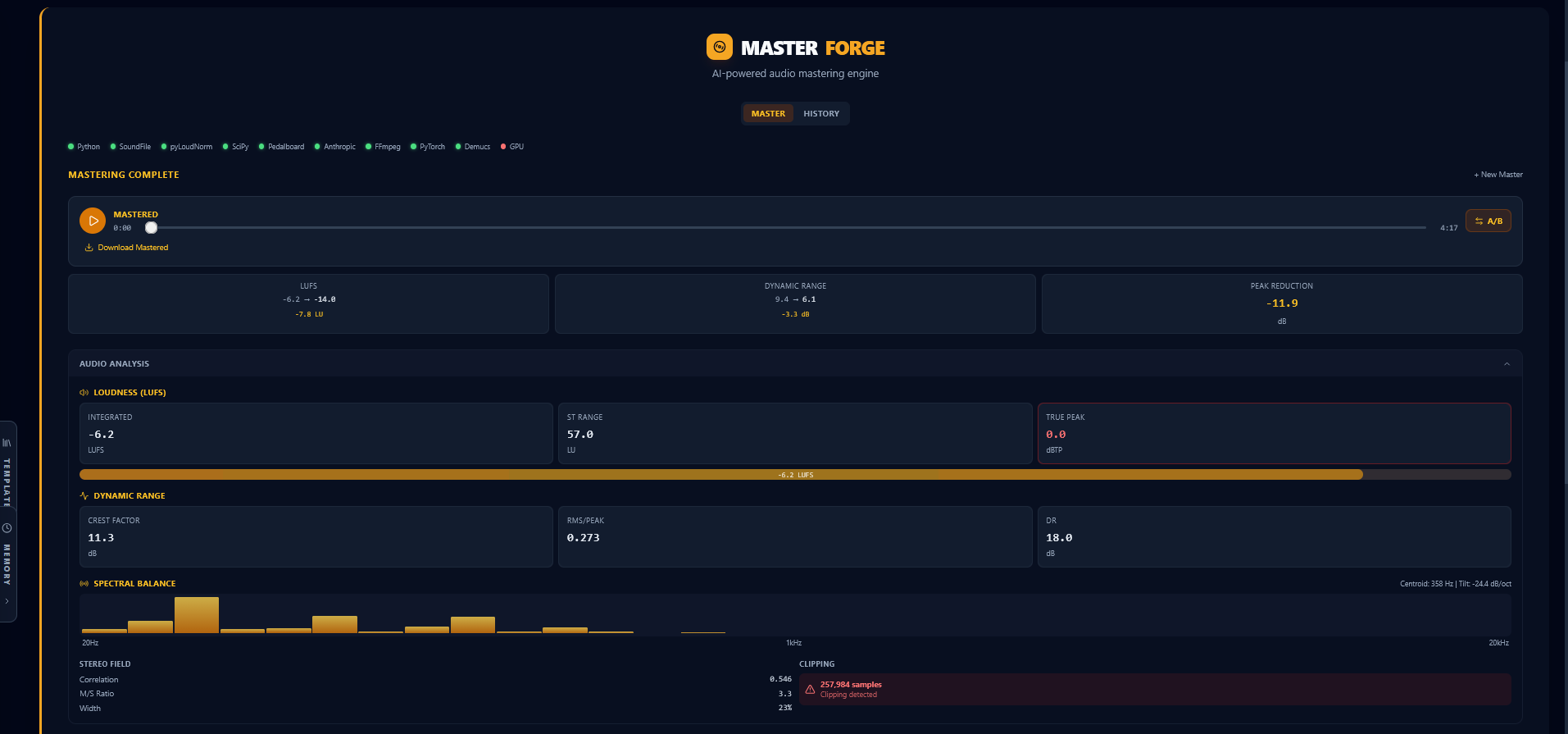
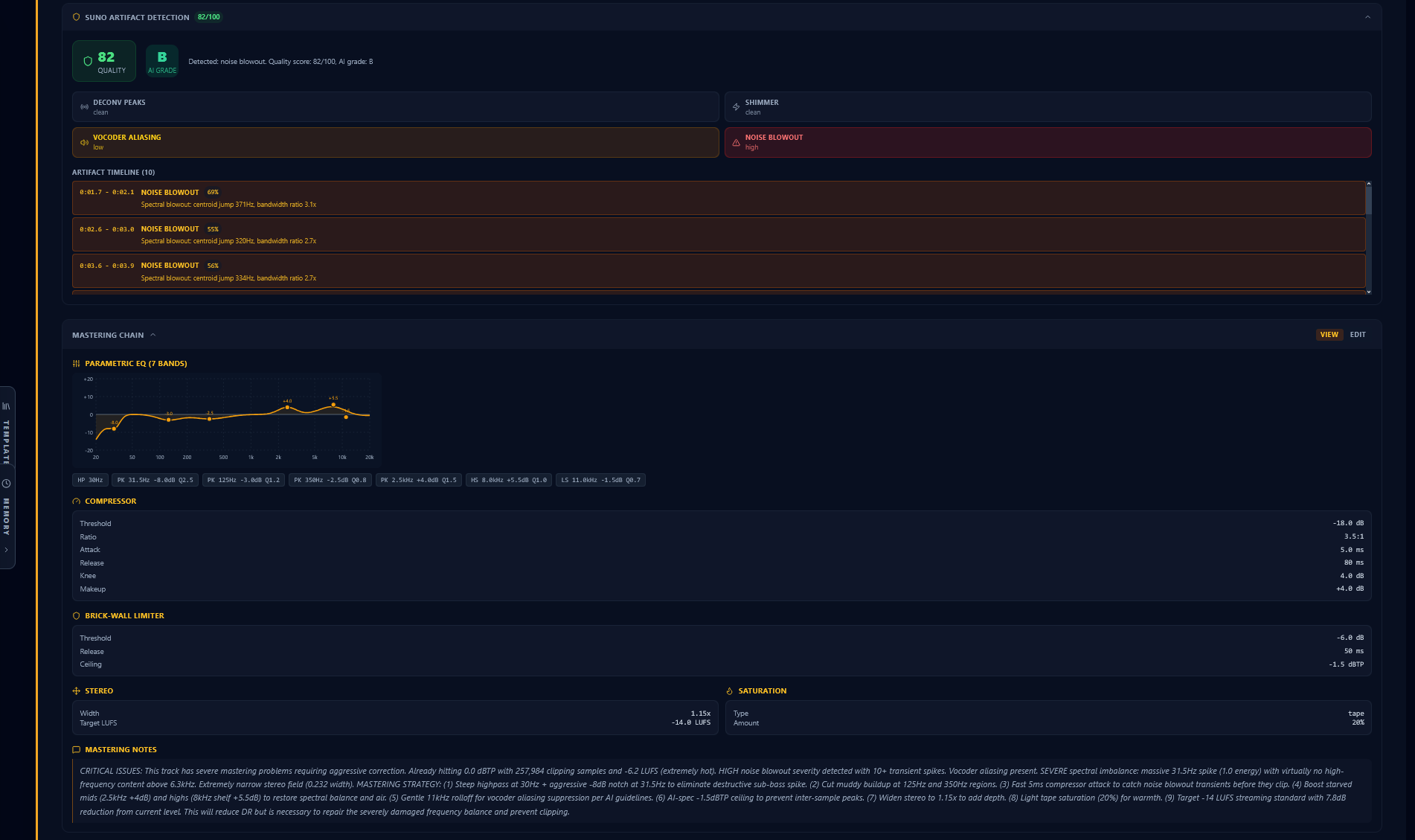
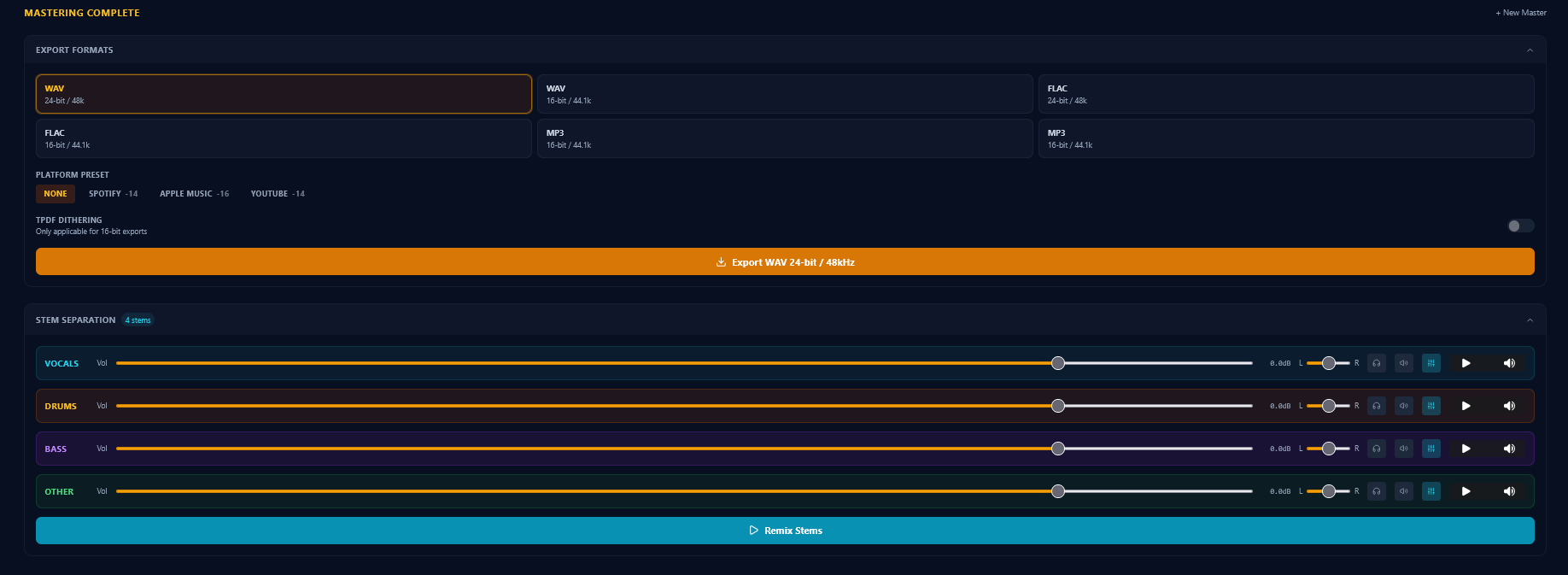
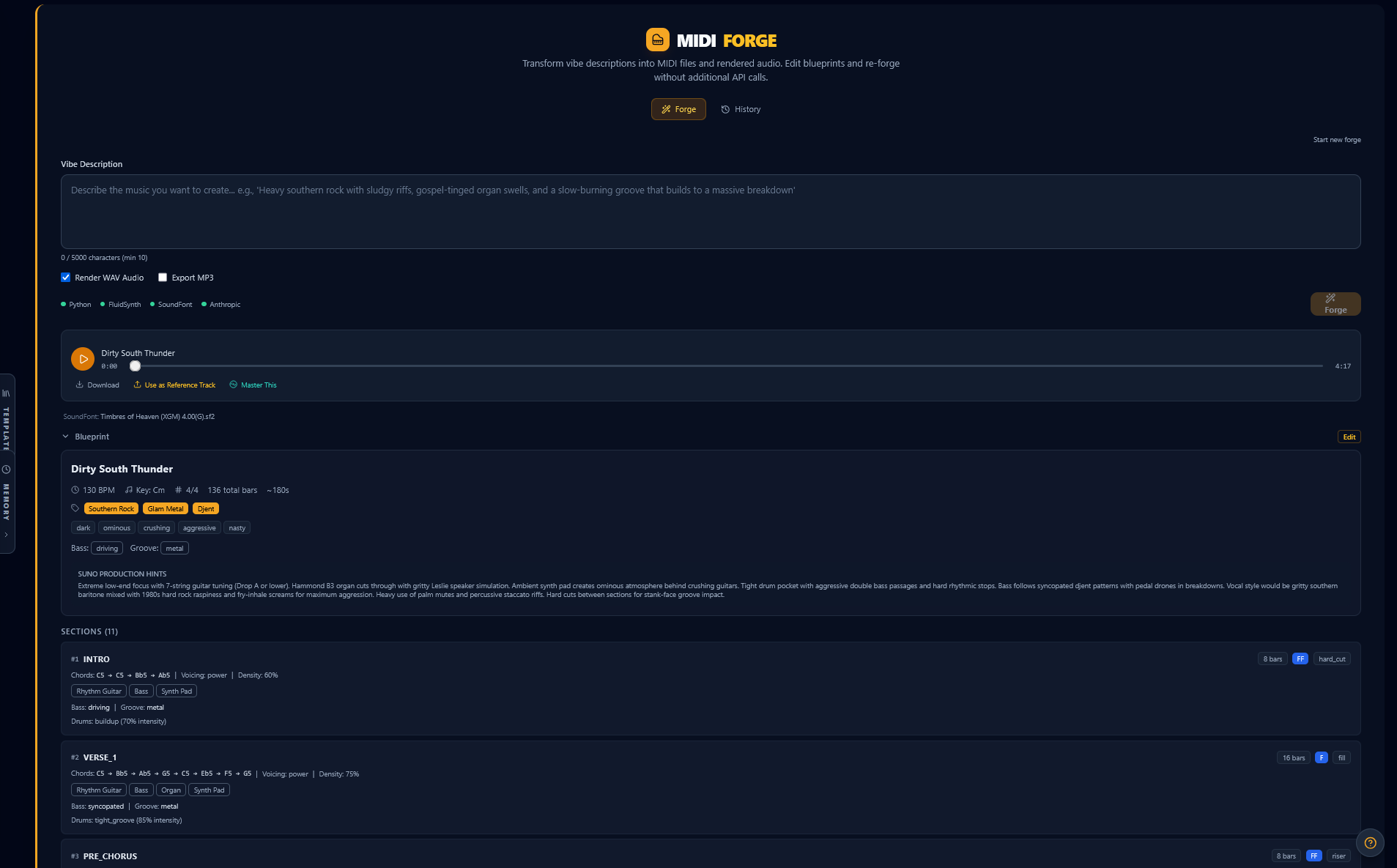
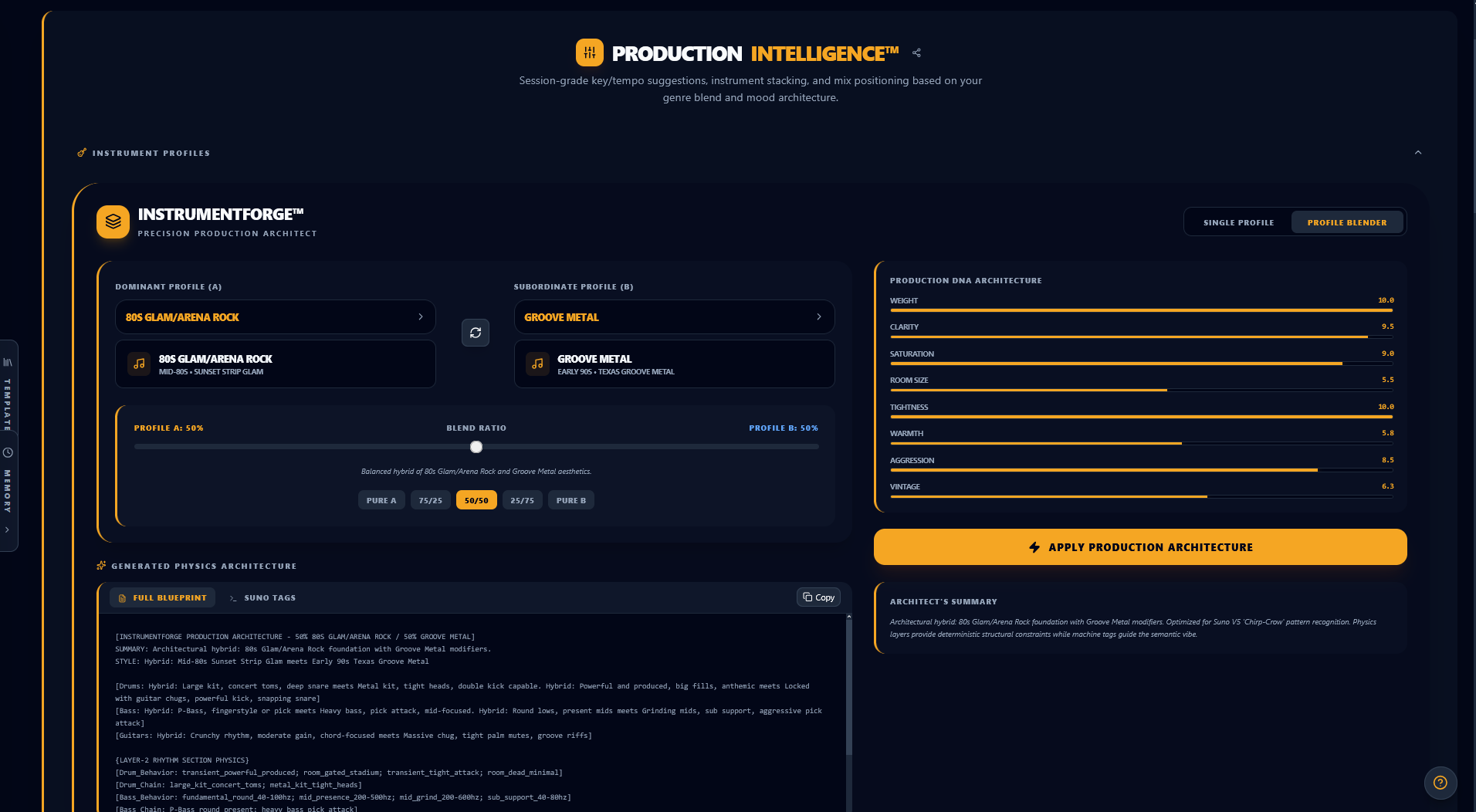
The two tools that required the most infrastructure. MidiForge takes a plain-language vibe description, Claude converts it to a MusicalBlueprint, Python’s pretty-midi generates a MIDI file, and FluidSynth renders it to audio — all local. MasterForge does spectral analysis on uploaded audio, Claude designs a mastering chain, then Spotify’s Pedalboard DSP library runs the actual EQ, compression, limiting, and LUFS targeting. Demucs handles stem separation if you want to remix at the stem level. I won’t pretend building these was smooth — Python environment hell, DSP math learned on the fly, FluidSynth on Windows being difficult. There were points I considered cutting both features. Glad I didn’t.
The Suite
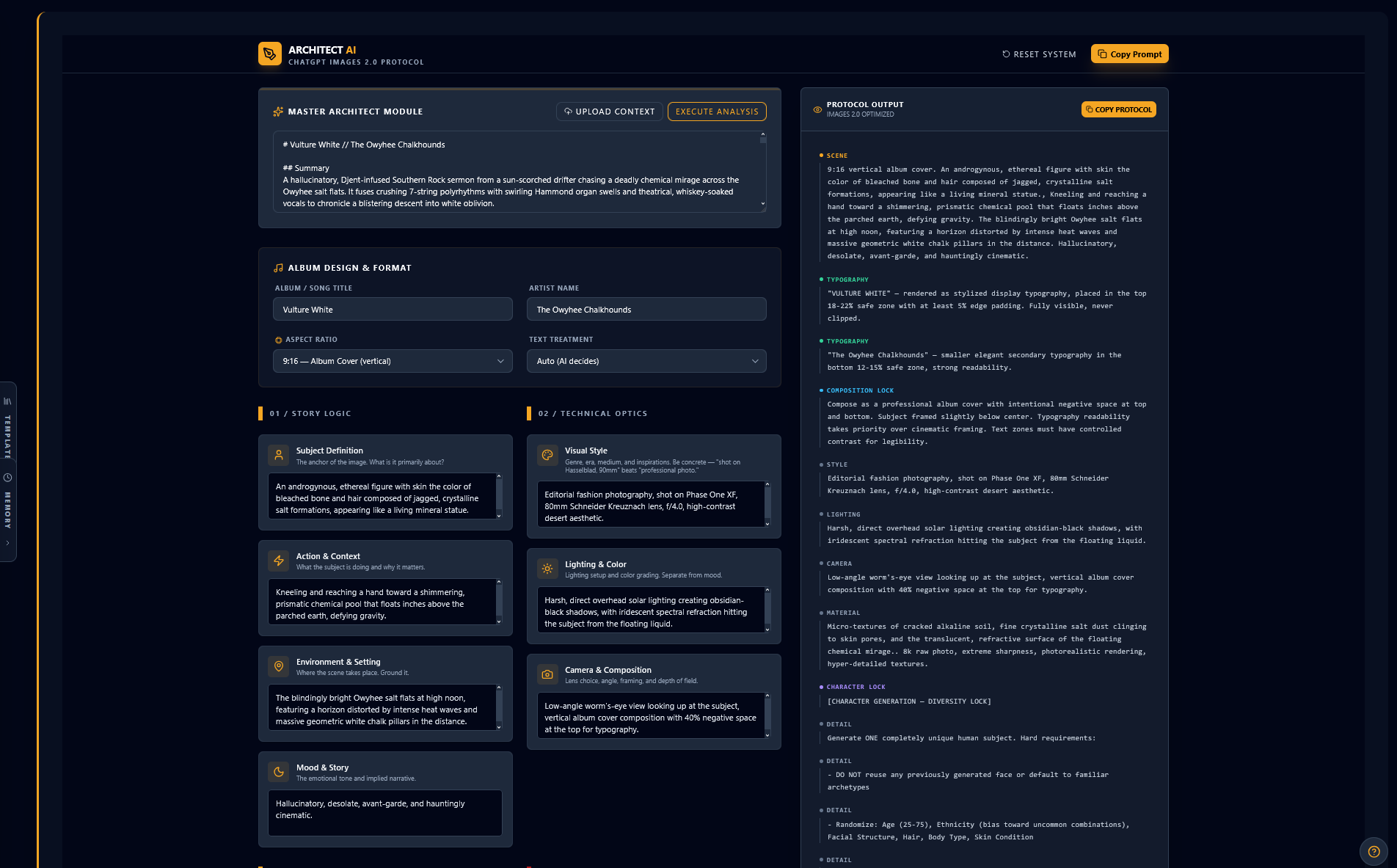
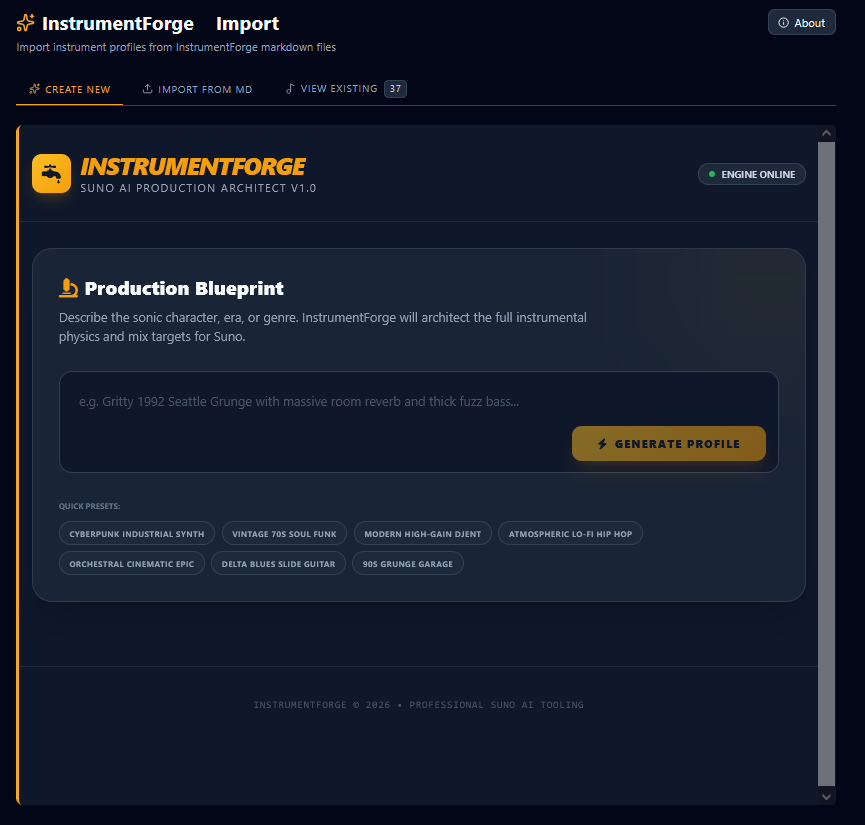
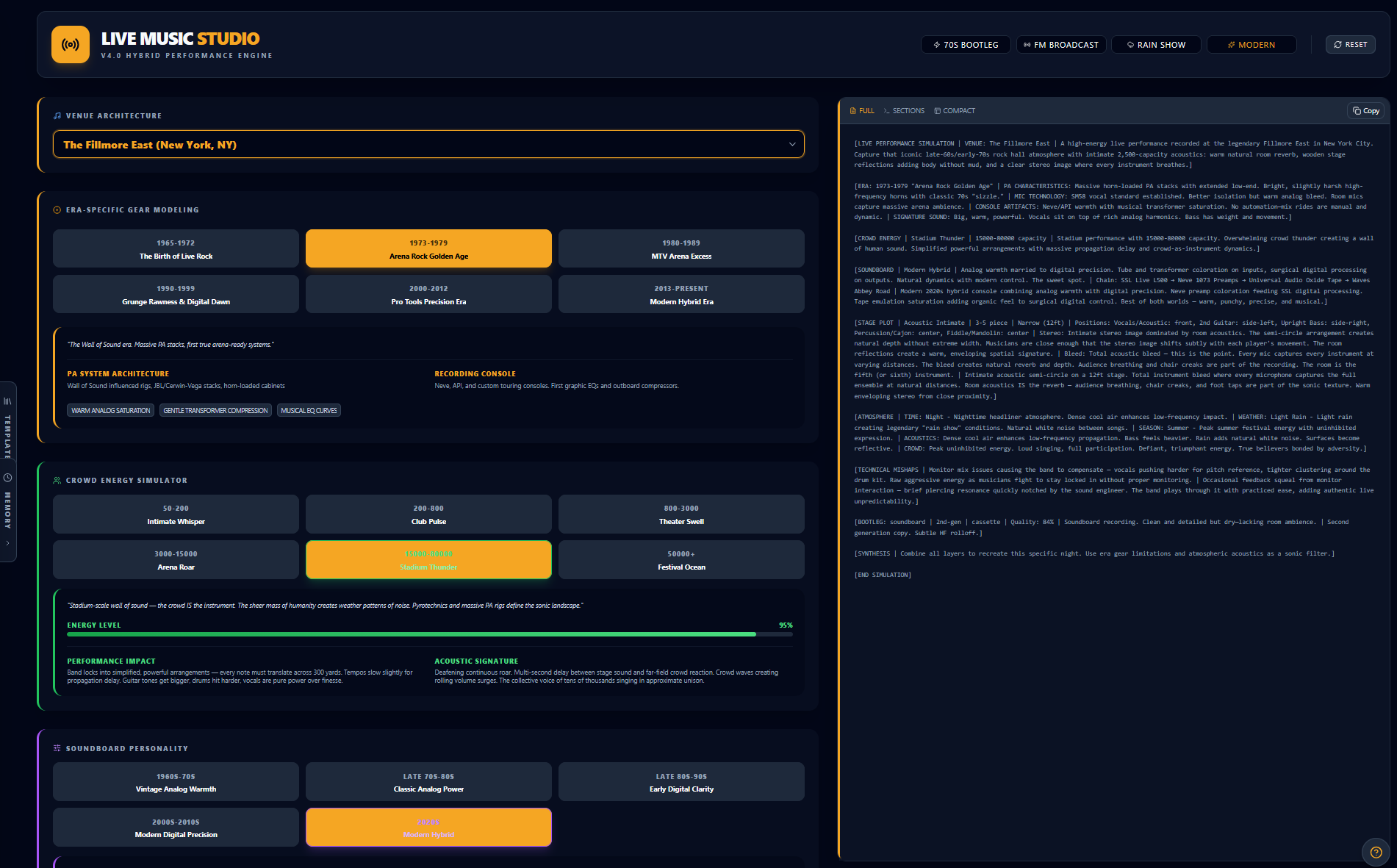
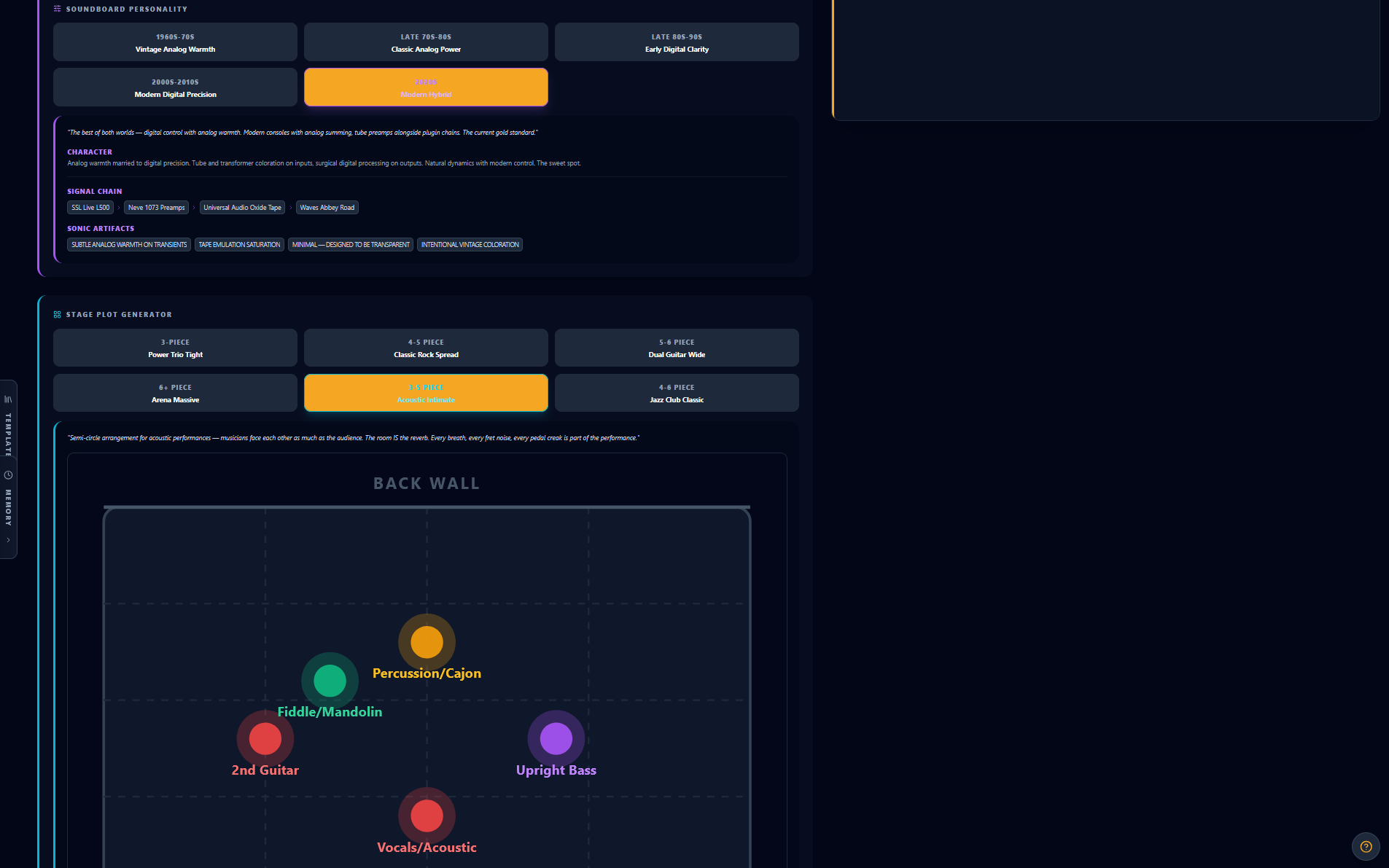
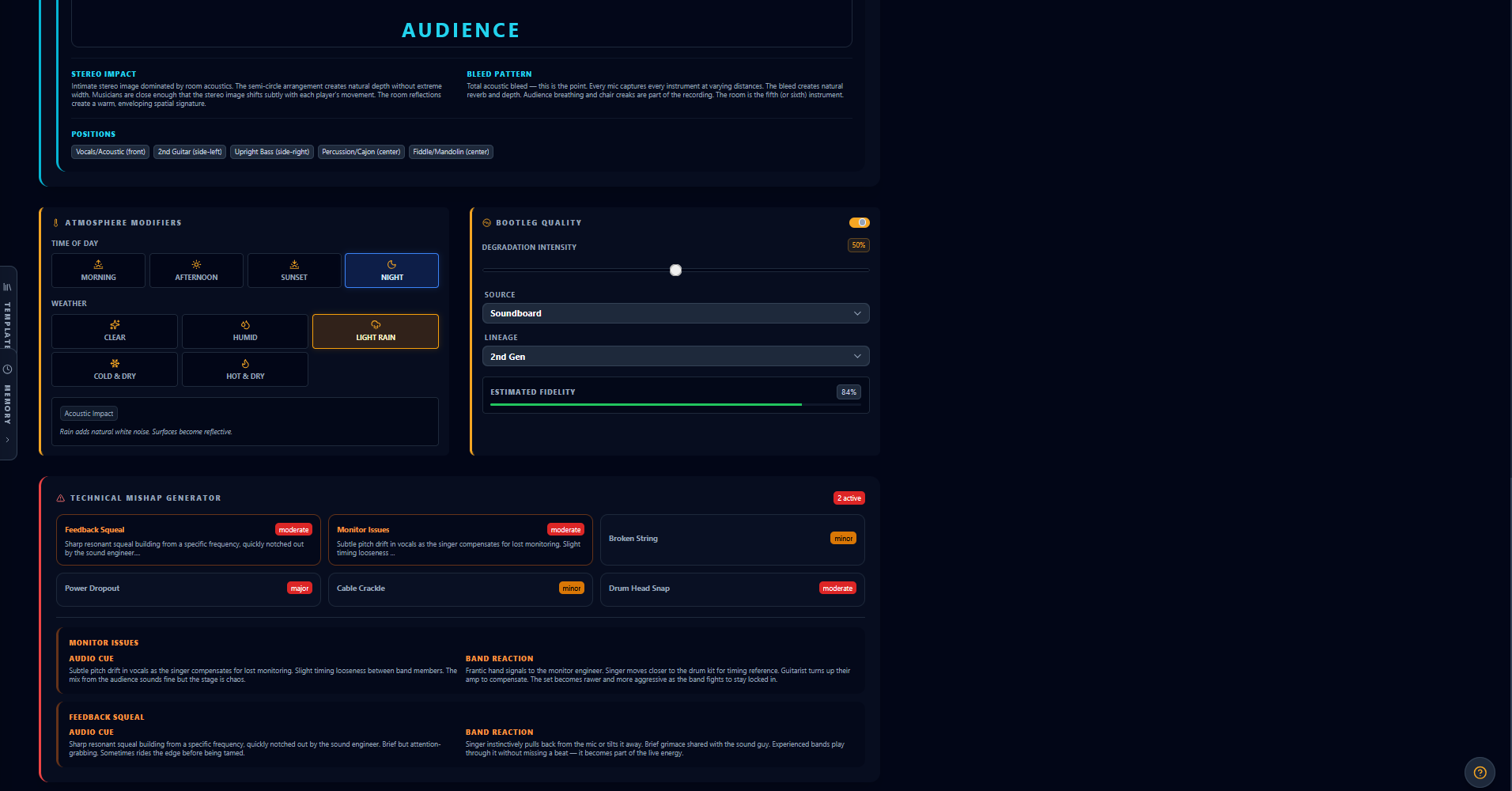
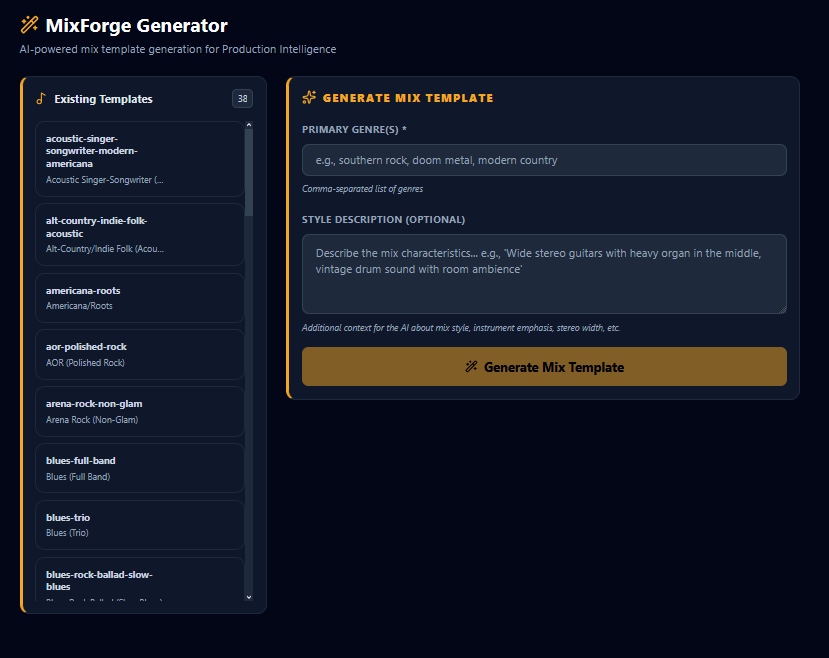
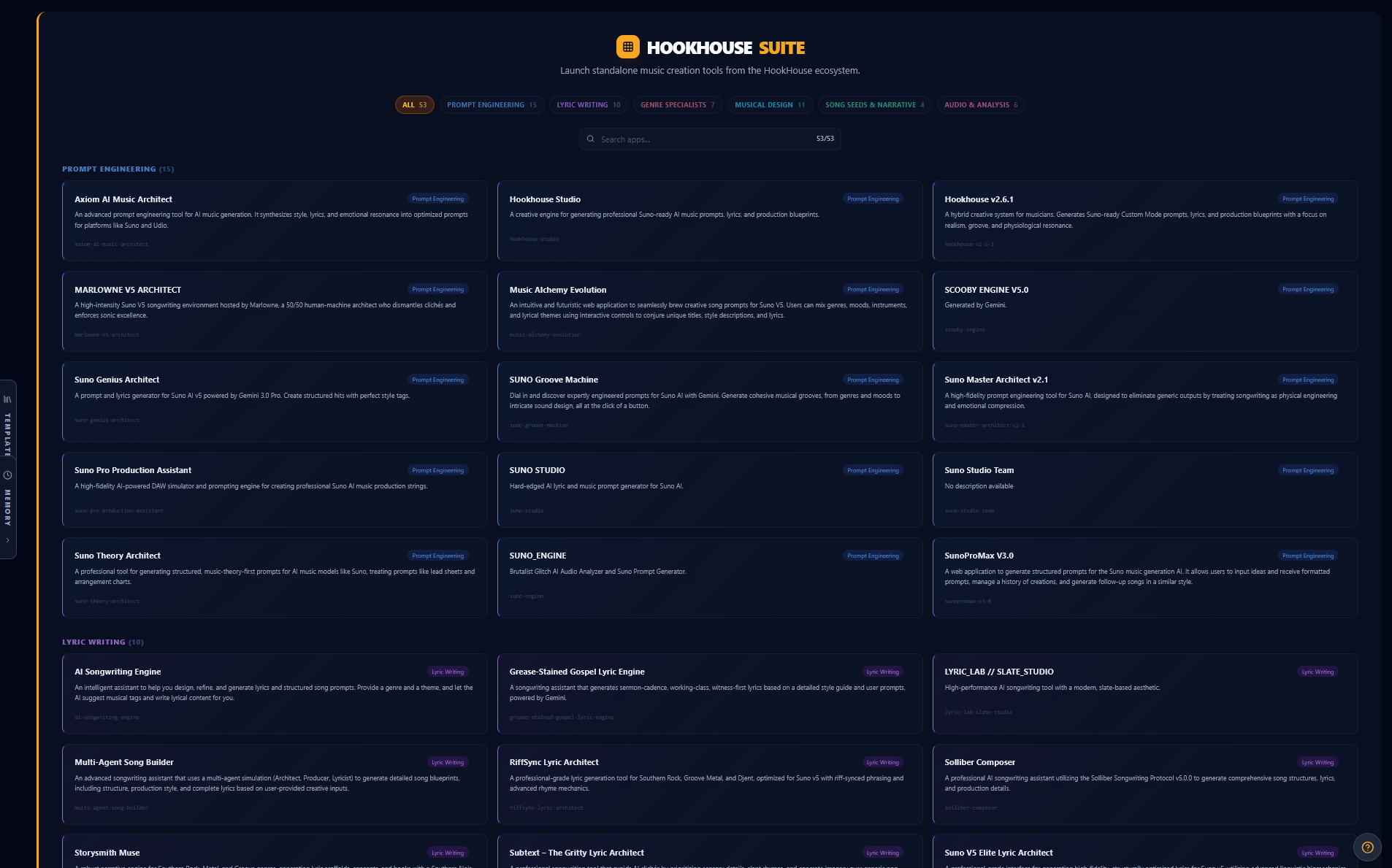
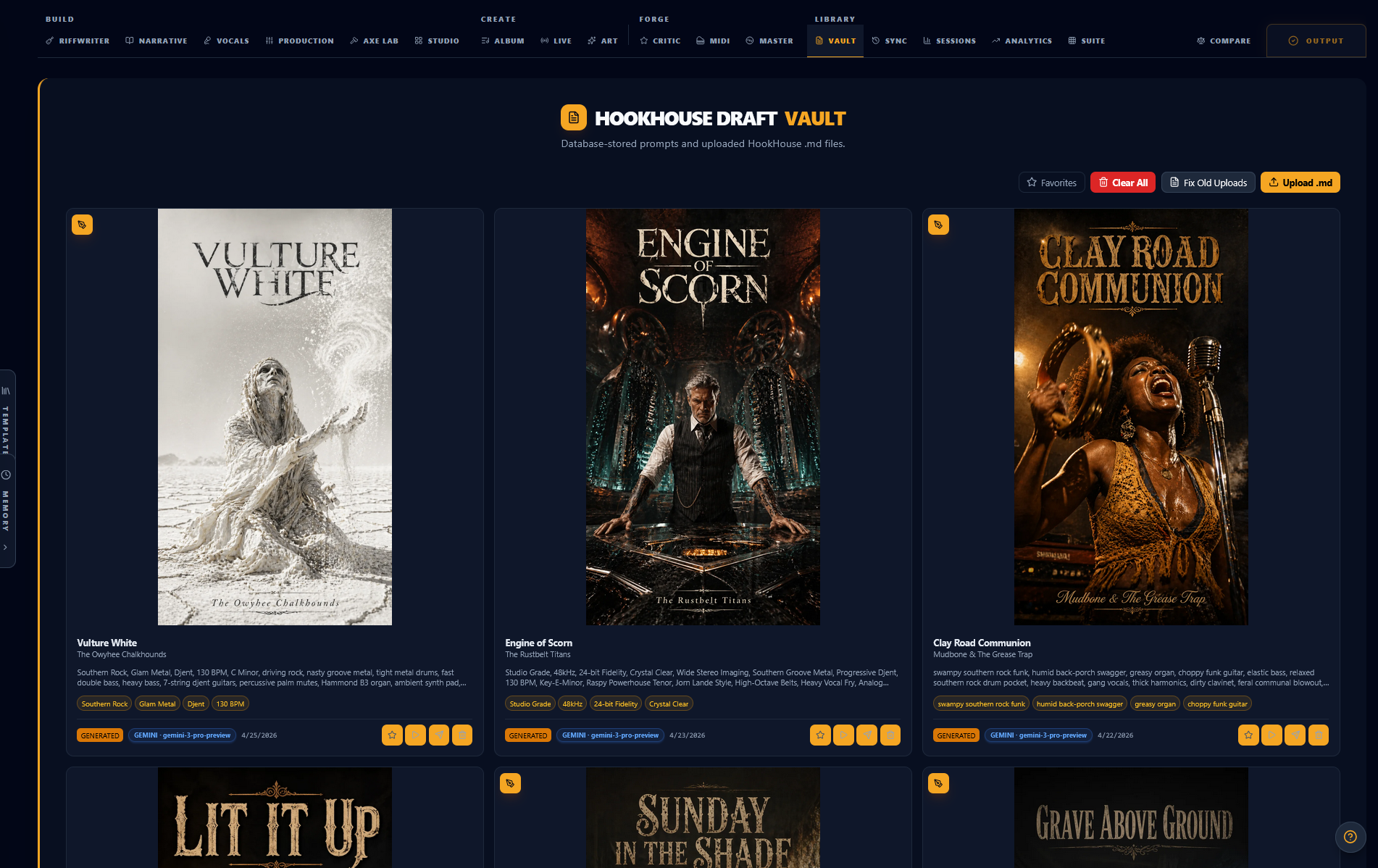
Features that didn’t fit the main pipeline got spun into standalone single-page apps served from the Express backend. There are 46 of them now. A Live Music Studio simulator with venue physics and bootleg tape source options. A Southern Rock Critic with multi-agent scored feedback. Album artwork generation. Stuff I built because I wanted it to exist. I’m not trying to ship a product, I’m building the tool I wish had existed when I started making music with AI.
What I Learned
Domain expertise matters more than code fluency. The reason the genre modules sound right is because I’ve been listening to this music my entire life. The reason the vocal profiling is detailed is because I care about the difference between a Memphis soul baritone and a Muscle Shoals session singer. AI-assisted coding, primarily Claude via Claude Code, let me build something I genuinely couldn’t have built alone. But what makes it useful is the thousand hours of musical knowledge that went into deciding what to build. The code is the container. The music knowledge is what fills it.
I’ve also learned that scope creep is just passion with bad time management. Every one of those 46 suite apps started as “I just want to add one more thing.”
Tech Stack
- Frontend: React 19, TypeScript 5.8, Vite 6, Tailwind CSS
- Backend: Express.js, Prisma + SQLite
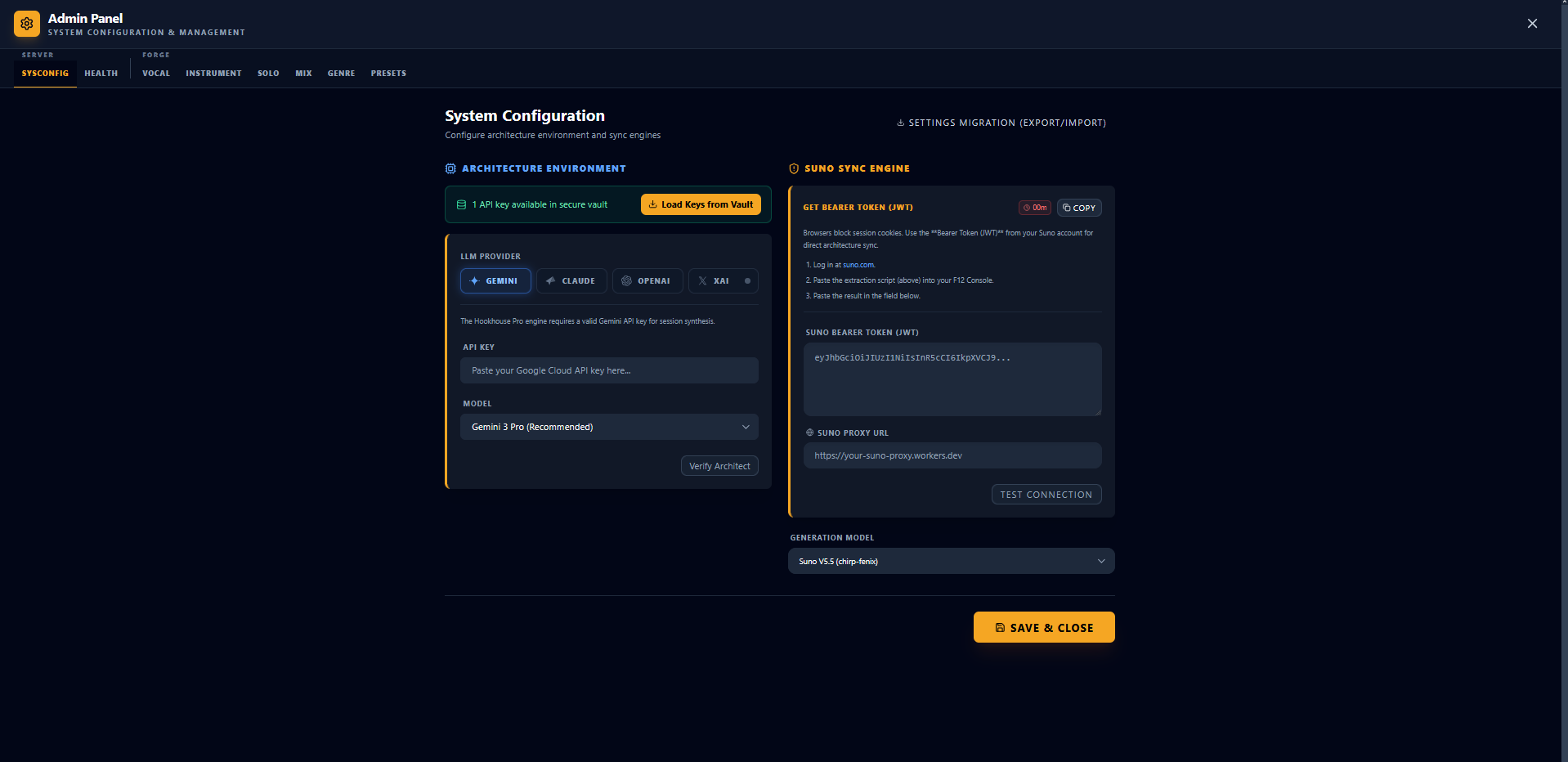
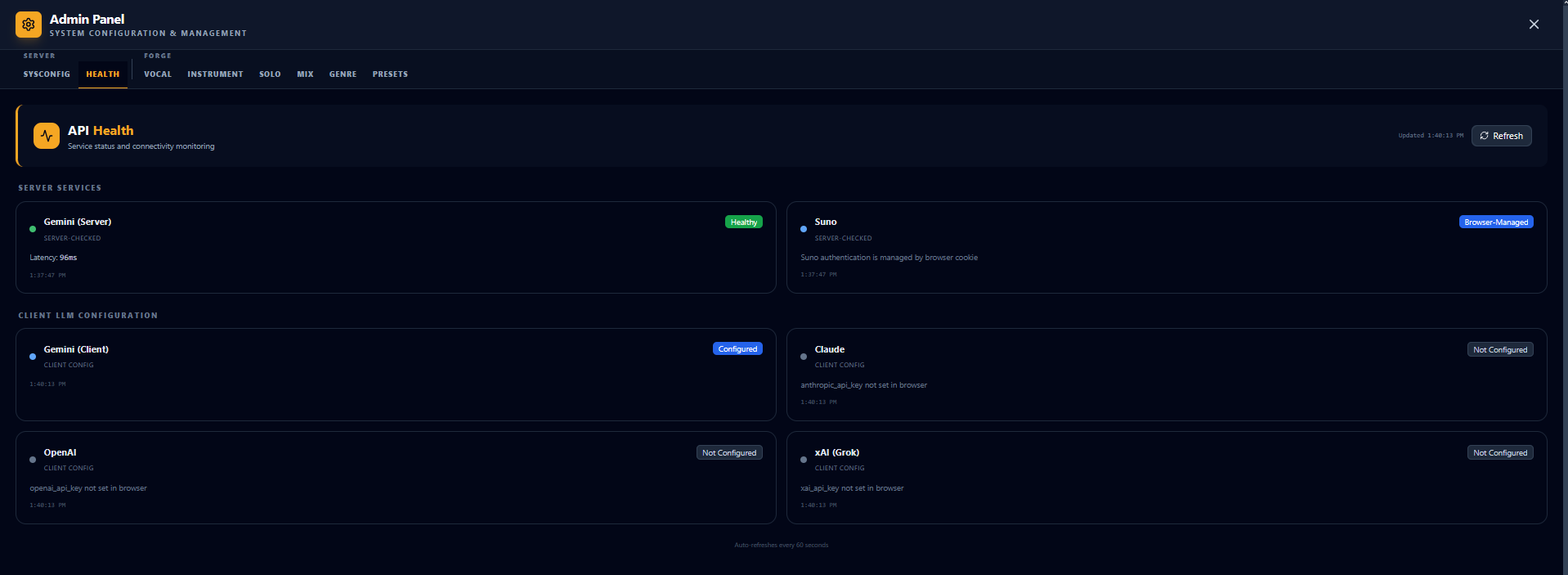
- AI Providers: Claude (Anthropic), Google Gemini, OpenAI, xAI — all four toggleable at runtime
- Audio: Python 3.10+, Pedalboard (Spotify DSP), Demucs, FluidSynth, pretty-midi
- Music Generation: Suno AI
- Auth: Authentik (SSO)
The app is now cloud-hosted, membership levels handled by Stripe payment processing and OAuth login via Google, Discord & GitHub. Try it out, Free members get access to the full app, including 25 free generations to see what it can do.