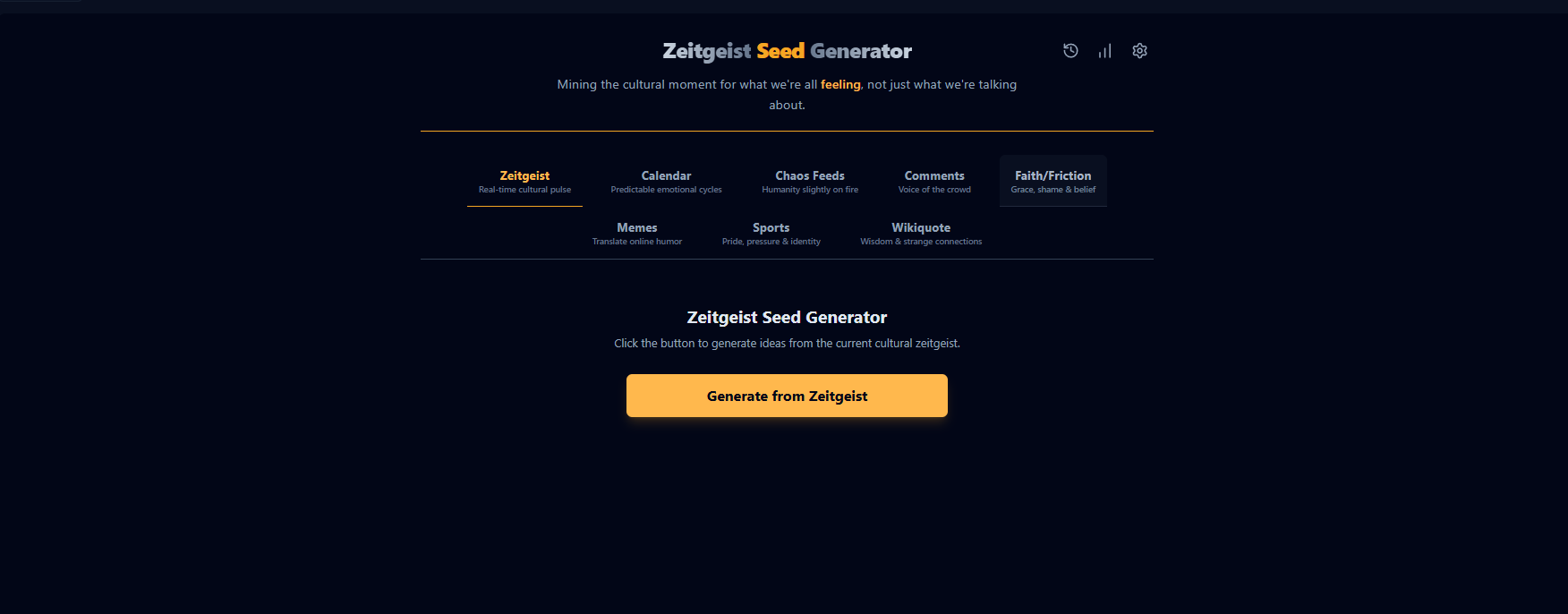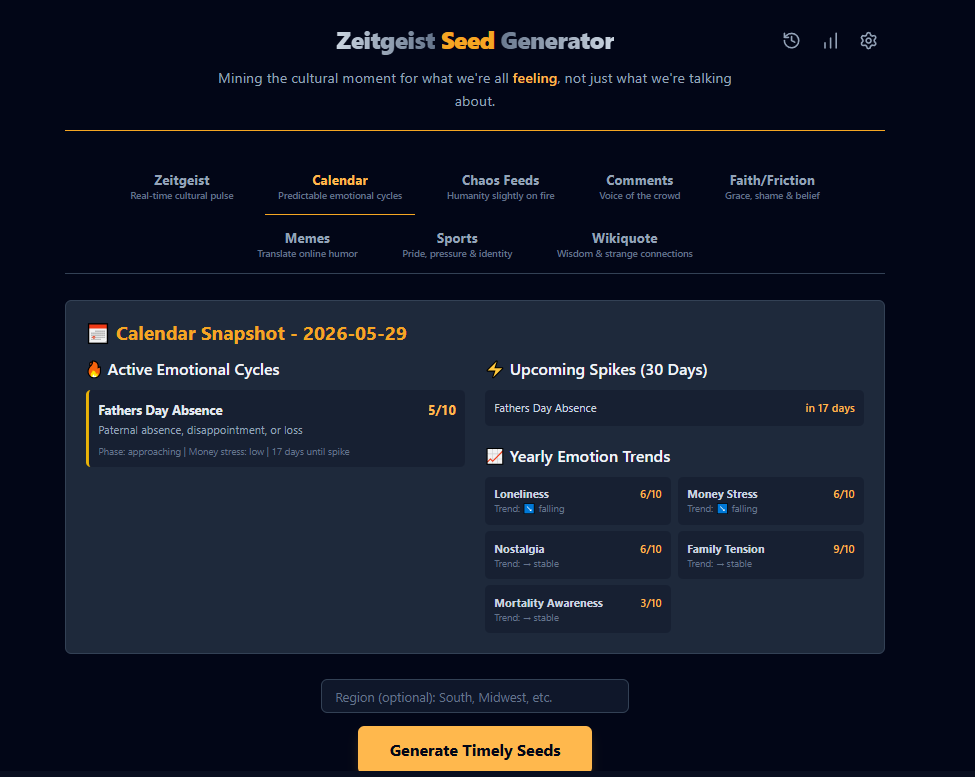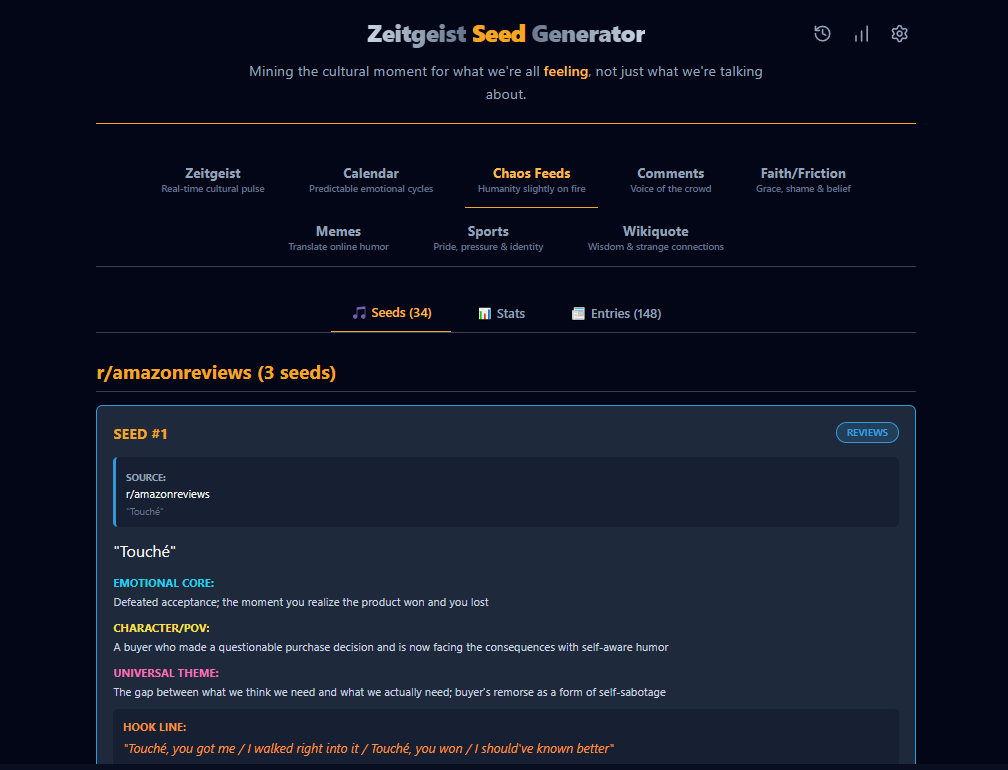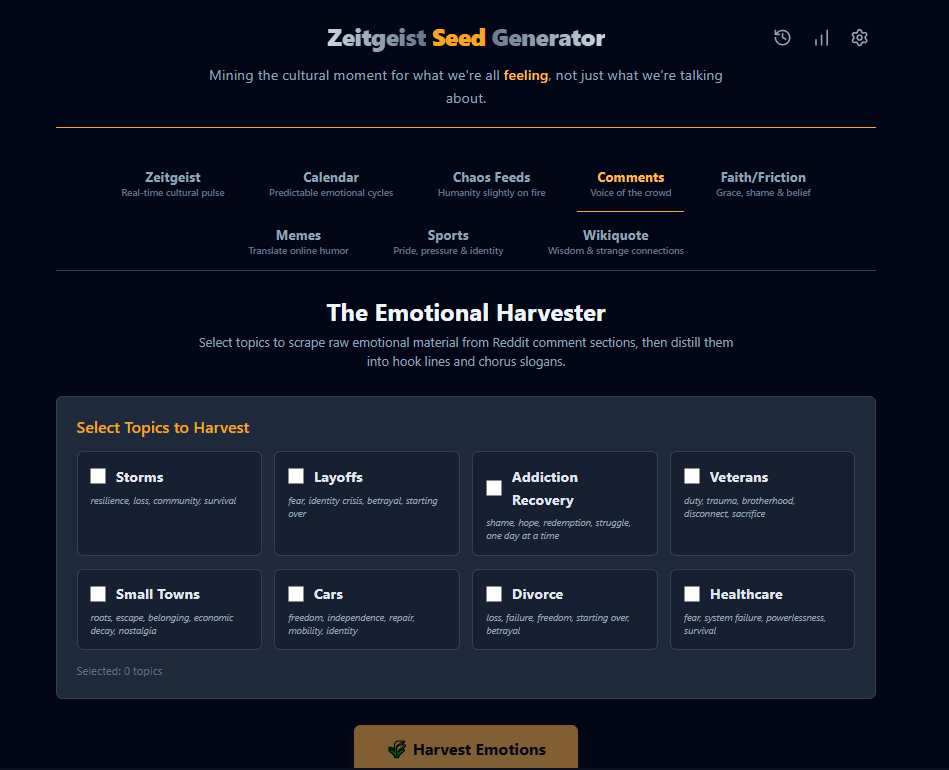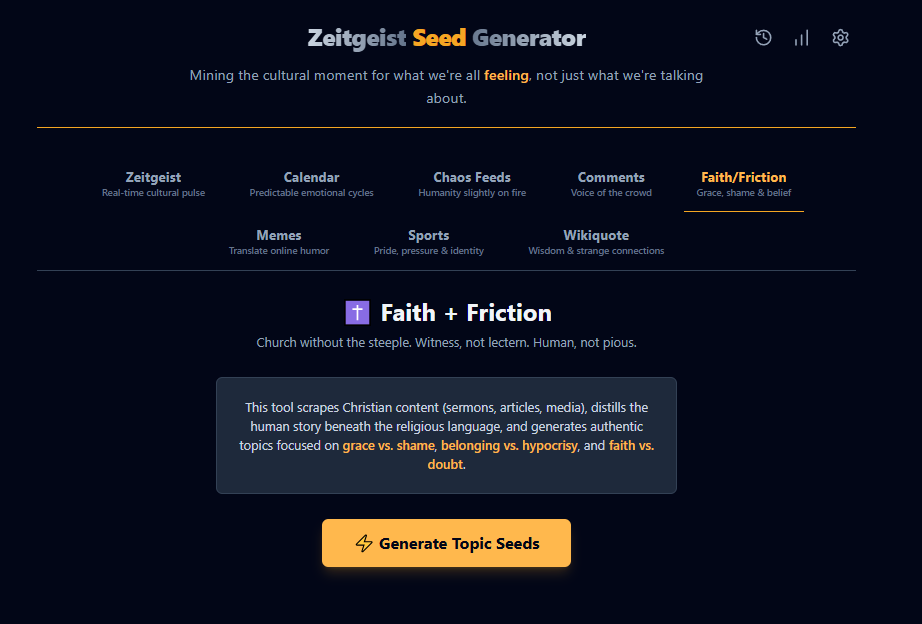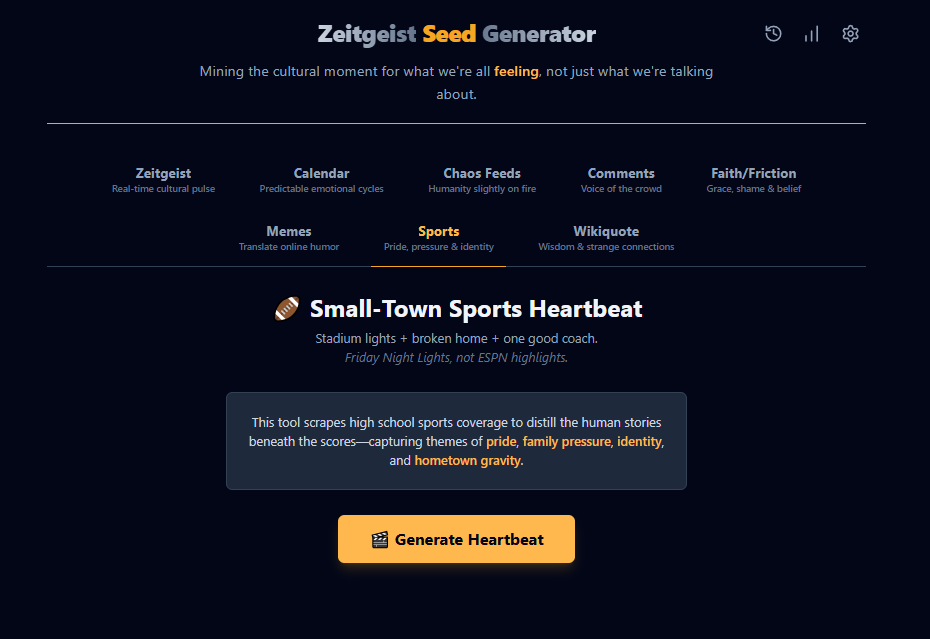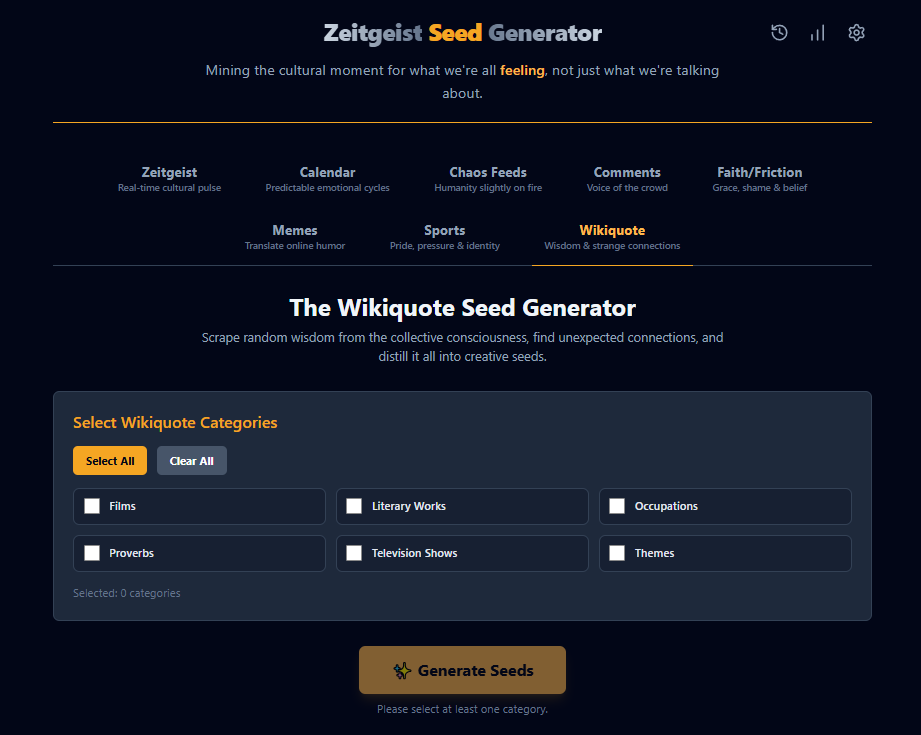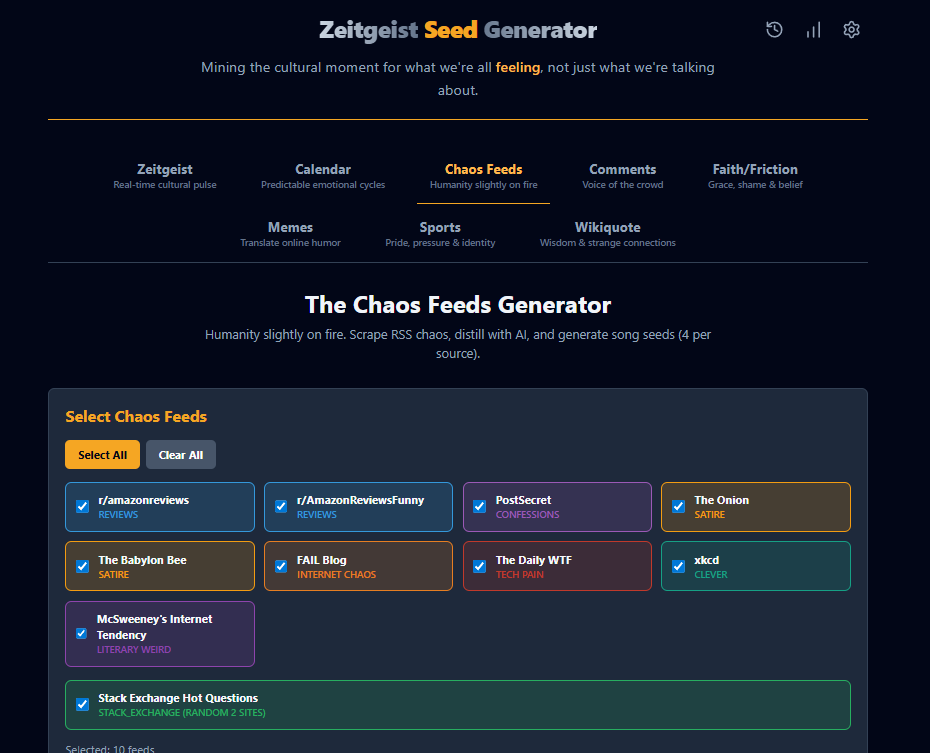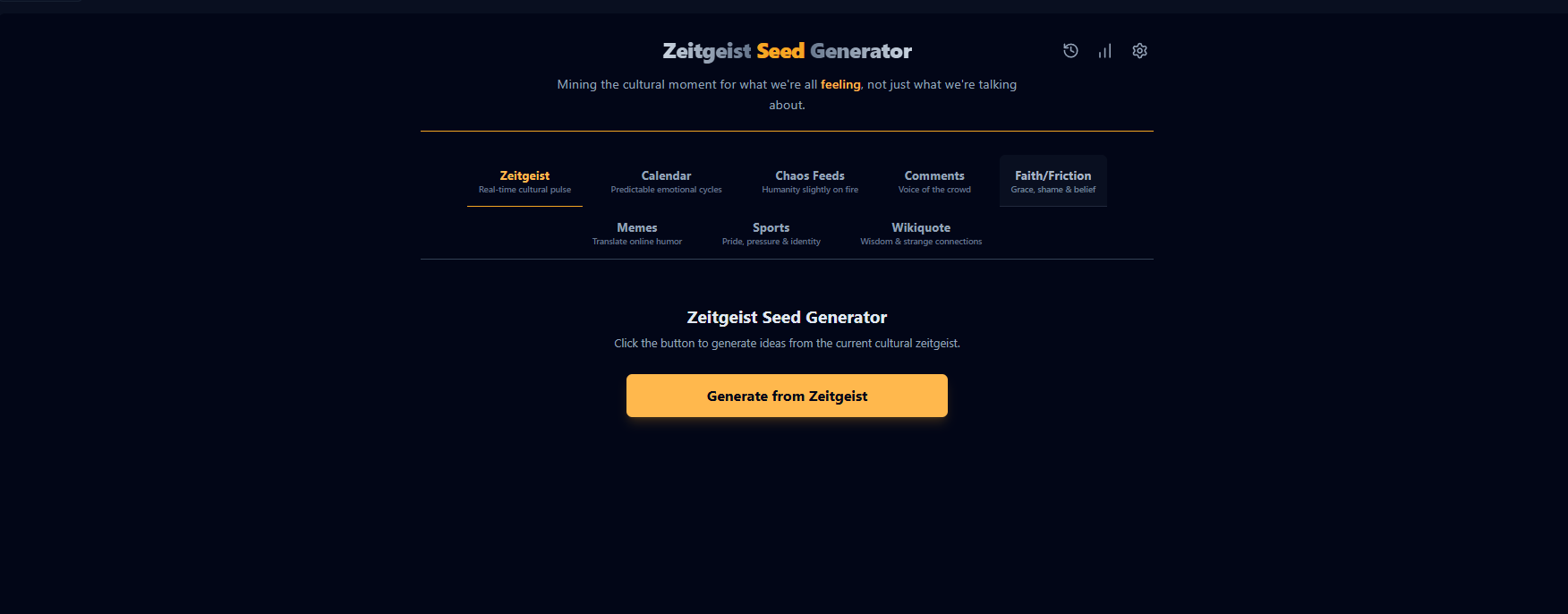
The Zeitgeist Seed Generator is a tool that uses the Gemini API to surface the emotional and conceptual subtext of a cultural moment, rather than simply reflecting trending topics. It generates creative starting points intended to capture underlying moods or tensions, with a primary use case of sparking song ideas in Suno.
The project runs locally via Node.js and is also accessible through AI Studio. Its front end uses HTML and JavaScript, with TypeScript for type safety. Most of the development effort went into prompt design, specifically distinguishing culturally resonant output from hollow, surface-level responses.
What This Is
There’s a difference between what people are talking about and what people are feeling. Trending topics tell you the surface. The Zeitgeist Seed Generator tries to go a layer deeper, pulling from the cultural moment to surface the underlying mood, tension, or preoccupation behind the noise.
I built this because I kept noticing that creative prompts, brainstorming tools, and AI assistants all anchor themselves to current events or popular topics. That’s fine, but it flattens everything. What I wanted was something that could name the vibe, not just the headline. This gives you current, socially relevant seeds to generate song ideas for Suno if you hit a “creative black hole.”
How It Works
The app uses the Gemini API to do the heavy lifting on cultural interpretation. You give it a moment in time, and it generates seeds: starting points, prompts, or concepts that reflect what’s underneath the surface of that moment. Not “AI is everywhere right now” but something closer to the anxiety or wonder or fatigue that comes with it.
The front end is HTML and JavaScript, with TypeScript handling the parts that need to stay honest about their types. It runs locally with Node.js and a Gemini API key, and I’ve also kept it running in AI Studio for quick access.
Why I Find This Interesting
Most generative tools are reactive. You put in a prompt, you get an output. This one is trying to be a little more diagnostic. The goal is to ask: given everything going on right now, what’s the emotional or conceptual subtext? That’s a harder question to answer than “what’s trending,” and honestly Gemini handles the ambiguity better than I expected.
It’s also a good stress test for prompt design. Getting the model to produce something that feels culturally resonant rather than just topically relevant required a lot of iteration. The difference between a useful seed and a hollow one is pretty thin, and figuring out where that line is was most of the work.
Status and Stack
This project is actively maintained. The core stack is:
- HTML + JavaScript for the front end
- TypeScript for structure and type safety
- Gemini API as the model layer
- Node.js for local dev
Source is hosted on my self-hosted Forgejo instance. If you want to run it yourself, you’ll need a Gemini API key and Node.js. Drop the key in .env.local, run npm install, then npm run dev and you’re up.