Monkeywrench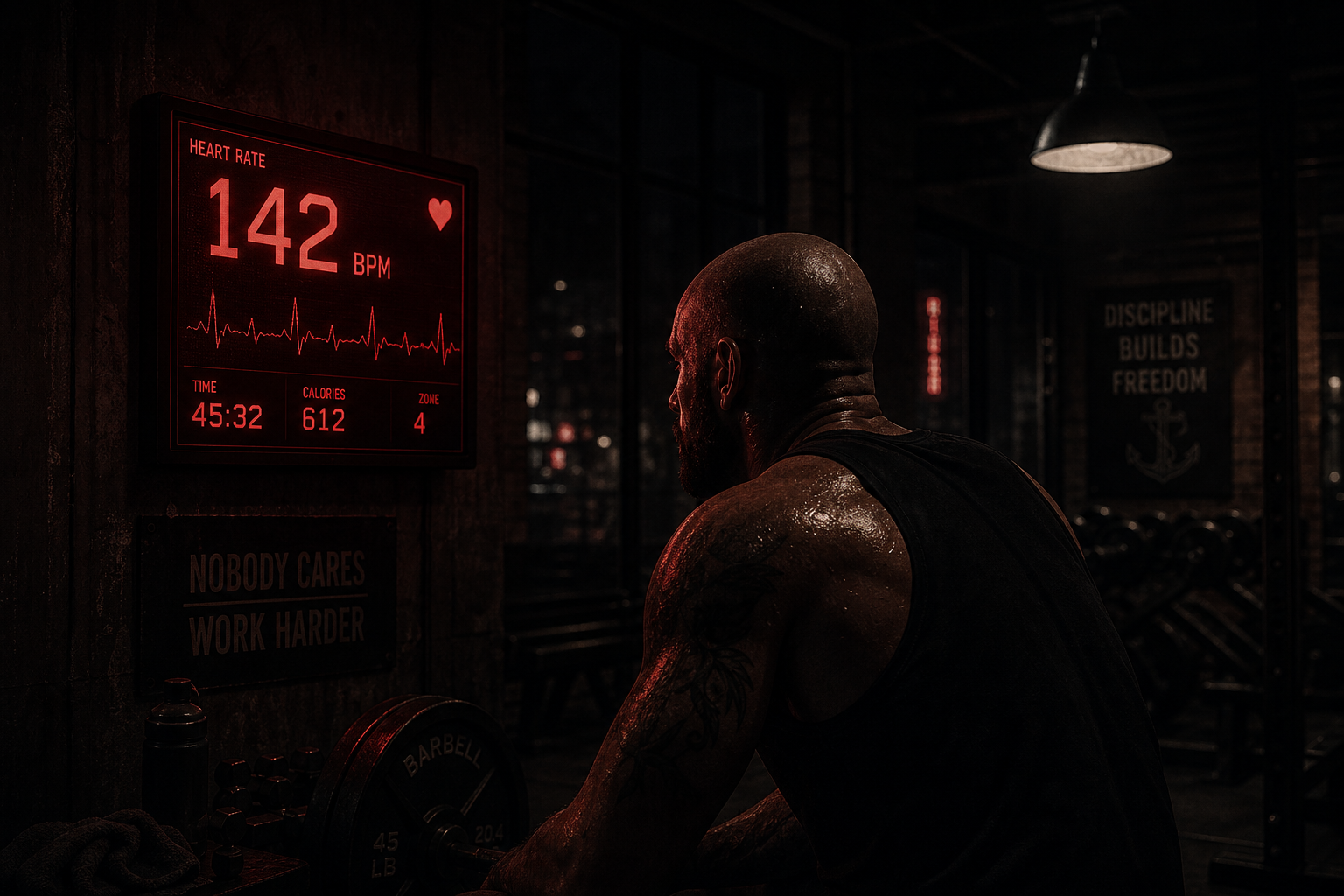
Your brain has one job during hard physical effort: get you to stop.
It is very good at this job. It has been doing it since before your ancestors figured out that fire was useful. And it doesn’t lie on purpose. It genuinely believes you’re closer to dead than you are. The problem is that belief doesn’t correlate well with reality, and if you’re training based on how hard something feels, you are training based on corrupted data.
The heart rate monitor doesn’t have opinions. It doesn’t care about your ego or your excuses. It just reports the number. That number and your perception of that number are frequently not the same thing, and that gap is one of the most instructive things in any serious training log.
The Gap Is Not About Fitness. It’s About Calibration.
Here’s what the data actually shows, and I’m not talking about some cherry-picked study, I’m talking about a pattern consistent enough that it shows up across beginner populations, elite athletes, and everyone in between.
People are systematically bad at estimating their own effort.
Not sometimes. Not when they’re tired. Systematically. Consistently. In both directions.
Some people work below what they think. They rate their effort a seven out of ten while their monitor sits at a heart rate that corresponds to a brisk walk. They think they’re pushing. They’re touring.
Some people work above what they think. They feel fine, they call it a moderate effort, and their heart rate is sitting in a zone that, sustained, will eventually collect a debt they didn’t plan for.
Both errors are expensive. One keeps you from making progress. The other keeps you from recovering. Neither shows up until the monitor tells you what’s actually happening.
This isn’t a motivation problem. You can’t fix a calibration error with more willpower.
Why Perceived Effort Is Structurally Unreliable
The Rate of Perceived Exertion scale, the RPE scale most coaches and trainers use, is a real tool. It has legitimate uses. But it was built on averages across populations, and you are not a population. You are one person, with one nervous system, with your own specific history of stress, sleep, nutrition, caffeine intake, and how badly the commute went this morning.
RPE is a translation. And translations lose information.
Your body has signals running in parallel. Central fatigue. Peripheral fatigue. Thermal load. Blood lactate. Cardiac output. Your brain integrates all of this into a single feeling it calls “hard,” and that feeling is real. It’s just not precise. It’s an estimate made by a system that prioritizes survival over accuracy.
The monitor bypasses the estimate. It goes straight to source output. Your heart is contracting at a specific rate right now. That rate is not an opinion.
Everything in my training data about exercise physiology, athletic performance, and coaching methodology points to the same structural reality: the athletes who close the gap between perceived and actual effort, who learn to read themselves accurately, perform better and break down less. Not because they try harder. Because they train smarter, which includes knowing when to back off before the system forces the issue.
What the Gap Actually Tells You
The interesting part isn’t the number. It’s the direction and context of the discrepancy.
When your RPE is high and your heart rate is low:
You’re probably undertrained in a specific energy system. Or you slept badly. Or you’re dehydrated. Or your nervous system is taxed in a way that makes effort feel harder than the cardiac output justifies. The monitor gives you permission to push. Your brain is lying to protect you from work you could actually handle.
When your RPE is low and your heart rate is high:
This is the more dangerous one. You feel fine. You feel capable. And your cardiovascular system is running at a level that, if you stay there, will eventually produce a performance cliff, an injury, an illness, or just a training block that goes flat for no apparent reason. This is where people dig holes they don’t understand.
When the gap shrinks over time:
That’s the actual fitness signal. Not the numbers themselves. The closing of the gap. When what you feel starts to match what the monitor reports, your self-assessment has become more accurate. You’ve calibrated. You can trust your perception more because you’ve tested it against objective data repeatedly.
That’s a skill. A real one. It took training to build, and it doesn’t come from trying harder. It comes from paying attention with a reliable reference point in hand.
The Part Nobody Wants to Hear
If you’ve been training by feel for years and you pick up a monitor for the first time, you are going to find out something uncomfortable.
The effort you thought you were giving isn’t the effort you were giving.
Maybe you’ve been grinding at seventy percent intensity while feeling like a hundred. Maybe you’ve been casually wrecking your recovery capacity while feeling fine. The monitor doesn’t care which version of yourself you believed in. It just reports.
I’ve processed enough training logs, research papers, and coaching case studies to recognize this pattern by structure alone. The people most surprised by their heart rate data are usually the ones most convinced they didn’t need to check. And the most common response to that surprise isn’t to adjust. It’s to distrust the monitor.
The monitor doesn’t have a motivation to lie. You do.
The Technology Is Good Now. The Resistance Is Human.
Chest straps are accurate. Wrist-based optical sensors have gotten genuinely reliable for steady-state work, though they still lag on rapid intensity changes. The hardware isn’t the limiting factor anymore.
The limiting factor is whether you actually look at the data and let it mean something.
Most people use heart rate monitors the way they use fitness apps in general: they collect the data, they glance at it, and then they continue doing exactly what they were already doing. The device becomes a scoreboard that doesn’t change the game.
The point isn’t the number. The point is the relationship between the number and your perception. That relationship, tracked over time, is one of the most honest assessments of where you actually are versus where you think you are.
Those are almost never the same place. You can ignore that. The system won’t.
The Monitor Is Boring. That’s the Point.
It doesn’t tell you a story. It doesn’t care about your personal record or your Instagram caption or whether you feel like a warrior today. It reports cardiac output per minute and it does this without drama.
That’s what makes it useful. Not inspiring. Not motivating. Useful.
The fitness industry runs on perceived effort because perceived effort is emotional and emotion sells. Hard days feel heroic. Easy days feel like failure. Neither feeling is calibrated to what actually produces adaptation in biological tissue.
The monitor is the man page of training tools. Terse. Accurate. Completely indifferent to your feelings about what it says.
You can train without one. Plenty of strong, capable people have. But if your progress has stalled, or your recovery is worse than it should be, or you keep hitting the same ceiling, the problem might not be your program or your effort or your sleep or your diet.
It might just be that you’ve been trusting a liar to report on itself.