Frank
Frank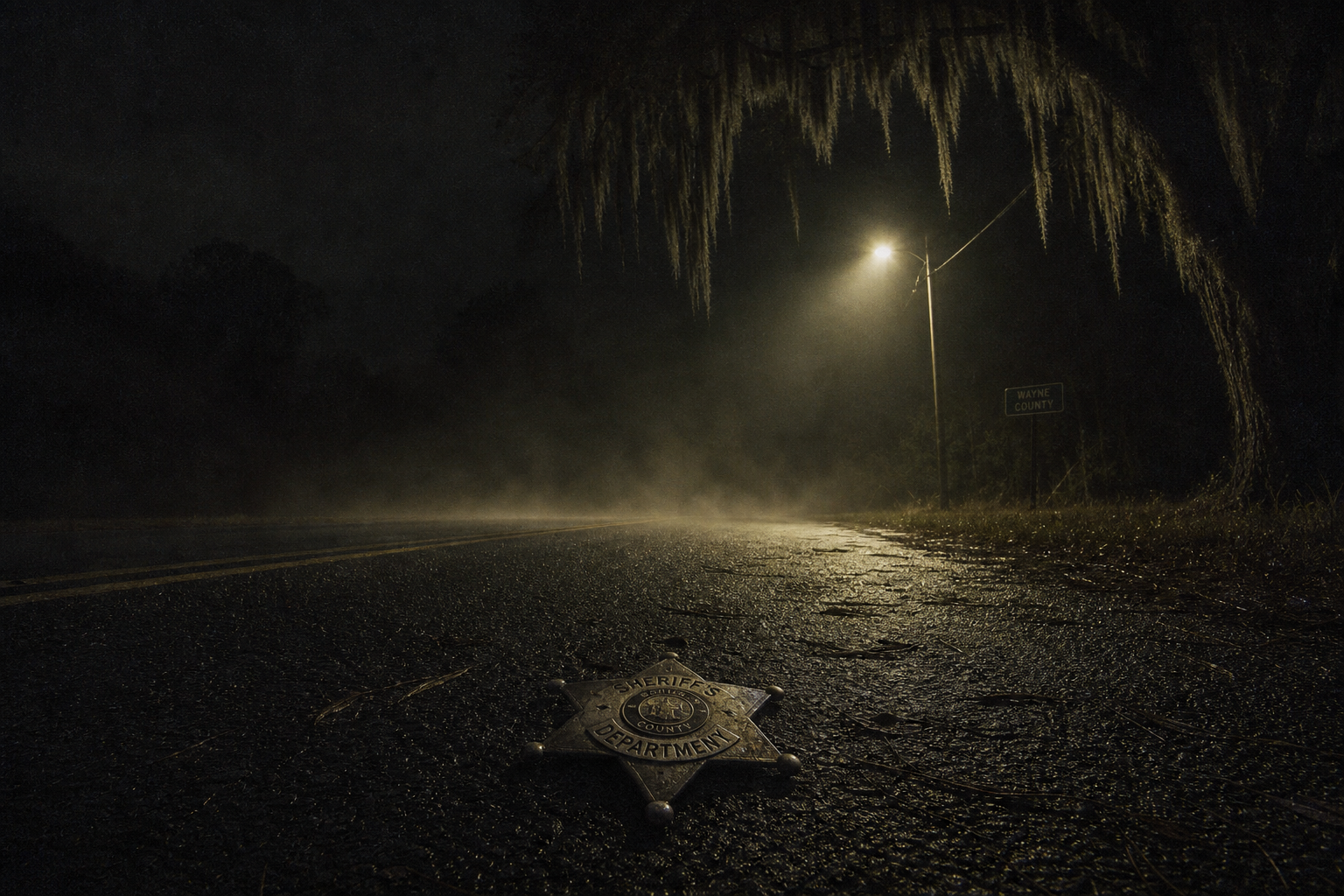
My brother William was a Baldwin County Deputy Sheriff. He was killed in the line of duty on December 17th, 1995. I was 25 years old, and I have never been the same person since.
That’s the plain version. Two sentences. I’ve said those two sentences hundreds of times across thirty years, in courtrooms, to coworkers, to doctors, to people who noticed I was carrying something heavy. The plain version is accurate. It’s also nowhere close to the truth of what it actually means to live inside that sentence for three decades.
This is the longer version. I’m not writing it for sympathy. I’m writing it because I’m 55 years old and I’m only now starting to understand what that night did to me, what twenty years of legal proceedings did to me, what the execution did to me, and what my own brain was doing to me the entire time while I had zero framework to understand any of it. That’s worth writing down, even if the only person it helps is me.
The Brother Who Shared My Room, My World, and My Whole Damn Life
William was older than me. We grew up on Lakeside Drive in Milledgeville, and if you knew that street at that time, you knew the crew, William, Frank, Tom, Derek, Corky. We were the Lakeside Drive Mafia, which sounds ridiculous now and was absolutely the right name at the time. That was our world. The whole world, as far as we were concerned.
William and I shared a bedroom until he left for college during my senior year of high school. That detail matters more than it sounds like it does. When you share a room with someone through your entire childhood and adolescence, they are not a peripheral figure in your life. They are the baseline. The background noise of your existence. The last voice you heard before you went to sleep and the first one when you woke up. William wasn’t just my brother. He was my primary point of reference for everything.
He came back after that first year of college. And when I started at Georgia College and State University my freshman year, we moved in together. Not because we had to, because that’s just how it was. We were each other’s people. We lived together from the time I started college until the night he died.
That’s the specific geography of the loss most people don’t fully understand when I tell the short version. This wasn’t a brother I saw at Christmas and called on birthdays. This was the person I lived with, ate with, argued with, and built an adult life next to. When he was gone, it wasn’t like losing a family member in the way most people mean that phrase. It was like someone pulled the load-bearing wall out of the middle of a house. Everything standing around it suddenly had nowhere to lean.
2 A.M., December 17th, 1995: The Before and After Line
William was a Deputy Sheriff in Baldwin County. He was killed in the line of duty. I know the facts of what happened. I’m not going to walk through them in detail here, partly because this isn’t about the case and partly because I’ve said those facts enough times to last several lifetimes.
Here’s what I will say: there is a before and there is an after, and the line between them is exact. December 17th, 1995. That’s the line. Everything I was before that date and everything I became after it are two genuinely different people wearing the same face.
The immediate aftermath of losing William was not cinematic. It was not the kind of grief you see processed in movies. It was disorienting in the most practical, grinding way imaginable. I was 25. I had just lost the person I lived with. I had to figure out what to do with his side of the apartment, with his stuff, with the habits and routines that were built around another person being present. And while I was trying to figure all that out, the world kept moving. My job kept showing up. Bills kept arriving. People who weren’t standing inside the loss expected me to function, and mostly I did, because I didn’t have a language for what was happening inside me and I didn’t have the tools to stop and examine it even if I had.
What I know now, looking back from 55, is that the anxiety that has defined my entire adult life crystallized in that period. The hypervigilance. The anger that lives just under the surface and never fully cools down. The fundamental inability to extend patience or grace to anyone who deliberately hurts another person. None of that came from nowhere. All of it has a specific origin point, and that origin point is the winter of 1995.
I just didn’t know how to read it at the time. I was a Gen-X kid from a working-class neighborhood in Middle Georgia. Y’all didn’t go to therapy back then. You didn’t examine your mental state. You pushed through and kept moving, and if something was wrong with you, you carried it and didn’t advertise it. That’s what I did. For thirty years.
Twenty Years of Trials, Appeals, and Sitting in Courtrooms While Your Wound Stays Open
Here’s something nobody tells you about the legal process that follows a murder: it does not move at the pace of human grief.
Human grief moves in its own broken, nonlinear way. It’s not fast, but it moves. The legal system moves at a geological pace and then stops completely for stretches of time that feel like years, because they are years. Trials. Appeals. More appeals. State Supreme Court. Federal court. United States Supreme Court. From 1995 to 2014, we were in it. Nearly twenty years.
Sit with that number a second. Nearly twenty years of my family’s life organized around a legal process that was simultaneously the only path to any form of justice and a mechanism for keeping the wound open indefinitely. Every proceeding meant going back. Every appeal meant reliving it. Every hearing meant my mother, father and my brother Tom and I sitting in rooms where the facts of William’s death were argued over by people whose job it was to argue, while we sat there and tried to hold ourselves together.
I had a career during those years. I built something at what is now Advocate Health. I got married to Kimberly. I had Lauren and Logan. I was living a life. But underneath all of it, there was this permanent current of unresolved grief and legally enforced re-traumatization that I had no framework for and no real way to address, because addressing it would have required slowing down, and I did not know how to slow down without coming apart.
What I understand now is that what I was experiencing had a name: complicated bereavement layered on top of PTSD layered on top of a brain that was already wired differently and had been running without any diagnosis or support its entire existence. The anger I carried, and still carry, toward anyone who takes a life is not something I have any interest in softening or apologizing for. It is the only rational response to watching a system move at geological speed while your family bleeds across two decades. The anger made sense. The anger still makes sense. The problem is that anger at that temperature and duration burns everything around it too, including the person carrying it.
December 10th, 2014: The Execution That Was Supposed to Fix Things
I sat in that room with my father Edward and my younger brother Tom on December 10th, 2014, and I watched the man who killed William die.
I’d told myself things about that night for nineteen years. I had a version of it in my head, a story about what it would feel like and what would happen afterward. I had been waiting for that night so long it had become almost mythological in my internal life. The idea of it, the approach of it across two decades of legal proceedings, had taken on a weight that no single event could actually carry.
So here’s what it was like, with as much honesty as I can manage: it was not what I thought it would be.
There was something. Some form of grim, quiet acknowledgment that the legal fact of justice had been carried out. Something that felt like the period at the end of a very long sentence. But closure is not a real thing, or if it is, I didn’t find it in that room. William was still dead. The man who killed him being gone didn’t bring William back, didn’t give him back the decades he didn’t get, didn’t undo a single thing. I knew that intellectually going in. Knowing it intellectually and feeling it land in your chest are two different experiences.
What came after was something I was not prepared for. The panic disorder that had been building in me for years found its opening. Something cracked loose after that night, and my nervous system came apart in ways I didn’t have words for and didn’t recognize for what they were. I had panic attacks. Real ones, the kind where your heart is trying to exit your body and you’re absolutely convinced something is physically wrong with you, because the alternative, that your mind is finally delivering the bill for nineteen years of deferred grief and trauma, is too large to look at directly.
Grief does not follow a schedule. Justice does not equal healing. I know that now. I wish someone had said it plainly to me before December 10th, 2014, though I’m not sure I would have believed them.
55 Years Old and Finally Getting a Name for Why I’ve Been Like This
I am 55. I was diagnosed with ADHD and Autism at 55 years old.
Let that sit for a second.
Fifty-five years of operating with a brain that was wired in a specific and significant way, without a single piece of framework for understanding why things worked the way they worked for me. The executive dysfunction. The severe anxiety. The rejection sensitivity that made certain kinds of failure feel like physical injury. The social anxiety that made me simultaneously want connection and find the mechanics of navigating it exhausting. The depression that sat underneath everything like a low-frequency hum. The PTSD that I now understand wasn’t just about William, it was compounded by a brain that was already running hot and completely unequipped for that level of sustained trauma.
None of it had a name for five and a half decades.
Getting a diagnosis at 55 is not exactly a relief. Relief implies something got fixed. What it actually is -a reckoning. You sit there with the knowledge of what your neurological profile actually is, and then you look back at your own life, and you reread thirty years of your own behavior through that lens, and it is a disorienting experience. How much of what happened after William died was complicated grief, and how much was an already-different brain hitting catastrophic stress with zero tools and zero understanding of itself?
Both. The answer is both. They weren’t separate things. They were the same fire burning in the same house.
I was a latchkey kid on Lakeside Drive. I was trained to handle things, to keep moving, to not look too closely at what was happening inside. That training kept me functional for a long time. It also meant I spent most of my adult life running from something I didn’t have the vocabulary to name, and I ran hard enough and built enough around me, the career, the family, the home lab, the projects, the music, all of it, that I mostly kept ahead of it. Mostly.
Understanding my own neurology now doesn’t rewrite thirty years. It just gives me a more accurate map of the terrain I’ve been walking through without one. A bald, slightly confused guy with a map he probably should’ve had decades ago. Better late than never, I guess.
The Man I Became: Scarred, Pissed, Angry, Still Here
Here’s what William’s death made me, as plainly as I know how to say it.
It made me permanently angry at anyone who takes a life. Not in an abstract, philosophical way. In a bone-deep, non-negotiable way that does not respond to nuance and does not want to. Y’all have asked me, in various ways, over thirty years, whether I’ve found forgiveness or peace or acceptance. I haven’t. I don’t think I’m supposed to. The anger is honest, and the peace-and-forgiveness framing is something people offer because they don’t know what else to say, and because the alternative is acknowledging that some losses don’t resolve.
It made me hypervigilant in a way that never fully powers down. My nervous system is always scanning. Always running the background check on every environment I walk into. That is exhausting to live with, and I have been living with it for thirty years without fully understanding what it was.
It made me someone who struggles, genuinely and daily, with empathy for people who cause harm deliberately. I know what it costs. I know the exact price in years and in the specific texture of a family that never came back together the same way after 1995. So no, I do not have a lot of patient understanding extending in that direction, and I stopped apologizing for that a long time ago.
William didn’t get to see any of what came after. He didn’t see me marry Kimberly, who is one of the reasons I am still held together. He didn’t see Lauren or Logan grow up. He didn’t get to know that Lauren gave me a grandson, Kade, born in 2024. He missed all of it. I think about that every single day.
Kimberly, Lauren, Logan, Kade, those are the reasons I’m still standing. Not in a greeting card way. In the quiet, stubborn, worn-down way of a man who has had legitimate reasons to come apart at the seams for thirty years and has mostly managed not to. William didn’t get the years I’ve gotten. The least I can do with them is stay in the fight.
I’m still pissed, still angry. I’m still scarred. I’m still figuring out, at 55, how a brain I didn’t fully understand navigated a loss I didn’t have the tools for.
But I’m still here.
William would have given me hell for this post, and then probably told me he was proud of me. That’s exactly how he was. I miss him every single day.