Fifty-Five and Finally Named: What Getting Diagnosed Late Actually Does to a Person
Getting a late diagnosis for AuDHD doesn’t fix anything. But it does hand you a flashlight and point it backward at a life that never quite made sense.
The productivity world built its entire mythology around single-tasking. Turns out, for a meaningful slice of the population, that mythology was always wrong — and the people it was wrong about spent decades being told they were broken.
Getting diagnosed with AuDHD at 55 doesn’t rewrite your past. It just finally explains it, which is both a relief and its own kind of grief.
The noise doesn’t always come from speakers. Sometimes it’s the kind that lives in your head, and the only circuit breaker that actually works is a change of scenery, some fresh air, and zero notifications.
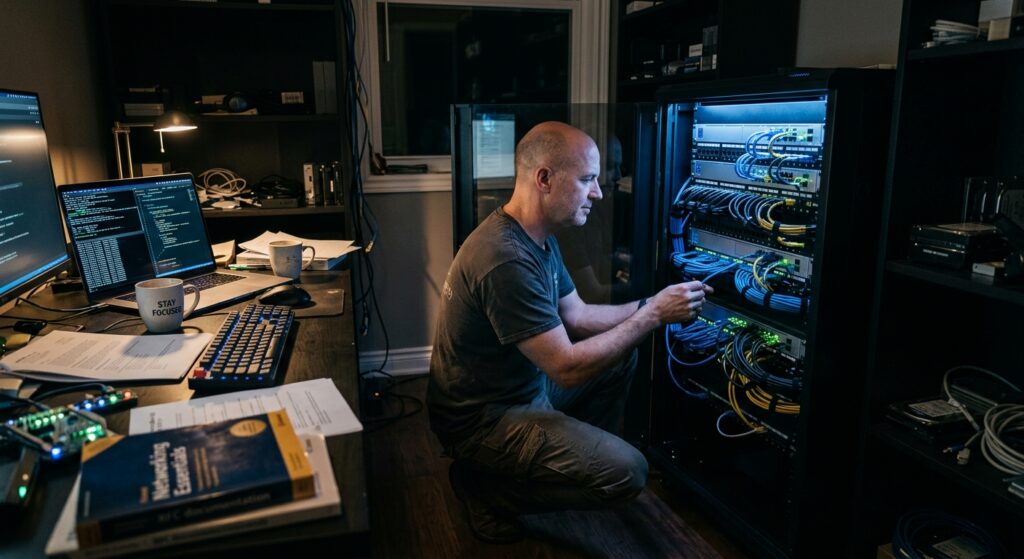
AuDHD hyperfocus isn’t a productivity tool you switch on. It’s more like a flash flood, and my homelab is the proof of what it leaves behind.
I got an AuDHD diagnosis at 54. Not because something was wrong, but because I finally had a name for everything that had always been exactly this way.
I spent 55 years running on a brain nobody had a name for. Turns out it built something real anyway — but not without a cost worth being honest about.