Frank
Frank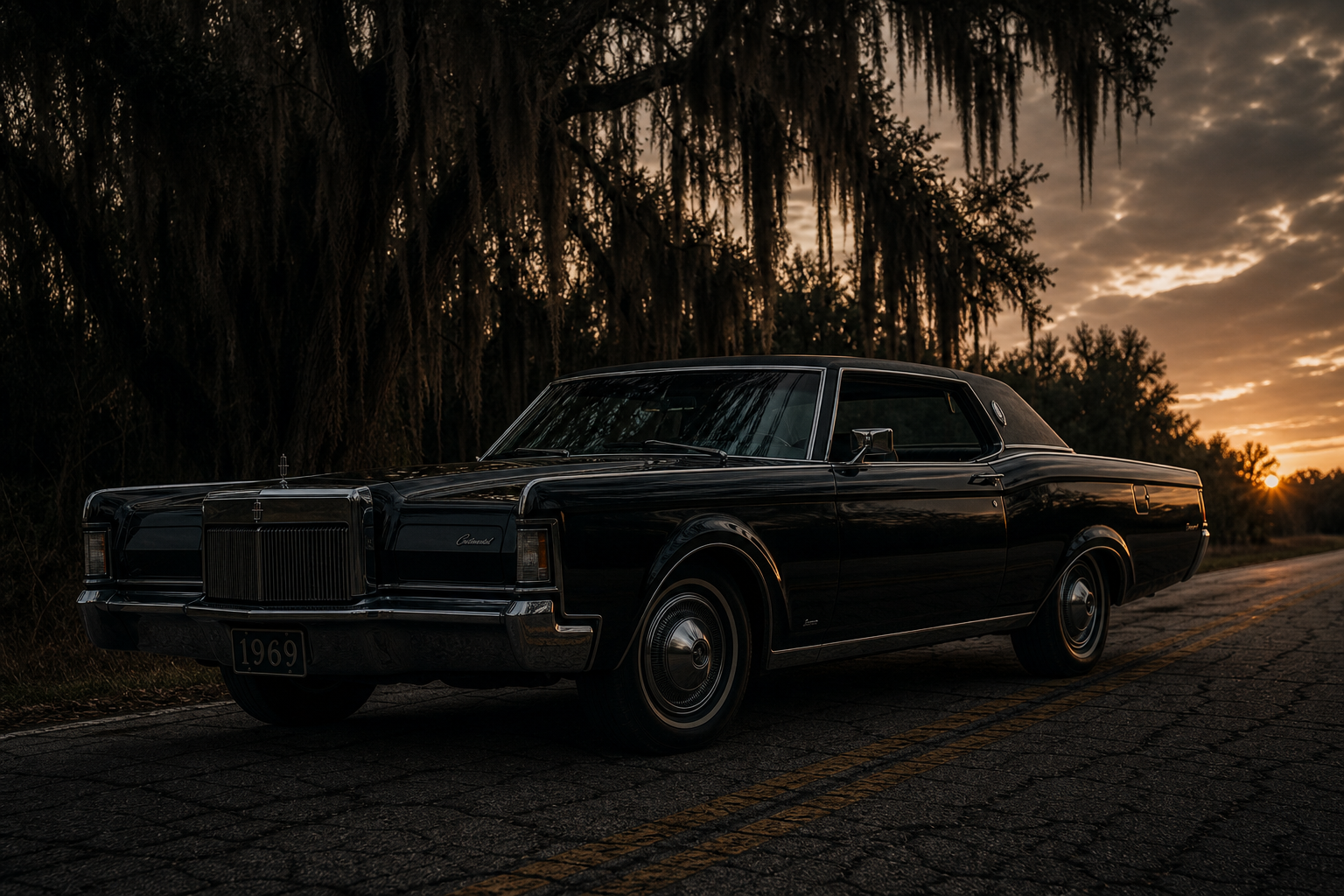
The salesman at the dealership didn’t even try to up-sell the man. He just walked the buyer around the car twice, let the lines do the talking, and wrote the paper. That’s how Lee Iacocca sold the Mark III to the American public, and in 1968 it worked so well that Ford moved over 30,000 units in the first model year alone, outselling every other personal luxury coupe on the market. Including the Eldorado.
And then history just kind of forgot about it.
I’ve been a car guy my whole life. Middle Georgia, muscle cars, old American iron, the whole thing. I’ve sat in more conversations about classic cars than I can count, and the same names come up every single time. Mustang. Camaro. Chevelle SS. Charger. GTO. Every once in a while somebody will mention a Riviera or an Eldorado if they want to sound like they have range.
The Mark III almost never comes up. And that bothers me more than it probably should.
Here’s what people get wrong about this car. They lump it in with the Continental name, assume it’s just a big soft luxury barge for bank presidents and funeral directors, and move on. That’s a lazy read. The Mark III wasn’t a Continental with extra chrome bolted on. It was a purpose-built personal luxury coupe with a 460 cubic inch V8, a Rolls-Royce inspired grille that Iacocca himself pushed for, a hidden spare tire hump on the trunk lid that became one of the most distinctive design signatures in postwar American automotive history, and a wheelbase shorter than the standard Continental specifically so it would handle more like a driver’s car.
Ford designed this thing to compete with the Cadillac Eldorado on taste, on presence, and on power. It did. On all three counts.
The proportions on a ’69 or ’70 Mark III are still genuinely stunning to me. The hood is longer than some small apartment hallways. The roofline drops in that long, tapered sweep that designers were chasing all through the late sixties. The vinyl opera window is polarizing, I know, but it wasn’t an accident or an afterthought. It was a deliberate style choice, and when you see one in person, done right, it works. The whole car has a gravity to it. It occupies space the way a Stetson hat does on a man who earned it.
What Gets Lost When We Only Tell the Muscle Car Story
The narrative of late-sixties American performance gets reduced to a pretty short list because short lists are easier to merchandise. Pony cars and muscle cars dominated the magazines, the TV spots, the poster market. They were photogenic and accessible and the insurance rates on a Mach 1 made for better outrage copy than the sticker price on a Mark III.
But the Mark III was never trying to be a Mach 1. That’s the misunderstanding that keeps it off the list.
This was a car for a man who was past the phase of proving things at stoplights. It was for someone who already had something, and knew it, and wanted a machine that reflected that without being ostentatious about it the way a Cadillac Eldorado could be. There’s a difference between confidence and showboating, and the Mark III understood that difference better than almost anything Detroit built in that era.
The 460 wasn’t a screamer. It wasn’t tuned for the drag strip. It was tuned for torque, for that deep-chest pull when you hit the highway entrance and just go. Smooth and inevitable, like a freight train that’s been running that route for thirty years and has nothing left to prove.
My curiosity about this car tends to spiral, which I recognize is a personality defect as much as it is a virtue. One afternoon looking at specs turned into a three-week rabbit hole into Iacocca’s original brief for the program, the T-7 concept that predated it, the production decisions around the Thunderbird platform they shared. Some people take that kind of fixation as being difficult to talk to at a party. They’re probably right.
But here’s what I keep landing on, and this is the part I wish I’d understood better years ago when I was younger and still sorting out which hills to plant myself on.
The cars that get remembered are the ones that got photographed well, marketed aggressively, and priced where a twenty-two year old could dream about them. The Mark III was photographed beautifully, yes, but it was marketed to a buyer who didn’t need convincing, and it was priced where that buyer lived. That buyer eventually got old, and their kids grew up romanticizing different machines, and the Mark III got left in the cultural garage.
That’s not a verdict on the car. That’s a verdict on how we decide what deserves to matter.
I’m still figuring out a lot of things, just slightly more inefficiently each year. Cars are one of the few places where I’ve stopped second-guessing myself, though. I know what I like, I know why I like it, and I’ve stopped needing other people to validate the list.
The Mark III belongs in the same conversation as any American performance coupe from that decade. Not because of what it could run at the quarter mile, but because of what it represented about what American design and engineering could do when the goal was something other than going fast in a straight line.
Find one in decent shape. Stand next to it. Look at that hood line from the front quarter.
Tell me I’m wrong.