Frank
Frank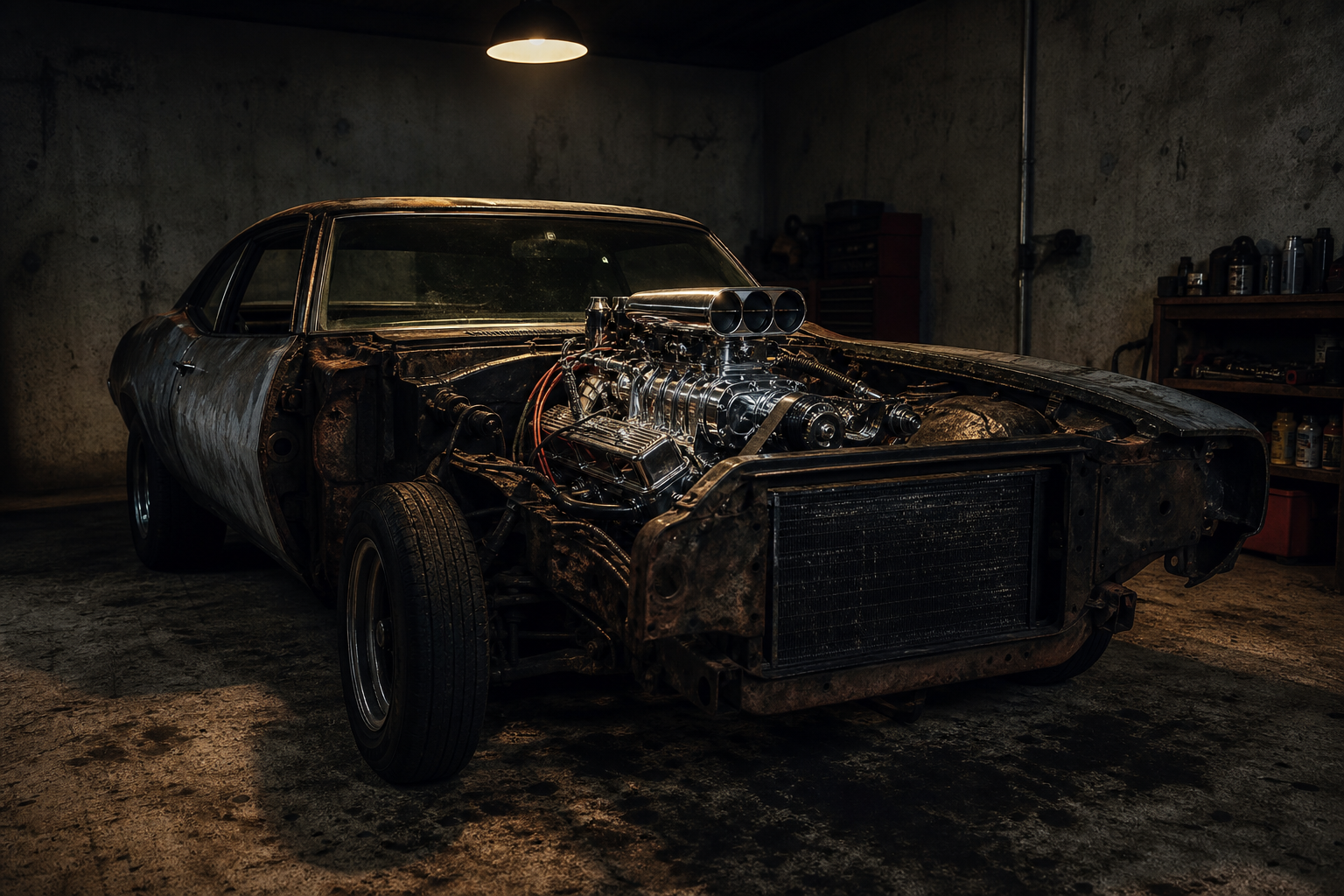
A 1973 Caprice with bubbling paint and a cracked dash just ran a 10-second quarter mile, and the guy in the $80,000 resto-mod is still in the staging lanes.
The Story
Somewhere in the mid-1970s, a culture started forming in Black communities across Chicago, Detroit, and Los Angeles. Nobody gave it a name at first. It was just what happened when you had more mechanical talent than money. Guys were buying beat Impalas, Caprices, and Buick Electras for four hundred bucks, dropping the most savage engines they could find into them, and leaving the body exactly as-is. Rust, dents, cracked vinyl, one working window. The outside looked like it had lost a fight with a parking lot. The inside told a completely different story.
The point was never the body. The point was the drivetrain. A perfectly rebuilt 454. A reworked 400 Turbo transmission. Suspension geometry dialed in tighter than most new cars rolling off the line. These weren't neglected heaps. They were deliberate. The ugly was intentional. You show up looking like nothing, you drive home having beaten everything.
That culture evolved into what we now call the hooptie tradition, and it never really died. It just moved. You'll find it today in every form of racing where the envelope doesn't matter and the contents do. A minivan running 9s. A Volvo wagon with a built LS. A primer-gray Cutlass that will absolutely embarrass you off the line.
The car looks like it owes somebody money. The engine does not care.
The Hidden Principle
There's a principle buried in the hooptie that most people never think about because it looks like poverty from the outside. It isn't. It's the separation of signal from capability. The beater is a filter. It runs off anyone who judges by appearance and rewards anyone paying attention to what's actually going on under the hood. The guys who built these cars weren't hiding their skill. They were just not wasting a single dollar on the part of the machine that doesn't make it go faster.
Capability and presentation are two completely different budgets. Most people spend on both equally, or worse, spend more on presentation. The hooptie philosophy says: max out the engine, let the body do whatever it wants. You'll know what you have. The stopwatch will confirm it.
What This Means Today
Y'all see this everywhere once you know what to look for. The freelancer with the outdated portfolio site who quietly does better work than the agency with the $40,000 rebrand. The open-source project with ugly documentation that runs circles around the venture-backed competitor with beautiful UI and a broken core. The guy at the gym in a faded Hanes shirt who just pulled 600 pounds off the floor while the guy in the matching set is still warming up.
Resources are finite. The decision of where to put them is everything. When you pour your budget into what's visible before what's functional, you've made a cosmetic investment in a performance competition. The hooptie guys figured that out by necessity, and then kept doing it by choice. Because once you've run a 10-second quarter in something that looks like it came from a scrap yard, you understand something most people never will: the ugly ones are usually the dangerous ones.
Don't fix the paint until the engine doesn't need fixing anymore.