Frank
Frank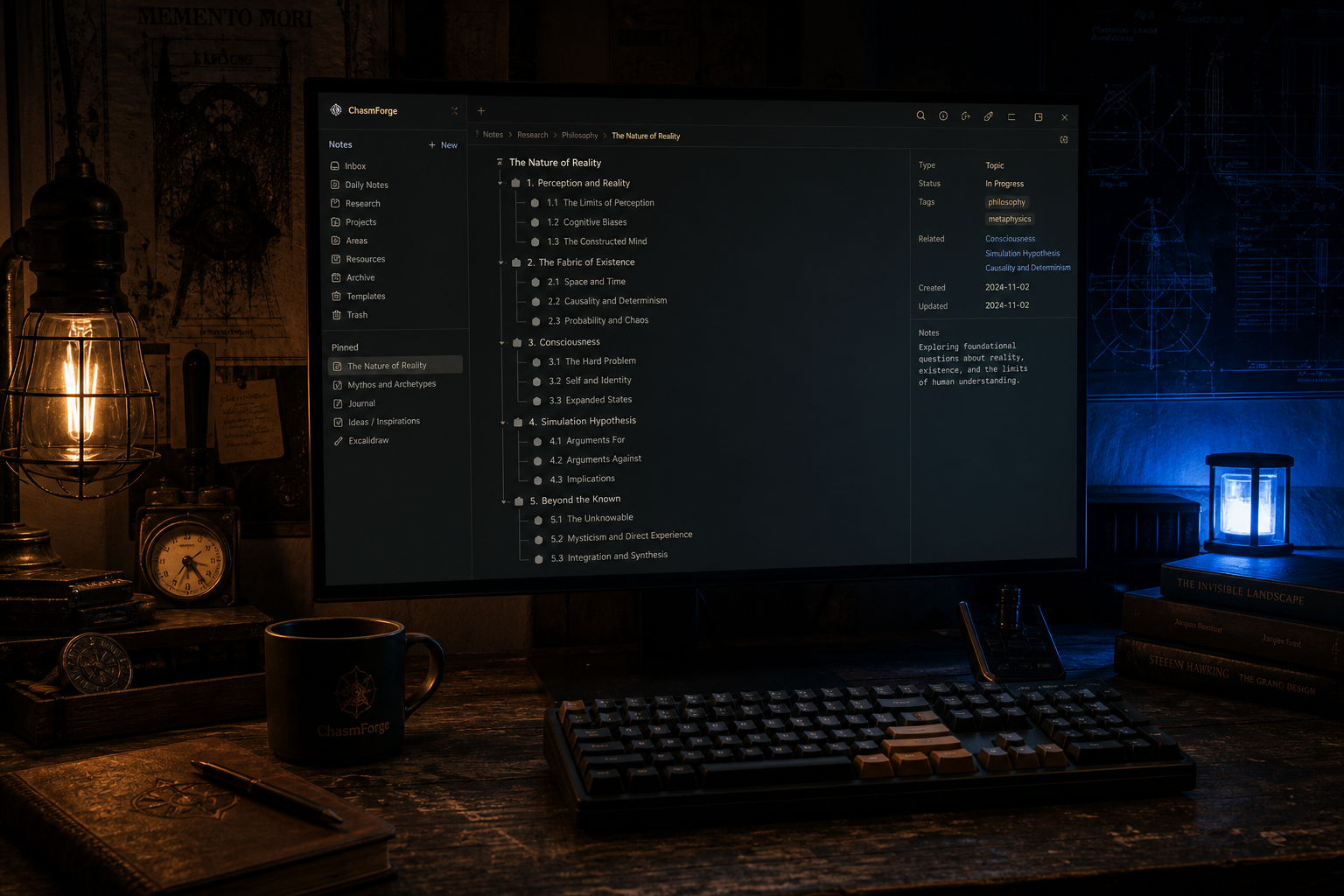
Nobody at work has heard of it. That’s the part that gets me every time.
I’ll be in a conversation with another IT person, someone with legitimate years under their belt, and I’ll mention Trilium Notes. The response is always the same. Either a polite head tilt, like I just spoke in a foreign language, or the classic “is that like Notion?” And I have to stand there and figure out how to explain it without sounding like I’m pitching a product nobody asked me to pitch.
Here’s the short answer: Trilium Notes is a self-hosted, hierarchical personal knowledge base. You run it yourself, on your own hardware, and it stores everything in a SQLite database. The long answer is that it’s the tool I actually use every single day, more than almost anything else in my stack, and it does something that nothing else I’ve tried does quite right.
The thing Trilium gets correct that every other notes app fumbles is the tree structure. Not folders. Not tags. Not a flat list with filters. A proper hierarchical tree where a note can live in multiple places at once using something called clones. That sounds simple. It isn’t. When you’re managing documentation across a homelab with multiple servers, four NAS units, a dozen Docker containers, and a handful of side projects all running simultaneously, flat organization falls apart fast. Trilium doesn’t fall apart.
I keep my entire homelab documented in Trilium. Every machine, what it runs, what port maps to what, what broke last time and how I fixed it. Optimus, Scooby, Megatron, Rollo, Lamont, Grady, FredG, the whole bunch. When something goes sideways at 11 PM and I need to remember what I did six months ago to fix a Caddy reverse proxy issue, I’m not digging through a Word document or scrolling through a chat log. I open Trilium and I find it in about thirty seconds because I put it there in a logical place when I fixed it the first time.
I also use it for my music catalog. I have a target I’ve been working toward for a while now, getting every song in my personal AI music library fully documented in Trilium with lyrics, style tags, metadata, and associated media files. It’s a project that only makes sense inside a tool built for this kind of structured, nested information. Notion would work until it didn’t. Obsidian is fine if you love markdown files in folders, and I don’t hate Obsidian, but the file-system-as-database approach creates its own headaches when you’re cross-referencing a lot of things. Trilium keeps it all in one database and handles the relationships cleanly.
The coding in Trilium is also something most people don’t know exists. You can write JavaScript directly inside notes and execute it. I’m not a programmer in any serious sense of the word, I want to be clear about that, but I’ve built some simple automation inside Trilium that would require a whole separate app anywhere else. Nothing fancy. Stuff that makes my life easier without me having to spin up another Docker container to do it.
Now, the honest part. Trilium’s development situation is complicated. The original developer stepped back, and the community forked it into TriliumNext, which is where active development is happening now. That’s worth knowing before you commit your entire knowledge base to it. I’m not going to pretend that’s a nothing concern. But I’ve been watching TriliumNext and it’s moving. People care about this tool enough to keep it alive, which tells you something about how good it actually is.
The enterprise IT blind spot here is real and it makes sense. Enterprise runs on what IT can manage at scale, what has a vendor behind it, what has a support contract. Trilium has none of that. It’s open source, self-hosted, and community-supported. That’s exactly why nobody at my organization has heard of it, and exactly why it’s perfectly suited for a homelab where I control everything anyway.
The blank stare I get when I mention it isn’t because Trilium failed to make its case. It’s because the people I’m talking to have spent their careers inside systems chosen by procurement departments. There’s nothing wrong with that, but it creates a gap between what enterprise IT knows and what’s actually useful for managing complex personal or small-team knowledge.
Most of the tools that actually improve how I think and work didn’t come from a vendor demo. They came from someone on a forum at midnight saying “have you tried this?” Trilium was exactly that. And three years later, it’s still running on Grady, still holding everything together, still getting no credit from anyone who didn’t go looking for it.