Personal › Category

Life & Identity

20 dispatches
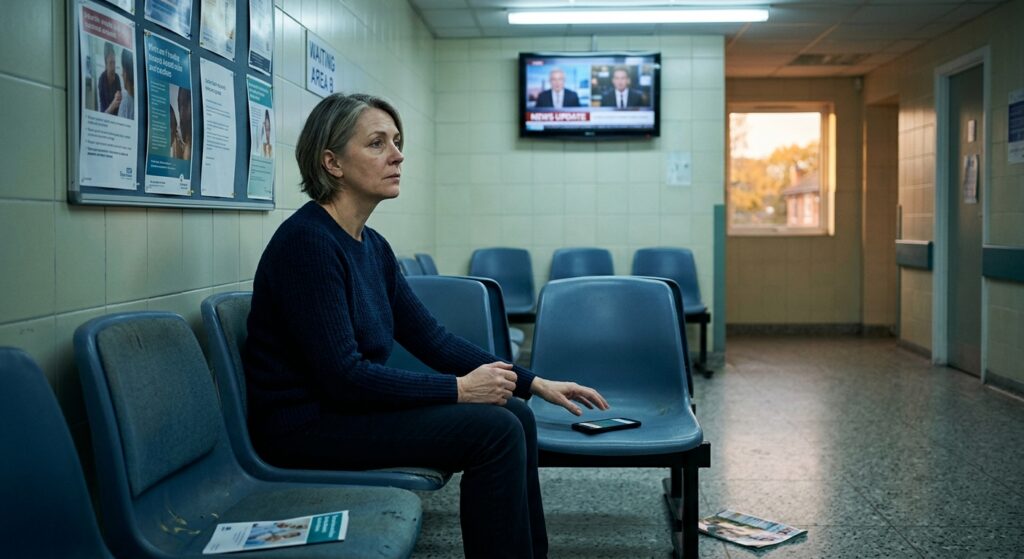
A middle-aged person sitting alone in a sterile hospital waiting room with harsh fluorescent lighting, plastic chairs, and a muted TV on the wall showing blurred news footage. Their hand is frozen mid-reach toward a smartphone resting on the seat beside them, but they have pulled back, choosing instead to sit still with their hands folded in their lap, staring into the middle distance with a contemplative, slightly unsettled expression. The room feels quiet and suspended in time. Through a small window, warm afternoon light filters in, suggesting the world outside moving at a slower, more natural pace. The overall mood is introspective and melancholic, a visual tension between the pull of digital distraction and the rare stillness of an unoccupied mind. Photorealistic editorial style, muted color palette with cool fluorescent blues contrasted against warm amber tones from the window, shallow depth of field.

What has fundamentally changed the world for the worst but us humans haven’t realized?

Boredom was never the enemy. For most of human history, idle time quietly powered memory consolidation, creative insight, and empathy through the brain’s default mode network. Smartphones and algorithmic feeds have colonized those cognitive gaps, training our brains away from depth and sustained thought. Frank argues we didn’t fix boredom — we amputated it, and we’re only beginning to feel what’s gone.

Read More »
A weathered 1980s suburban neighborhood street at golden hour, showing an empty driveway in front of a modest ranch-style house with the lights off inside, while a group of kids on bicycles rides freely down the road in the background, no adults in sight. The foreground features a worn door key on a lanyard resting on concrete front steps beside a scuffed backpack. The scene evokes late afternoon independence and quiet solitude — a child's world operating without supervision. Shot in warm, slightly faded tones reminiscent of analog photography from the early 1980s, editorial realism style with nostalgic depth and a bittersweet emotional undertone.

The Pros and Cons of Being a GenX Latchkey Kid

Growing up as a Gen-X latchkey kid on Lakeside Drive in Milledgeville, Georgia meant coming home to empty houses, cooking dinner at eleven, and figuring everything out alone. Frank reflects honestly on how that unsupervised childhood built real capability, resilience, and problem-solving instincts while also leaving lasting wounds around emotional regulation, isolation, and decades of undiagnosed AuDHD.

Read More »
A dimly lit mid-nineties college apartment at night, a young man in his early twenties sitting alone in a worn armchair beneath a single lamp, a thick open textbook on his lap and a yellow highlighter loosely held in one hand. He stares into the middle distance, not at the page, his expression distant and inward, caught somewhere between effort and paralysis. The room is cluttered with the quiet evidence of a life being lived hard — stacked books, a half-empty coffee mug, papers spread across a desk nearby. The warm amber light creates deep shadows, giving the scene a heavy, intimate atmosphere. The mood is melancholic but not hopeless, evoking the weight of undiagnosed struggle, the loneliness of not having language for what you are experiencing, and the particular exhaustion of a mind that cannot rest. Photorealistic editorial style, cinematic lighting, muted color palette with warm amber and cool shadow tones.

A Discipline Problem

At 55, Frank receives an AuDHD diagnosis that reframes decades of academic failure, sensory overwhelm, and social exhaustion he had blamed on laziness and poor character. From six quarters of academic exclusion to a 28-year self-taught IT career built on hyperfocus, he traces what working three times as hard as everyone else actually looked like, and what it means to finally have a name for it.

Read More »