Frank
Frank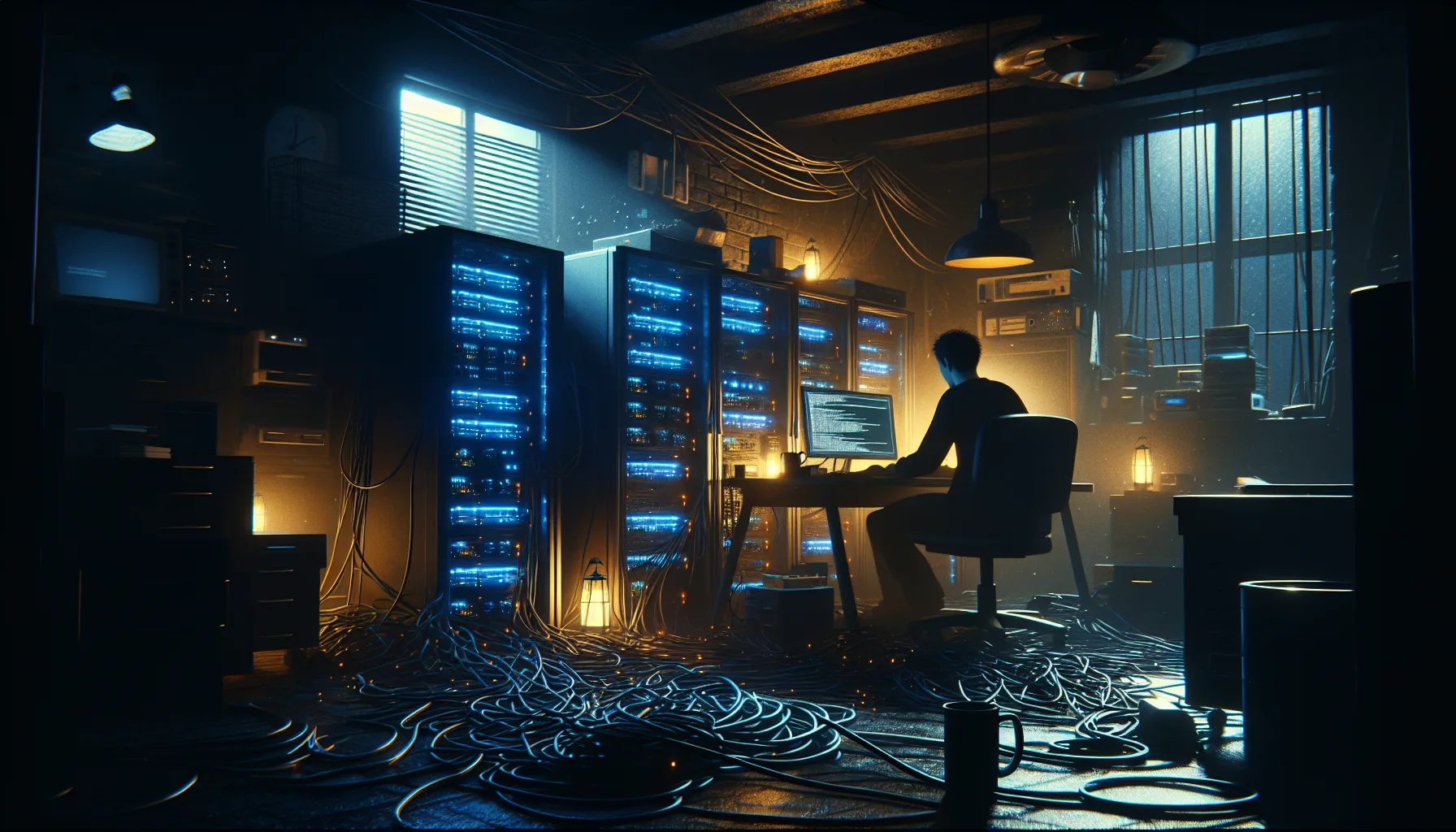
It was a Saturday in March, around 10 in the morning. I sat down to check one thing about my Caddy reverse proxy configuration. Just one thing. I looked up at the clock again at 11:47 PM, and Kimberly was standing in the doorway of my office with an expression I’ve learned to read as somewhere between concern and resignation.
Oakley was asleep at my feet. I had no memory of eating lunch. On my screen was a fully containerized Authentik SSO deployment I hadn’t planned on building that day, a migration from NGINX Proxy Manager I hadn’t planned on starting that month, and three browser tabs of documentation I apparently needed at 11 PM on a Saturday.
That’s not a productivity win. That’s a hyperfocus episode wearing one.
The distinction matters, and I’ve been sitting with it for a while now.
The Part Nobody Talks About Is the Wreckage Around the Edges
Hyperfocus gets framed as a superpower in a lot of AuDHD circles. And honestly, I get it. When it hits on the right target, it is extraordinary. The Authentik migration I mentioned above? Solid. Works perfectly. I never would have gotten through the complexity of that deployment in fragmented evening sessions. It needed one sustained, obsessive push, and that’s exactly what it got.
But that framing skips the human cost on the other side of the desk.
Kimberly has watched me disappear into a project too many times to count. Not disappear physically, I’m right there in the office, but the man who shows up for dinner and normal conversation is just gone. What’s left is some version of me that can talk at length about Docker networking but cannot tell you what day it is or whether he’s hungry. That’s not comfortable for her. And honestly, when I come back up for air, it’s not always comfortable for me either.
There’s a specific kind of disorientation when a hyperfocus episode ends. The project is done, or at least done enough for my brain to release it. And you look around at the normal world and have to re-enter it, like you’ve been underwater and you’re not quite sure how long.
What I’ve realized is that the home lab didn’t get built on a plan. It got built in bursts. Megatron, Scooby, the whole network with Lamont and Rollo and the rest of it, none of that was mapped out in advance. It accumulated through maybe thirty or forty of these weekend-consuming episodes over the years. Each one tackled something specific with an intensity that doesn’t belong to normal Saturday mornings. HomeBase came out of one of those. So did most of HookHouse-Pro.
The thing is, I can’t tell you when the next one is coming. I can’t schedule it, I can’t aim it with precision, and I definitely can’t stop it once it starts. If something catches in my brain, that’s it. The day is gone. The weekend might be gone.
Kimberly has built her own rhythms around it. She checks in at the door instead of calling from the other room. She doesn’t plan anything that requires me to be mentally present on days when I go quiet early. That’s not a small accommodation, and I don’t take it lightly.
The home lab is real, and it works, and I’m genuinely proud of what’s in those racks. But I didn’t build it. The hyperfocus built it, and I was just the guy holding the keyboard when it decided to show up.
That’s the “honest” version of the story.