Frank
Frank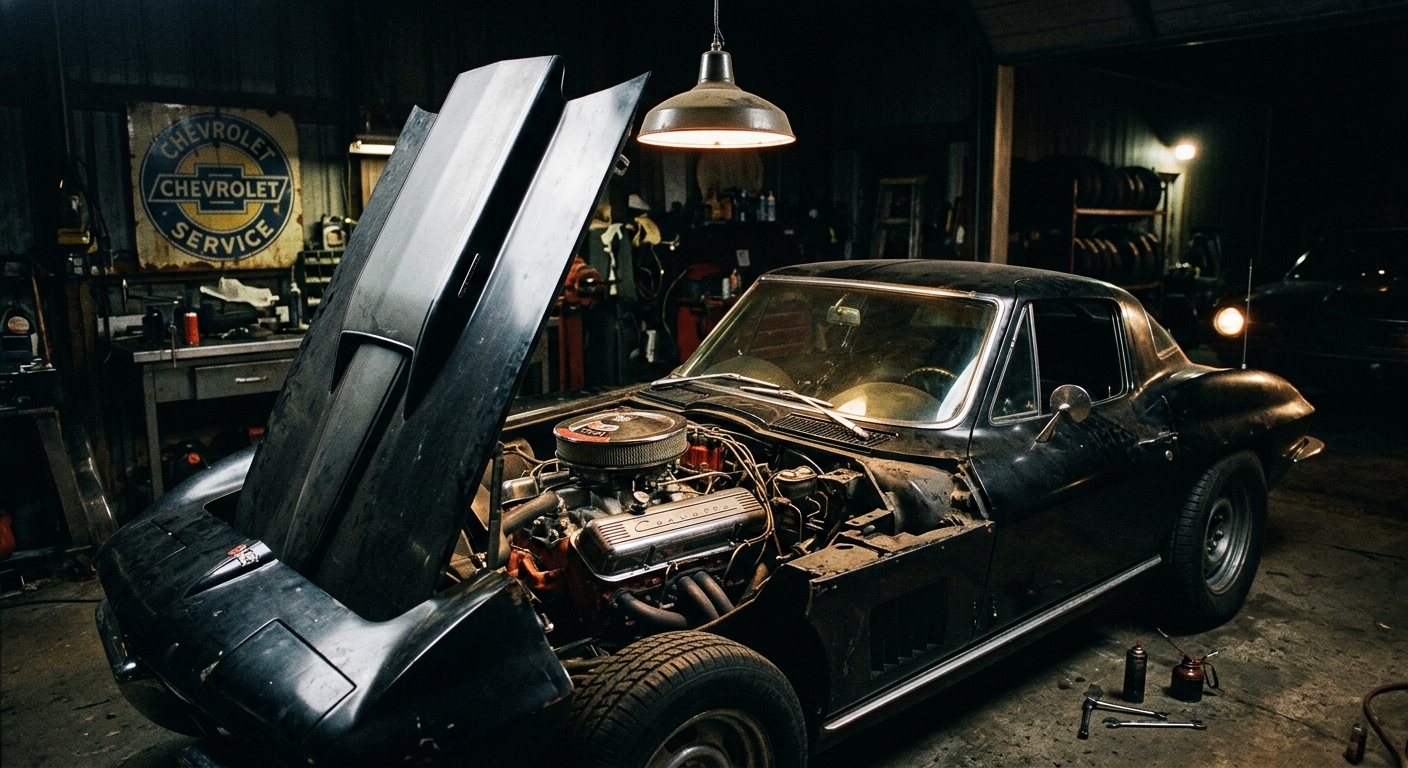
Something unusual happened when Chevrolet released the L88 option for the 1967 Corvette. They didn’t want you to buy it. They actively discouraged it. The order form warned buyers that the engine was “not recommended for highway use.” The heater was deleted. The radio was deleted. Air conditioning wasn’t available. The compression ratio was listed at 12.5:1 at a time when premium pump gas topped out around 10.0:1. Chevy’s own paperwork rated the engine at a laughably dishonest 430 horsepower, a number so far from reality it was practically a joke, and everyone knew it.
And yet, a handful of people checked that box anyway. Fifty people in 1967, to be precise. Twenty. That’s how rare the 1967 Corvette L88 actually was in the real world.
What they got for their money and their stubbornness was arguably the most serious production automobile Chevrolet had ever built to that point, a car that wore Corvette badges but lived in an entirely different universe from the boulevard cruisers that shared the name. This wasn’t a sports car with a wink and a nudge toward performance. This was a race car with license plates bolted on, sold through Chevrolet dealerships to people who absolutely knew what they were doing with it.
In a blog series built around muscle car legends, the L88 occupies a strange but important place. Most of what we’ve talked about, the Hemi ‘Cuda, the LS6 Chevelle, the Charger Daytona, the GTO Judge, these were cars built for the street that happened to be ferociously fast. The L88 was built for the track, period. The street was an afterthought. That distinction matters, and it’s worth sitting with.
The Engine That Chevy Tried to Hide
Let’s start with what was actually under that hood, because the gap between what Chevrolet told the public and what the L88 actually produced is one of the great pieces of automotive theater from the entire muscle car era.
The official rating was 430 horsepower. Ridiculous. Conservative estimates from people who actually tested and raced these cars put the real output somewhere between 530 and 560 horsepower, with some builds reportedly edging closer to 600 depending on preparation. The reason for the understatement wasn’t modesty. It was strategy. Chevrolet was navigating a complicated relationship with racing, having signed the Automobile Manufacturers Association’s gentleman’s agreement in 1963 not to officially support motorsport. If the L88 was too obviously a race engine on paper, it would draw the wrong kind of attention. So they lied on the spec sheet, and the racing world nodded and went racing.
What made the L88 remarkable wasn’t just raw power. It was the obsessive engineering behind it. The engine was built around a high-compression aluminum cylinder head, specifically designed to extract everything the 427 cubic inch big block had to offer. The combustion chambers were unique, the ports were large and carefully shaped, and the valves were substantial. The camshaft was a wild, lumpy grind that made the engine genuinely unhappy at idle and completely transformed it above 3,000 rpm. Below that number, the L88 was almost sulky, a car that didn’t want to be coddled in traffic. Above it, the thing simply came alive.
The induction system was a single four-barrel Holley carburetor rated at 850 cfm, fed through an open-element air cleaner that drew cold air from outside the engine compartment. Chevrolet wanted that engine breathing, not suffocating. The exhaust system was built with the same philosophy: get the gases out fast, get out of the way.
There was no power steering in early configurations. No power brakes. The deleted heater and radio weren’t cost-cutting measures; they were weight reduction and simplicity. Chevy wanted buyers who would strip the car down further, not add things to it.
Why Only 20 People Said Yes in 1967
The scarcity of the 1967 L88 is part of what makes it mythological now. Twenty examples is not a production run. It’s barely a fleet. But the low numbers make sense when you understand what Chevrolet was actually asking a buyer to accept.
The price premium for the L88 package was significant, roughly $947 above the base Corvette price, which was already a substantial automobile. That sounds almost laughably cheap by modern standards, but in 1967 it was real money, especially for a car that came without a heater in a country where winters exist. The buyer had to be someone who either lived somewhere warm year-round or genuinely planned to trailer the car to the track and leave it there.
The 12.5:1 compression ratio meant the engine demanded racing fuel or carefully sourced aviation fuel to run properly. Put regular pump gas in an L88 and you’d encounter detonation severe enough to damage the engine. This wasn’t a theoretical concern. It was a practical reality that made everyday use actively problematic. Chevrolet wasn’t being overly cautious when they said “not recommended for highway use.” They were being honest about a car that would destroy itself if you treated it like a normal Corvette.
The buyers who did check that box were, almost universally, racers. People who knew exactly what they were buying, who had access to proper fuel, and who intended to use the car in competition. The L88 found its way onto the tracks at Sebring, Daytona, and Le Mans. It was campaigned by serious teams who understood that beneath the Corvette body was something genuinely competitive with purpose-built European sports racing cars, and in some cases, capable of beating them.
At the Track: Where the L88 Earned Its Reputation
The reputation of the 1967 L88 wasn’t built in magazine dyno rooms or at stoplight drags. It was built at endurance races, on banked ovals, and in the hands of professional racing drivers who used it to beat cars that cost three times as much.
At the 1967 24 Hours of Le Mans, an L88-powered Corvette ran competitively in the GT class, finishing well and demonstrating that the platform could hold together under sustained racing conditions. This wasn’t a sprint car. This was a car built to run hard for hours without coming apart, and that tells you something important about the engineering confidence Chevrolet had in the design.
Drag racing L88s were equally savage in a different context. The combination of torque, compression, and the aggressive cam meant the car could run consistent times well into the 11-second range in stock form, with some prepared examples going considerably quicker. For a car that technically came with street equipment and factory warranty paperwork, that was extraordinary.
What separated the L88 from almost everything else in the Corvette lineup during this period was the complete absence of compromise in its engineering priorities. When Chevrolet built the LS6 Chevelle (which we covered back in Part 5), they were still building a car that somebody could drive to the grocery store. The L88 had no such aspiration. Every decision in its design tilted toward performance, and everything that conflicted with that goal, comfort, convenience, driveability, got cut.
The C2 Body: A Fighting Chance on Four Wheels
The 1967 Corvette was the last year of the C2 generation, a body shape that remains one of the most beautiful things American automotive design ever produced. The Sting Ray styling, with its twin rear taillights, fastback roofline, and long hood, was already a few years old by 1967, but it aged beautifully. Chevrolet had refined it over the years, removing the controversial split rear window of the 1963 coupe, adding functional side exhausts as an option, tightening up panel fit and quality.
The 1967 specifically is often cited as the best execution of the C2 design. They dialed back some of the chrome ornamentation, cleaned up the flanks, and produced a car that looks almost contemporary even today. There’s a rightness to the proportions that holds up across decades.
For the L88 specifically, the body wasn’t incidental. The aerodynamics, by 1960s standards, were reasonably good, and the relatively low curb weight of around 3,000 pounds gave the big block engine room to do its work. Compare that to something like the Chevelle we discussed in Part 5, where the LS6 was hauling nearly 3,700 pounds around, and you start to understand why the L88 Corvette felt categorically different in motion.
The chassis underneath was fully independent suspension on all four corners, a significant advantage over virtually every muscle car we’ve discussed in this series. Most of the competition was running solid rear axles. The Corvette’s independent rear suspension gave it composure through corners that a Chevelle or Charger simply couldn’t match, even if the muscle cars could come close on straight-line numbers. The L88 wasn’t just a drag car. It was a complete racing machine.
The Separation Between Muscle Car and Sports Car
I want to spend a moment here on something that matters to me personally, because the L88’s inclusion in this series invites a conversation about categories and what they really mean.
Is the 1967 L88 a muscle car? Technically, no. The traditional definition of a muscle car involves a large engine dropped into a mid-size body, sold at an accessible price point to a broad audience. The Corvette is a two-seat sports car. The L88 was not accessible in any meaningful sense. It wasn’t priced for the working-class buyer who wanted something fast on a budget, the way the Road Runner we discussed in Part 11 was designed to be.
But I’ve included it in this series anyway, and I’ll tell you why. The spirit of the L88 connects directly to the spirit that drove the muscle car era. It’s the same impulse: put the most powerful engine possible into a vehicle platform, accept the consequences, and build something that makes anyone who encounters it understand immediately that it was made to go fast. The execution is different from a GTO Judge or a 442 W-30, but the conviction behind it is identical.
The L88 also matters in this series because it represents the ceiling of what that era’s American automotive engineering could produce. It’s the far edge. Everything we’ve talked about in the preceding twelve installments was, in some sense, pointing toward this kind of car without quite getting there. The L88 got there.
It also foreshadows something. The ZL1 Corvette of 1969 built directly on what the L88 established, replacing the iron block with aluminum and extracting even more from the same basic design philosophy. We’ll get into that in detail in Part 14, because the ZL1 Corvette story is one of the most extraordinary chapters in this entire series.
The Mythology of Scarcity and What It Tells Us
Twenty examples in 1967. The number haunts the car’s legacy in a way that feels almost literary. There’s something about extreme rarity that amplifies a machine’s mythology beyond what any amount of production volume could achieve.
Part of this is the collector market reality. Authenticated 1967 L88 Corvettes command prices well into seven figures at auction. They’re among the most valuable American production cars ever made, period. But the financial value is almost beside the point when you’re trying to understand what the car represents.
The deeper value is what the L88 tells us about intention. Chevrolet made a decision in 1967 to offer something that was genuinely unsuitable for normal use, something that required its buyer to be serious and knowledgeable and committed to a specific purpose. That’s a strange thing for a mass-market automaker to do. It runs against every instinct a sales organization has. And yet they did it, because there were engineers at Chevrolet who believed in this engine and this car completely, and who found ways to get it into production even when the corporate environment and the racing ban and the practical logistics all argued against it.
That combination of engineering conviction and institutional defiance is what makes the L88 feel like more than a car. It feels like a statement.
When I think about what the muscle car era was really about, underneath all the horsepower numbers and the quarter-mile times and the magazine ads, I keep coming back to exactly this: the belief that building something fast and serious and uncompromising was worth doing, even when the reasons to pull back were real and plentiful. The 1967 L88 embodies that belief more completely than almost anything else from the period.
The buyers who ordered one in 1967 weren’t dreaming. They knew exactly what they were doing and why. And Chevrolet, in its complicated, half-official, winking way, knew exactly what it was building.
Twenty cars. The legend they left behind is out of all proportion to the number. That’s how you know it was real.
Next up in Part 14: The story gets even wilder. The 1969 Chevrolet Corvette ZL1 took everything the L88 established and pushed it further, replacing iron with aluminum and creating what might be the most outrageous factory Corvette ever conceived. If the L88 was radical, the ZL1 was something else entirely.