Frank
Frank
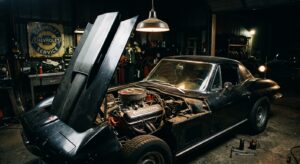
If you read Part 13 on the L88 Corvette and thought, “okay, that’s probably the most insane thing Chevrolet ever stuffed into a fiberglass sports car,” I understand why. The L88 was brutal, barely streetable, and deliberately misrepresented on paper so insurance companies and nervous buyers wouldn’t know what they were actually getting. It was a factory racer wearing a loophole as a disguise.
But then there’s the ZL1.
The ZL1 Corvette is the L88’s answer to the question nobody asked out loud: what if we built the same engine, but made it entirely out of aluminum? Same basic architecture, same racing DNA, same refusal to apologize for itself. Except now you’re talking about a powerplant so advanced, so expensive, and so rare that most people who worked at Chevrolet in 1969 had never seen one in person. Two were built for the Corvette. Two. The whole run, start to finish, was two cars.
That’s not a production model. That’s a statement.
The Engine That Cost More Than the Car
Let’s get into the ZL1 engine itself, because if you skip straight to the legend without understanding the hardware, you’re missing the whole point.
The ZL1 was a 427 cubic inch V8, same displacement as the L88 covered in Part 13. But where the L88 used an iron block, the ZL1 used an all-aluminum block and aluminum cylinder heads. This wasn’t just weight savings for the sake of vanity. The engineering behind it was serious, purpose-built racing technology that Chevrolet had developed for Can-Am competition. The engine was being raced in cars like the McLaren M6B and the Chaparral 2G, where reducing unsprung and rotational mass was the difference between winning and being a footnote.
When that same engine ended up in a Corvette, it was so light that the car’s front-to-rear weight distribution actually improved compared to an iron-block car. The ZL1 powerplant shed around 100 pounds versus the L88, and in a sports car that already had a weight problem relative to pure racing machinery, that mattered enormously.
Now, the output. Chevrolet officially rated the ZL1 at 430 horsepower, which is the same number they put on the L88 and which everyone understood to be a polite fiction. Independent testing and the testimony of the engineers themselves pointed to somewhere north of 500 horsepower, with some estimates going higher still depending on the state of tune. The compression ratio was 12:1, which demanded race-grade fuel and made the car entirely hostile to daily driving. There was no power steering, no power brakes available with this package, and the solid-lifter cam meant the engine was harsh and lumpy at low RPM, the kind of thing that made you wonder if something was wrong until you got above 3,500 and the whole thing woke up like a cornered animal.
What really tells you everything you need to know about the ZL1’s price: the engine option alone cost $3,000 in 1969. The base Corvette sticker that year was around $4,700. You were paying more for the engine than you were for the rest of the car around it. Total as-delivered cost for the ZL1 Corvette came in around $10,000, which in 1969 money was genuinely extraordinary. You could buy two fully loaded Corvettes for that price. You could buy a modest house in parts of the country. Two of these cars were sold to the public. The rest of the ZL1 engine production went into Camaros, which we’ll get to in Part 15.
Duntov’s World, and the Men Who Could Afford to Visit
Zora Arkus-Duntov’s name is already in this series from the L88 discussion, and that’s appropriate because you can’t talk about high-performance Corvette history in the 1960s without talking about Duntov. He was the Belgian-born engineer who lobbied from inside GM to transform the Corvette from a styling exercise into a genuine sports car, and who spent the better part of two decades pushing the platform further than the accountants and the safety-focused executives were always comfortable with.
The ZL1 Corvette was not, technically, a Duntov project in the sense that he greenlit and championed it. The aluminum 427 was racing division technology, developed with the Can-Am program in mind. But it existed within the culture Duntov had cultivated, the culture that said Corvette should be the place where Chevrolet’s performance ambitions found their highest expression. He may not have cut every check or signed every memo, but the ZL1 Corvette happened because of the environment he built.
The two customers who actually took delivery of ZL1 Corvettes were not casual buyers. One went to a racer. The others who inquired and backed away did so largely because of the price and because the car was so obviously not intended for street use. The purchase process itself was the filter. You had to know what you were asking for, be willing to pay an almost absurd premium, and understand that what you were getting was a race car with license plates.
There’s something almost medieval about that. Not everyone gets access to the king’s armory. You have to be the kind of person the armory is built for.
What It Was Like to Drive
I’ll be honest with you: I haven’t driven a ZL1 Corvette. Almost nobody has. With only two examples known to exist from the factory, and values today that put them well into seven-figure territory at auction, these cars are in museums or in the hands of serious collectors who are not handing out test drives.
But the picture of what it was like comes through clearly enough from period accounts, from the testimony of people who drove the race-spec ZL1 Camaros, and from anyone who’s spent time with the iron-block L88 Corvette. Take that experience, subtract roughly 100 pounds from the nose, add the same savage powerband, and keep everything else largely the same: no power assist anywhere, a close-ratio four-speed or Turbo-Hydramatic 400 automatic, and Positraction rear. What you get is a car that demands complete attention and complete respect.
The L88 Corvette was already described by period testers as something that punished inattention. The ZL1, with its superior weight distribution and the same basic engine making similar power, would have been faster and in some ways more manageable through corners, but no easier to live with at low speed, in traffic, or on cold starts. The engine’s high compression and solid lifter cam meant it idled roughly, responded poorly to light throttle inputs, and wanted to be run hard. You didn’t commute in this car. You went to the track.
The quarter-mile times estimated for the ZL1 Corvette, based on dyno data and the performance of ZL1-powered Camaros during the same period, put the car somewhere in the high 11-second range at trap speeds north of 120 miles per hour. In 1969. With a drivetrain configuration that could be registered, insured, and driven to the grocery store if you were willing to suffer through it.
That gap, between what the car was capable of and what the everyday world could make sense of, is part of what makes the ZL1 Corvette feel like it arrived from somewhere else. From some parallel timeline where Chevrolet never got the memo about building cars for regular people.
The Aluminum Advantage and What It Revealed About the Era
The all-aluminum engine in the ZL1 wasn’t just a racing trick. It was a preview of where the industry would eventually go, slowly and reluctantly, over the following decades. Weight reduction through materials technology is now a standard part of how performance cars are engineered. Aluminum blocks are commonplace. Carbon fiber body panels are unremarkable in certain segments. The obsession with power-to-weight ratio that defines modern performance is partly descended from exactly this kind of thinking.
In 1969, though, it was exotic to the point of being alienating. Iron was what engines were made from. Iron was reliable, understood, and cheap to machine. Aluminum required different tolerances, different casting techniques, different considerations for thermal expansion. The engineering challenges were real, which is part of why the ZL1 engine cost what it cost.
What the ZL1 revealed, in retrospect, was that the most advanced thinking in Detroit at the peak of the muscle car era wasn’t purely about displacement or carburetion. It was about systems thinking. About recognizing that a 500-horsepower engine in a 3,800-pound car is not the same animal as a 500-horsepower engine in a 3,200-pound car. The ZL1 engineers understood something that the rest of the industry was still only beginning to grasp, and they built a car around that understanding.
The tragedy, and there is a tragedy here, is that the timing was all wrong. By the end of 1969, the emission regulations were tightening, insurance costs were destroying the market for high-performance options, and GM’s own internal policies were moving toward compression ratio limits that would have made an engine like the ZL1 impossible to offer even as a special order. The window was closing. These two cars got through it by the narrowest of margins.
Two Cars, and What That Number Means
Two ZL1 Corvettes. I keep coming back to that number because it’s one of the things that separates this car from everything else in this series.
The 1969 Camaro ZL1, which we covered in Part 9, was rare, with 69 built through the COPO system. The L88 Corvette from 1967 through 1969 had a combined production of around 216 units across all three years. The Hemi ‘Cuda, the GSX Stage 1, the Boss 429, all of them were rare enough that finding one today is a genuine event.
But two? Two is not a production figure. Two is a prototype run that accidentally got sold. Two is a clerical error that the factory decided to honor. Two is the kind of number that makes automotive historians double-check their sources.
And yet those two cars are fully documented. They have VINs, build sheets, dealer invoices. They were purchased by real people who drove them. One of them has an extensive racing history. They are not myths or concept cars or something that got photographed at a show and then quietly disassembled. They exist. You can look them up.
What does it mean that Chevrolet, even for a moment, even for just two cars, decided to put the most expensive, most powerful, most technologically advanced engine they had ever built into the car that sat at the top of their passenger vehicle lineup? It means they were serious. It means that the Corvette’s identity as America’s sports car wasn’t just a marketing claim in 1969. It was something the people inside the building genuinely believed, seriously enough to do something completely impractical about it.
That’s not a business decision. That’s a conviction.
The Ghost at the Top of the Mountain
The ZL1 Corvette occupies a specific kind of place in the muscle car story. It’s not the most famous car in this series. The Charger R/T gets more recognition from people who didn’t grow up obsessively reading about horsepower ratings. The Hemi ‘Cuda has more cultural footprint. The Boss 429 has the Mustang name behind it, which does a lot of work.
But the ZL1 Corvette sits at the absolute top of what 1969 Detroit could do when it decided, for just a moment, that cost and practicality were someone else’s problem. It’s the ghost at the top of the mountain, the thing you find when you follow the trail of performance thinking all the way to its logical, unreasonable conclusion.
Two cars. One engine specification so advanced it belonged in a Can-Am racer. A price tag that made serious buyers flinch. A power output that the factory wouldn’t fully admit to. And a weight advantage that pointed directly at how performance engineering would eventually evolve.
The ZL1 Corvette is not the car that defined the muscle era. That distinction belongs to more accessible, more numerous machines. But it’s the car that revealed what the era was capable of imagining, at its most ambitious and least compromised.
That’s worth knowing. It’s worth more than the two slots on the production list would suggest.
In Part 15, we’re moving to the other car that got the ZL1 engine, the 1969 Chevrolet Camaro COPO 9561. Where the Corvette ZL1 was a bespoke racing instrument barely offered to the public, the COPO Camaro was something different: a factory hot rod built in volume through a back-channel ordering system, aimed squarely at the drag strip, and priced within reach of serious racers who didn’t have Corvette money. Same engine, very different story.